Editorial note: the ratings below are practical ownership assessments, not scientific measurements. Discuss individual health, diet and exercise decisions with your veterinarian.
A Dachshund breed guide needs to start with the point many first-time owners miss: this is a small dog with a big opinion, a strong hunting instinct and a body that needs careful management. Dachshunds are funny, affectionate and deeply engaging companions, but they are not low-effort dogs. Their long backs, short legs, alert nature and tendency to bark mean the right household plans ahead instead of improvising.
This Dachshund breed guide explains what daily life looks like with a smooth-, long- or wirehaired Dachshund. It covers exercise, back protection, feeding, training, family life and the equipment worth buying before the dog arrives.
Dachshund ratings
| Trait | Rating | What it means in practice |
|---|---|---|
| Family-friendly | 7/10 | Affectionate with its people, but better with calm children who respect handling and rest time. |
| Exercise requirement | 6/10 | Needs two purposeful walks, sniffing and short training sessions most days. |
| Grooming | 5/10 | Varies sharply by coat: smooth is simple; longhaired and wirehaired dogs need more work. |
| Trainability | 6/10 | Bright and food-motivated, though independent enough to test inconsistent rules. |
Breed overview
| Group | Hound |
|---|---|
| Adult size | Standard and miniature varieties; body condition matters more than chasing a single number. |
| Typical lifespan | 12–16 years |
| Coats | Smooth, longhaired or wirehaired |
| Best suited to | Owners who enjoy daily interaction, can manage stairs and jumping, and will train consistently. |
Size, weight and lifespan
Dachshunds come in standard and miniature varieties, and their height alone does not explain their needs. Their low frame makes extra body fat especially unhelpful because every unnecessary kilogram increases the load on the spine and joints. Ask your veterinarian to show you how to assess body condition: you should be able to feel the ribs under a light cover, see a waist from above and notice an abdominal tuck from the side.
A long lifespan makes puppy planning important. Budget for preventive care, dental work and age-related support over more than a decade. Choose a bed, harness and car restraint that fit the adult dog rather than buying around a tiny puppy body.
Dachshund temperament
The classic Dachshund temperament is bold, curious and devoted to its household. These dogs were developed to follow scent and work in confined spaces, so many retain impressive persistence. A Dachshund that has decided a smell, visitor or movement outside matters may not immediately agree that you have a better idea.
That character is enjoyable when it has an outlet. Give your dog approved digging games, scent trails, scatter feeding and simple searches around the house. Without them, the same drive can show up as repeated window barking, nuisance digging or a dog that patrols the home instead of settling.
Early socialisation should be measured, not overwhelming. Pair unfamiliar people, calm dogs, household sounds and new surfaces with food and distance. Let the puppy choose to approach. For a newly adopted adult, start with a quiet routine and introduce the wider world gradually. Forced greetings often create the very wariness owners are trying to avoid.
Exercise requirements
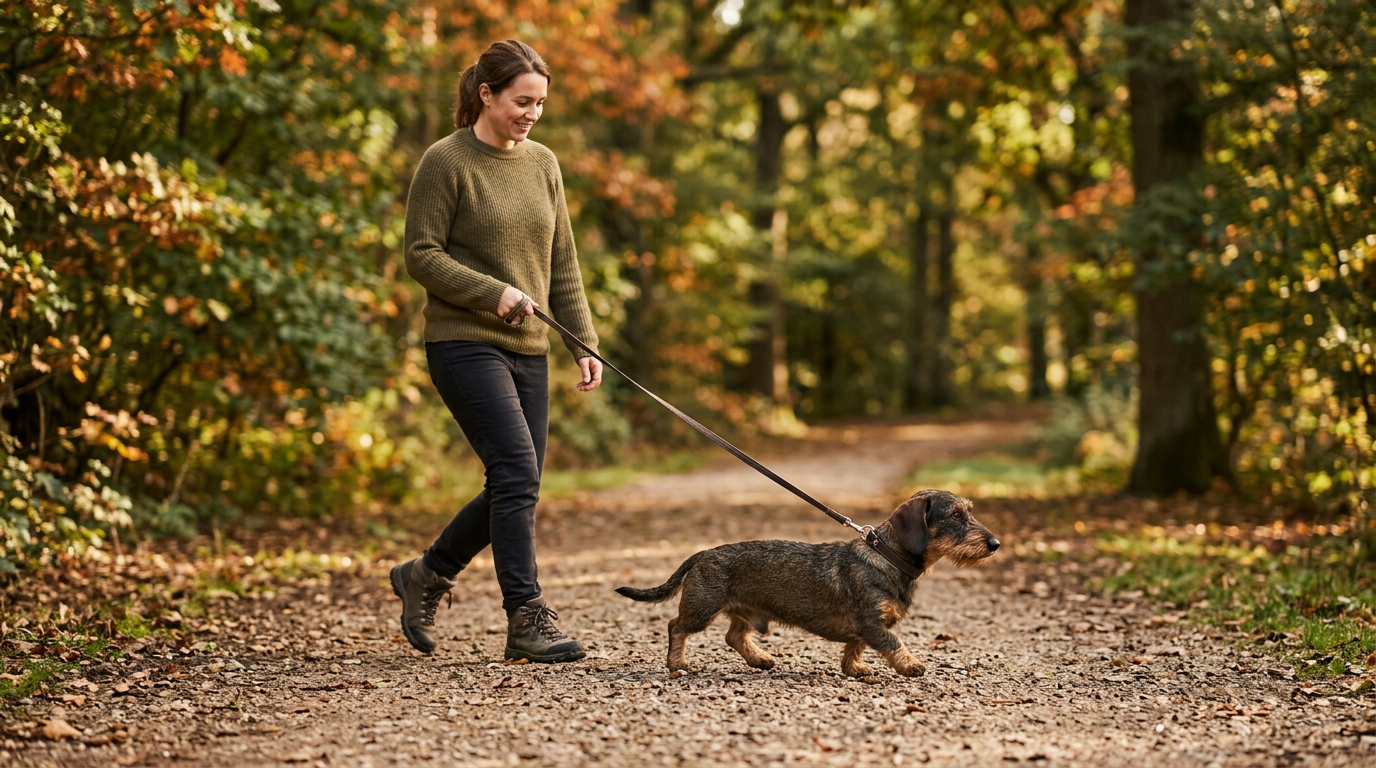
A Dachshund needs regular activity, even though it is not a distance-running breed. Two walks a day suit many healthy adults; the useful amount depends on age, fitness, weather and the individual dog. Walks with time to sniff are more valuable than marching around the block at a pace the dog cannot maintain.
Build strength safely with controlled hill walking where appropriate, slow lead walks, nose work and short retrieve games on level ground. Avoid repeated high jumps, uncontrolled stair sprints and frantic ball throwing. A ramp can reduce jumping onto a sofa or bed, but it works only when the surface is stable and the dog is trained to use it calmly. Pick the dog up with one hand supporting the chest and the other supporting the rear; never lift from the front end alone.
Stop activity and arrange veterinary advice for back pain, reluctance to move, a changed gait, weakness, crying when lifted or loss of toilet control. Those signs are not a training issue to push through.
Grooming and routine care
Smooth Dachshunds benefit from a weekly rubber mitt or soft brush, while longhaired dogs need frequent combing at the ears, chest, feathering and tail before tangles tighten. Wirehaired coats need regular combing and may need professional hand-stripping or clipping depending on the desired coat finish. Ask a groomer who knows the coat type to demonstrate a sensible home routine.
Check nails every two to three weeks. Long nails change foot placement and can make a low dog less comfortable. Brush teeth frequently with dog-safe toothpaste, inspect ears for odour or persistent redness, and check the skin under collars and harnesses. A sudden change in scratching, coat quality or smell deserves veterinary advice rather than a new shampoo.
Feeding a Dachshund
Feeding is one of the most practical ways to protect a Dachshund’s mobility. Measure meals, count chews and training treats, and adjust the total as the dog’s weight, activity and life stage change. Free feeding makes it hard to spot appetite changes and easy to overshoot daily calories.
Choose a complete diet appropriate for the dog’s life stage, then use part of the daily allowance for training. A puppy, pregnant dog, working dog and older adult do not have identical needs. Your veterinarian can set a target body condition and help with a plan if the dog gains weight or loses muscle. Do not make abrupt diet changes unless your veterinarian advises otherwise; transition gradually to reduce digestive upset.
Common health considerations
Intervertebral disc disease is the health concern most people associate with the breed, but prospective owners should also discuss dental disease, obesity, patellar issues and eye conditions with a veterinarian. Risk is not destiny: good breeding decisions, lean body condition, sensible movement and prompt attention to changes all matter.
When speaking with a breeder, ask for the health information relevant to the parents and the line, not a vague assurance that they are “vet checked.” The Canine Health Information Center publishes breed-specific screening protocols with participating parent clubs. Screening reduces uncertainty; it cannot promise a dog will never become ill.
For an adult rescue dog, ask for previous veterinary records, any signs of pain or mobility limits, medication history and how the dog handles being lifted. Set up a relationship with a local vet before an urgent problem arises.
Training a Dachshund
Train for the moments that matter at home: coming away from a scent, settling behind a gate, accepting a harness, waiting at doors and being comfortable with handling. Rewards work best when they arrive quickly and the task is simple enough for the dog to succeed. Five minutes of focused training is useful; a frustrated twenty-minute session is not.
- Name and check-in: say the name once, reward eye contact, then release the dog.
- Recall: practise indoors and on a long line before expecting reliability near wildlife.
- Loose lead: reward beside you, turn away from pulling and avoid retractable leads in busy areas.
- Settle: teach a mat cue so visitors, meals and work calls do not become constant patrol duty.
- Handling: pair brief paw, ear and body touches with treats; this pays off at the groomer and vet.
Housetraining can take patience. Take a puppy out after sleep, meals, play and confinement, reward outdoor toileting immediately, and clean indoor accidents with an enzymatic cleaner. Scolding after the event teaches little and can make a dog hide to toilet.
Are Dachshunds good with children?
They can be good with respectful older children, particularly when the dog has a predictable retreat space and adults manage the interaction. They are not a sensible choice for rough play, carrying by children or homes where the dog will be repeatedly startled while resting. Teach children to invite rather than grab, leave a dog alone while eating or sleeping, and call an adult if the dog walks away.
Are Dachshunds good with cats?
Some live well with cats, especially when introduced early and carefully. The breed’s hunting background means you should not assume a friendly puppy will be safe with every cat or small pet. Use baby gates, high cat escape routes and short, rewarded sessions. Progress only while both animals stay relaxed. Small caged pets need secure separation.
Apartment suitability
A Dachshund can suit an apartment if the owner plans for barking, lifts, toilet breaks and neighbour-friendly routines. The limiting factor is rarely floor area. It is whether the dog receives exercise, quiet-time practice and enough supervised access outside. If your building has long staircases, think seriously about how you will carry the dog safely throughout its life.
Similar breeds
- Miniature Pinscher: small and lively, but a different build and a more athletic day-to-day profile.
- Beagle: another scent-driven hound, generally larger and more pack-oriented.
- Whippet: a quieter indoor option for some homes, though with very different exercise and prey-drive considerations.
- Miniature Schnauzer: a small, trainable companion with more regular grooming needs.
Recommended Dachshund products
These are useful product categories for the breed. Fit and safety matter more than branding; replace anything that rubs, slips or encourages unsafe jumping.
| Product | Best for | Rating |
|---|---|---|
| Well-fitted Y-front harness | Everyday walks without loading the neck | 9/10 |
| Non-slip furniture ramp | Reducing repeated jumps where a vet agrees it is suitable | 9/10 |
| Supportive low-entry bed | Easy access and comfortable rest | 8/10 |
| Long line | Safe scent exploration and recall practice | 8/10 |
| Slow feeder or puzzle toy | Using meals for enrichment | 8/10 |
Choosing a Dachshund: breeder, rescue or adult dog
Do not choose a Dachshund only from photographs or coat colour. Start with the routine you can sustain: who walks the dog in bad weather, where it rests, how it gets in and out of the car, and who manages it when you travel. A miniature may be easier to carry, but it is still a dog that needs safe handling and regular activity. A standard Dachshund may be more robust physically, yet it will cost more to feed, board and insure.
A responsible breeder should welcome questions about the adults’ health, temperament and living conditions. Meet the mother where possible, ask what socialisation the litter has received, and take time to read records. Avoid sellers who pressure you to pay quickly, will not discuss health testing or offer delivery without a real conversation. A rescue organisation may be a better match for owners who want information about an adult dog’s household behaviour before committing.
When meeting an adult, look beyond whether it is excited to see you. Notice how it recovers after a small surprise, whether it can settle, how it responds to gentle handling and whether it moves freely. Ask whether it has lived with children, cats, stairs, visitors or apartment noise. A specific history is more useful than a breed generalisation.
A practical daily routine
Most healthy adult Dachshunds do well with a rhythm that alternates activity and rest. Morning can be a sniff-heavy walk followed by breakfast in a puzzle feeder. Midday may be a short toilet break and two minutes of recall or mat practice. In the evening, take another walk, then offer a calm chew or scent game instead of winding the dog up before bed.
Puppies need more toilet trips and more sleep than people expect. Schedule quiet time in a safe pen or crate if the dog has been introduced to it positively. Overtired puppies often become bitey, frantic or noisy; adding another exciting game rarely fixes that. Senior dogs may need shorter walks, better traction at home and a closer watch on mobility, appetite and sleep.
Barking, digging and separation time
Dachshunds are often quick to announce noises, deliveries and people passing the home. Do not rely on shouting to stop barking; it usually adds more noise and tension. Block the most useful visual triggers, use a white-noise source if needed, reward the dog for turning back to you after a sound, and teach a simple “find it” cue that sends it away from the window.
Digging can be normal hound behaviour. Give it a permitted outlet, such as a supervised sandpit or a towel wrapped around treats, rather than expecting the dog to abandon the urge completely. For separation training, start with very short absences that the dog can handle calmly. If the dog panics, vocalises for long periods or destroys exits, speak with a veterinarian and a qualified behaviour professional rather than leaving it to “get used to it.”
Home set-up and travel safety
Before bringing a Dachshund home, place non-slip runners on slippery routes, block access to unsafe stairs, and decide which furniture is off limits. Consistency helps: allowing a dog to jump up some days and preventing it on others creates a harder habit to manage. Secure bins, cables and small chewable items at the dog’s level. A low dog can reach more than many owners expect.
For car travel, use a crash-tested restraint or a secured travel crate sized for the dog to stand and turn around. Do not let a Dachshund ride loose, sit on a driver’s lap or jump out of a high vehicle. Build car comfort with brief, pleasant practice trips rather than saving the first ride for a long journey or veterinary visit.
Dachshund FAQs
Is a Dachshund a good first dog?
It can be, provided the owner is prepared for consistency, barking management and back-conscious handling. The breed is not difficult because it is unintelligent; it is difficult when people underestimate its independence and daily needs.
How much exercise does a Dachshund need each day?
Many healthy adults suit two daily walks plus enrichment, but age, fitness, weather and veterinary advice should set the amount. Prioritise regular controlled movement over occasional exhausting outings.
Can Dachshunds use stairs?
Ask your veterinarian about your individual dog and home. The practical goal is to prevent repeated, uncontrolled climbing and jumping, especially when a dog is young, unfit, painful or recovering from injury.
Do Dachshunds shed?
Yes. Smooth coats shed modestly throughout the year; longhaired and wirehaired coats add more maintenance because loose hair and tangles need regular attention.
Before you commit
Write down the non-negotiables before choosing this breed. A Dachshund needs frequent contact with its people, safe toilet access, controlled exercise and an owner who will protect its back even when that is inconvenient. It is also a vocal dog in many homes, so renters should check building rules and consider whether close neighbours will tolerate a dog that announces hallway noise.
Plan for care on ordinary days, not just weekends. Who takes the dog out when you are sick? Can you pay for prompt veterinary assessment if mobility changes? Is everyone in the home willing to follow the same lifting and furniture rules? A realistic answer makes for a better match than enthusiasm alone.
Finally, keep expectations flexible. Individual Dachshunds vary in confidence, sociability and energy. Good management gives the dog its best chance, but it does not erase genetics or replace professional help when health or behaviour problems arise.
When to seek professional help
Get help early if you see guarding, repeated fear, separation distress, escalating barking or a change in mobility. A veterinarian can rule out medical contributors, while a qualified reward-based trainer can turn a broad concern into a workable plan. Waiting for a behaviour or pain problem to become severe is rarely the cheaper or kinder option.
Conclusion
The Dachshund is not simply a small dog that fits into a small home. It is an alert hound that needs enrichment, clear training and thoughtful back care. If you can provide a lean diet, controlled exercise, patient socialisation and safe handling, a Dachshund can be an exceptionally entertaining and loyal companion. If stairs, noise tolerance or frequent lifting are non-negotiable problems in your household, choose with that reality in mind.
Sources and further reading
American Kennel Club: Dachshund; American Kennel Club: Is a Dachshund right for you?; OFA Canine Health Information Center.
Does this breed fit your life?
Use the dog lifestyle quiz to compare this breed with your home and routine, browse the breed database, or compare breeds side by side before deciding.