Editorial note: ratings are practical ownership assessments, not scientific measurements. Discuss health and behaviour decisions with a veterinarian and qualified professional.
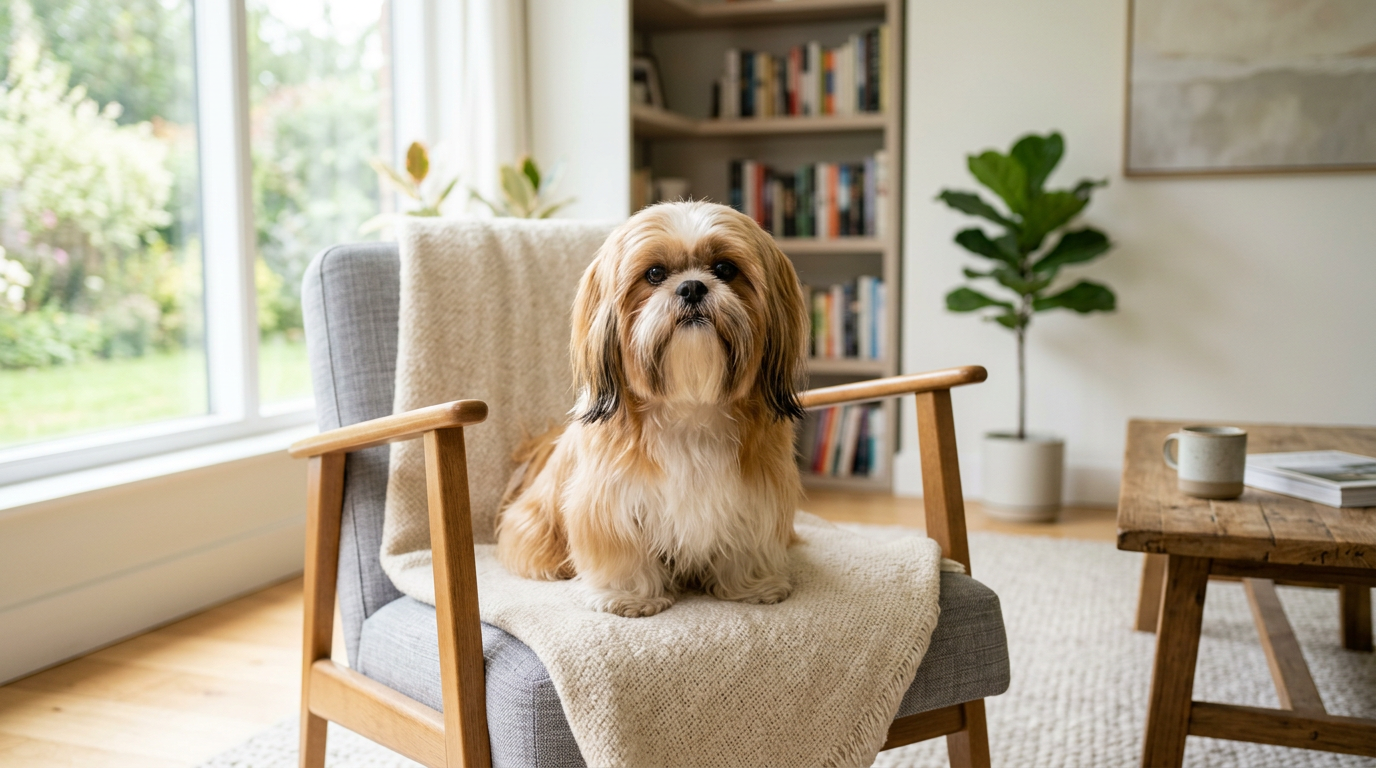
Shih Tzu breed guide: A Shih Tzu is a companion dog built for close household life, not a dog that needs marathon exercise. Its real commitment is grooming, eye care, dental care and respectful handling. A short haircut reduces the work, but no Shih Tzu is genuinely coat-free maintenance.
This guide covers the daily care, family fit, training, health preparation and products that matter before you bring home a Shih Tzu.
Shih Tzu ratings
| Trait | Rating | Meaning |
|---|---|---|
| Family-friendly | 9/10 | Depends on supervision and the individual dog. |
| Exercise requirement | 4/10 | Plan activity and enrichment most days. |
| Grooming | 10/10 | Includes coat, nails, teeth and ears. |
| Trainability | 7/10 | Assumes consistent reward-based training. |
Breed overview
| Size and weight | small companion dog, generally 9–16 lb (4–7 kg) |
|---|---|
| Lifespan | 10–18 years |
| Temperament | Individual temperament varies with genetics, early experience and training. |
Temperament and daily life
Shih Tzus are often affectionate, social and happy to share quiet time with their family. Some are outgoing; others prefer familiar people and a gentle pace. They do best with patient training and a home that does not expect a small dog to tolerate being passed around or disturbed while sleeping.
Exercise requirements
Several short walks, indoor play and scent games are enough for many healthy adults. Avoid heat and humid conditions, and watch for noisy or difficult breathing. Flat-faced breeds need sensible exercise choices; do not force activity to meet a generic target.
Build activity gradually and allow proper recovery. Stop and seek veterinary advice for limping, collapse, unusual fatigue, pain or breathing difficulty.
Grooming
Daily brushing is necessary for a long coat. Use a comb down to the skin, especially around the face, ears, legs and harness line. Many owners choose a practical short clip with regular professional grooming. Keep hair away from the eyes, clean facial folds gently as advised by a vet or groomer, and make grooming cooperative from puppyhood.
Common health considerations
Discuss eye, airway, patellar, dental and other breed-relevant concerns with a veterinarian and breeder. Do not dismiss squinting, discharge, rubbing the face, breathing changes or reluctance to eat; small facial structures can make problems uncomfortable quickly.
Health testing can lower uncertainty but cannot guarantee a lifetime without illness. Ask for breed-appropriate records and keep preventive care current.
Training
Focus on housetraining, harness comfort, grooming handling, recall in safe areas and calm greetings. Small dogs still need boundaries. Carrying a dog every time it hesitates can reduce its confidence, while expecting it to cope with rough handling can create fear.
- Reward name response and check-ins.
- Build recall in easy places before distractions.
- Teach a calm settle cue.
- Practise handling and grooming in small steps.
- Use gates and leads while skills are still developing.
Good with children?
Usually good with calm, gentle children who understand that a small dog needs rest and safe handling.
Good with cats?
Often able to live with cats after calm introductions.
Apartment suitability
A strong apartment option when the owner can provide regular grooming, toilet access and short daily activity.
Choosing the right Shih Tzu
Choose a Shih Tzu if you want a close indoor companion and accept grooming as a fixed cost or learned skill. Do not choose one only for its small size or appearance.
Meet the individual dog where possible and ask specific questions about household behaviour, health records, handling and previous exposure to children and other animals. Choose for the life you actually lead, not the ideal weekend.
Similar breeds
- Lhasa Apso — similar look but often more independent and watchful.
- Maltese — tiny companion with high coat care needs.
- Havanese — friendly small companion with a long coat.
- Pekingese — flat-faced companion with different activity and care needs.
Recommended Shih Tzu products
These are practical product categories, not products personally tested by this site. Prioritise fit, durability and safety.
| Product | Best for | Rating |
|---|---|---|
| Pin brush and metal comb | Daily coat maintenance | 10/10 |
| Small Y-front harness | Comfortable short walks | 9/10 |
| Dog-safe dental kit | Regular dental routine | 9/10 |
| Non-slip grooming mat | Safe grooming practice | 8/10 |
| Cooling vest | Short warm-weather outings | 8/10 |
Making the first year work
The first year is when routines become habits. Set up a resting area, secure household hazards, measure food, schedule toilet breaks and practise handling before it is needed at a groomer or vet. Keep early outings short and successful. A dog does not benefit from being overwhelmed by people, dogs, traffic and noise in the name of socialisation.
Use small rewards for behaviour you want repeated: looking at you when its name is called, stepping onto a mat, walking beside you and relaxing while household life continues. Five focused minutes, repeated often, gives better results than a long session after the dog is already tired or distracted. Prevent rehearsal of jumping, chasing, counter-surfing and barking with gates, leads and sensible storage while training develops.
Feeding and body condition
Feed a complete diet suitable for life stage, measure meals and treat food as part of the daily total. Treats, chews and scraps count. Your vet can show you the target body condition for the individual dog; a scale alone does not show muscle or fat distribution. Changes in appetite, weight, water intake, stool or energy deserve attention rather than a quick change of food.
Socialisation and behaviour
Allow the dog to choose distance from unfamiliar people and dogs. Reward calm observation instead of forcing greetings. If a dog freezes, hides, cannot take food or becomes frantic, make the situation easier. Early professional help is appropriate for fear, guarding, separation distress, persistent barking or reactivity. Punishing warning signals can remove the warning without resolving the concern.
Travel, visitors and safety
Teach the dog to rest in a secure car restraint or crate before a long trip is necessary. Keep veterinary records and medication details accessible. For visitors, use a lead or gate until you know the dog can stay calm. Every adult should follow the same rules for doors, food, furniture and greetings. This is responsible management, not an excuse to avoid training.
Later life
As the dog ages, review exercise, food, bedding and home traction. Older dogs still need enrichment, but shorter comfortable walks and easier access may replace high-intensity activity. Seek veterinary advice for stiffness, sudden reluctance to move, behaviour change or disrupted sleep. A clear plan for routine and emergency care is part of choosing any dog for life.
Frequently asked questions
Is this breed good for a first-time owner?
It can be if the owner has time, realistic expectations and access to veterinary and training support. The day-to-day plan matters more than a label such as “easy” or “family dog.”
What is the biggest avoidable mistake?
Waiting for a problem before teaching basic life skills. Start with calm handling, household boundaries, reward-based training and safe management from day one.
When should I get professional help?
Contact a veterinarian for pain, sudden health changes or a significant behaviour change. Use a qualified reward-based trainer or behaviour professional early for fear, aggression, guarding or separation distress.
Daily management: turning good intentions into a routine
A dog does best when the household makes its needs predictable. Decide the morning and evening walking plan, where the dog rests, how meals are measured, who practises training and where the dog goes when visitors arrive. Put leads, treats and poo bags near the door. Store food securely. Make the easiest choice the right one, especially on busy days when people are tempted to skip a walk or give food without measuring it.
Plan activity around the individual dog rather than a rigid number. A useful outing has a purpose: a sniff walk, a calm lead practice, a training exercise, a play session with pauses or a quiet observation session from a distance. Rotate the work. Constant high-arousal games can create a dog that demands more stimulation without learning to settle. End games while the dog is still engaged and give it a clear transition to rest.
Sleep is part of healthy development. Puppies and adolescent dogs often become mouthy, wild or noisy when overtired. Give them a quiet, safe place away from children and household traffic. Do not interpret every burst of energy as a need for harder exercise. Often the better answer is a toilet break, a chew, a short calm training task and a nap.
Grooming and handling as training
Handling should start before there is a medical need. Briefly touch a paw, lift an ear, look at teeth, brush one small area and reward. Stop while the dog remains comfortable. Gradually build the duration. This simple routine makes nail trims, grooming appointments and veterinary examinations safer and less stressful. It also helps you spot a tender area or skin change before it becomes serious.
Never use scissors near a matted coat or a struggling dog. Never force a frightened dog into an unfamiliar grooming tool. A professional groomer, veterinary nurse or qualified trainer can demonstrate an easier method. The aim is cooperative care, not getting a task done at any cost.
Visitors, public spaces and other dogs
Set the dog up to succeed when people come over. Put it behind a gate with a chew, use a lead, or give it a separate quiet room if it is not ready to greet. Ask visitors to ignore the dog until it chooses to approach. This is especially important for small dogs that can be overwhelmed and large dogs that can overwhelm others. A polite dog does not have to meet every person it sees.
On walks, cross the road or turn away before the dog is over threshold. Reward it for noticing another dog and returning attention to you. Avoid tight lead greetings between unfamiliar dogs. A short, calm walk away together is often safer than a face-to-face meeting. Socialisation should build confidence, not provide unlimited access to every dog nearby.
Home safety and emergency preparation
Secure chemicals, medication, rubbish, electrical cords and small items that can be swallowed. Check fencing regularly and use a properly fitted lead and harness outside the property. Keep identification tags and microchip details current. Carry water on warm days and know where the nearest emergency veterinary clinic is before a crisis happens.
Call a veterinarian promptly for signs such as collapse, severe breathing difficulty, repeated vomiting, a swollen or painful abdomen, sudden weakness, loss of coordination, severe pain, eye injury or a major behaviour change. Do not wait for an online answer when a dog may need urgent care.
Training for real life
Prioritise the cues that increase safety: name response, recall, leave it, drop, loose lead walking, wait at doors and settle on a mat. Train one small step at a time. For recall, start inside, then in a quiet outdoor area on a long line, then add mild distractions. Reward generously when the dog turns away from something interesting to return to you. Do not call the dog only when fun is ending.
Use management while training is incomplete. A lead prevents chasing; a gate stops rehearsal of jumping; a closed cupboard prevents counter-surfing. This is responsible dog ownership, not cheating. Every prevented rehearsal gives the new habit a better chance to take hold.
Cost and lifetime commitment
Include food, grooming, preventive medication, vaccinations, dental care, training, pet sitting, boarding, insurance or emergency savings in the decision. The initial price is only one part of owning a dog. Large breeds cost more to house, feed and transport; small dogs can still have high grooming and dental bills. A realistic budget keeps care decisions from becoming a crisis later.
Think ahead to travel, moving home, work changes and the dog’s senior years. Arrange a trusted carer and keep notes about food, exercise, medication and routines. The most reliable care plan is simple enough that another responsible adult can follow it.
When the breed may not be the right fit
Be honest about your home. If you cannot provide the exercise, coat care, quiet time, training or financial buffer described here, choosing a different breed—or waiting—may be the kinder decision. A good match is not about wanting a dog badly; it is about reliably meeting its needs when life is ordinary, busy or difficult.
Individual dogs vary. A breed guide helps you ask better questions, but it does not replace meeting the dog, reviewing its history and listening to veterinary or behaviour advice about that particular animal.
Practical questions for breeders and rescue organisations
Ask direct questions. What health screening has been completed? What has the dog been exposed to at home? How does it cope with strangers, grooming, being left alone, travel, children and other animals? What food is it eating, and has it ever had a veterinary or behaviour concern? Clear answers, written records and a willingness to discuss limitations are stronger signs than a polished advertisement.
For a puppy, ask how the litter was raised and what early handling, sounds, surfaces and short separations it has experienced. For an adult dog, ask what situations it finds difficult and what management has worked. No ethical source should promise that every puppy will have an identical temperament.
Building confidence without creating dependence
Spend time with your dog, but also teach it that quiet independence is safe. Offer a chew on a bed while you work nearby, then take a short step away and return before the dog becomes distressed. Vary the routine slightly so the dog learns that shoes, keys or a closed door are not a crisis. Increase duration slowly. Separation distress is not stubbornness; it needs a careful plan and, when significant, professional help.
Likewise, let the dog investigate new places at its own pace. Reward curiosity, provide distance when needed and avoid dragging or carrying a worried dog into the centre of activity. Confidence grows through successful choices.
Keeping records that help
Keep a simple record of weight, food changes, grooming dates, medication, vaccinations, training progress and unusual symptoms. A short phone note can make patterns obvious: perhaps itching begins after swimming, stiffness follows long walks, or barking increases after poor sleep. Useful details help a veterinarian or trainer make better recommendations than a vague memory weeks later.
Owner commitment
The goal is not perfection. It is prompt, thoughtful action when the dog needs something different. A home that adjusts routines, asks for help early and keeps the dog’s welfare ahead of convenience gives any breed the best chance to thrive.
One-week ownership check-in
At the end of each week, take five minutes to review what worked. Did the dog get enough quiet sleep? Were walks manageable? Is the dog eating, toileting and moving normally? Did any visitor, dog or household event create stress? Adjust the next week before a small problem turns into a repeated habit. This short review keeps training tied to real life instead of a plan that sits unused.
Reward progress that other people may not notice: a calmer door greeting, a faster response to name, a successful grooming session, a relaxed nap while the family eats or a walk past another dog without pulling. Those are the skills that matter most over years of ownership.
Keep the dog’s needs proportionate to its life stage and health. The right routine will change from puppyhood to adolescence, adulthood and senior years. Flexibility, consistency and early support are more useful than a rigid rulebook.
Keep improving the plan
Revisit this guide as the dog changes. The right response to a new challenge is to simplify the situation, protect the dog from repeating the problem and ask for appropriate veterinary or training support. Consistent care is built from small decisions made well.
Conclusion
A Shih Tzu can be a rewarding companion when its needs match the home. Plan training, health care, activity and management before bringing the dog home, then keep those basics consistent throughout its life.
Sources and further reading
American Kennel Club breed information; OFA Canine Health Information Center; AAHA nutrition and weight-management guidance.
Related breed guides
Compare the Shih Tzu with the Maltese breed guide and Havanese breed guide when assessing companion-breed grooming and temperament. For a realistic small-home setup, review our apartment-dog guide.
Does this breed fit your life?
Use the dog lifestyle quiz to compare this breed with your home and routine, browse the breed database, or compare breeds side by side before deciding.