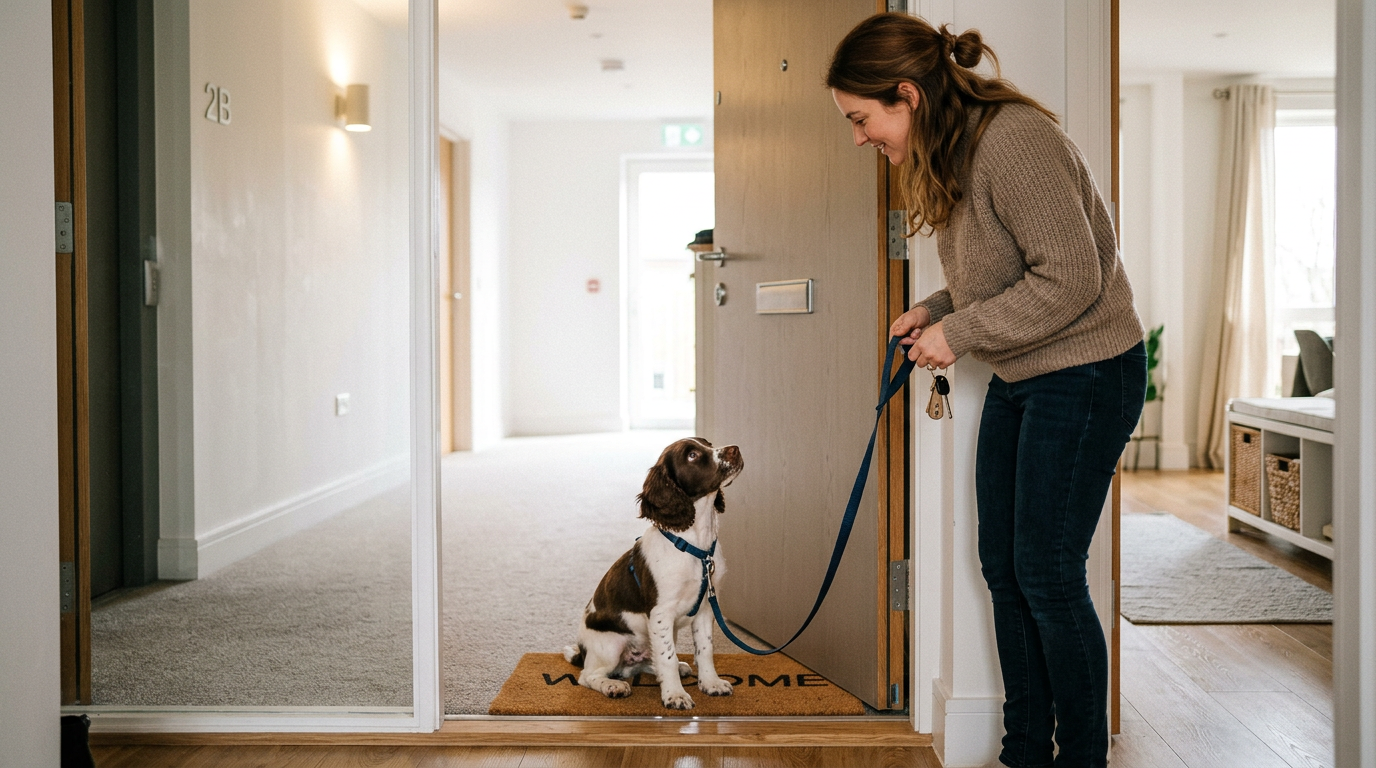
Apartment puppy toilet training is easier to organise when you plan the journey to the toilet area as carefully as the training itself. A puppy on the fifth floor has to wait for a lead, a corridor and possibly a lift. Build that delay into your routine instead of waiting until the puppy is already desperate.
This guide helps you set up a consistent system, record what works and make sensible adjustments. It is not a promise of a house-trained puppy in a fixed number of days. If you are still choosing a companion, start with our guide to dog breeds for apartment living to compare the wider commitment.
Choose an apartment puppy toilet-training location
Decide where you want your puppy to toilet in the long term. That might be a suitable outdoor area reached through the building, or a designated dog toilet where outdoor access is difficult. The AKC discusses indoor pads as one option for apartment owners; the important practical point is to make the location clear and consistent.
Read the AKC’s apartment toilet-training guidance for an overview of indoor options. Ask your vet which outdoor areas are appropriate before your puppy has completed their vaccination course. Shared dog toilet areas may need extra caution.
If you use a tray, choose a stable setup that gives the puppy enough room to stand and turn. Keep it separate from the sleeping and eating area. A balcony is not automatically safe: access must be supervised, barriers must be secure, and waste must not drain into another property. If you cannot provide that, use a different location.
Prepare the route before you need it
Keep the lead, waste bags, keys and rewards together near the exit. Clear shoes and other obstacles from the route. Everyone in the household should know where the puppy is going and which door to use. A simple preparation routine removes avoidable delays.
Check what happens when the lift is busy or unavailable. Can you reach the approved location without rushing or using an unsafe route? If you need a backup indoor toilet, introduce it deliberately rather than moving pads around after every accident.
Use events to prompt toilet opportunities
Build opportunities around waking, meals, drinks, play and the last part of the evening. Also watch the individual puppy between those events. Sniffing, circling or suddenly moving away from an activity can be useful signals, but some puppies give very little warning.
Do not treat an age-based holding-time formula as a guarantee. Keep a short log instead: when the puppy woke, ate, went out, toileted or had an accident. After a few days, your own notes will be more useful for scheduling than a rigid timetable copied from another dog.
Example apartment puppy toilet-training routine
- On waking: go to the chosen toilet location before starting a game.
- After breakfast: supervise closely and offer another opportunity.
- After naps and active play: repeat the same route and location.
- During quiet time: watch the puppy rather than assuming sleepiness means an empty bladder.
- Before bed: offer a final opportunity and organise any overnight care the puppy needs.
These are planning prompts, not limits on access. Offer extra opportunities when needed. If an accident repeatedly happens while you collect your keys, prepare earlier; if it happens after play, shorten the gap before the next trip.
Reward the right moment
Go with your puppy so you can reward toileting in the intended place immediately after they finish. Keep the reward ready and the interaction calm. The American Veterinary Society of Animal Behavior explains why prompt rewards help dogs learn.
Avoid ending every successful trip with an abrupt rush indoors if you can safely allow a little calm exploration afterwards. You want the toilet location to remain an ordinary, comfortable part of the routine. Use the same simple cue consistently, without repeatedly talking over the puppy.
Handle accidents without changing the whole plan
Clean the area thoroughly with a suitable pet-accident cleaner and follow its instructions. Do not punish the puppy or restrict drinking water to reduce accidents. Review what happened just before the accident: a long lift wait, a missed nap wake-up, or too much unsupervised space may explain it.
Change one part of the routine at a time. For example, prepare the exit kit before a meal, or supervise more closely after waking. A household log prevents two people from assuming the other person already took the puppy out.
When to ask for help
Pain, straining, blood, repeated unsuccessful attempts to urinate or a sudden change in toilet habits need veterinary attention. A puppy that cannot pass urine needs urgent care. Training cannot rule out a medical problem.
For breed-specific planning, see our Chihuahua care guide and French Bulldog care guide. Small size does not remove the need for patient training, regular toilet access and a workable care plan while you are away.
Still choosing the right dog?
Put this advice in context with the dog lifestyle quiz, browse practical profiles in the breed database, or compare breeds side by side.