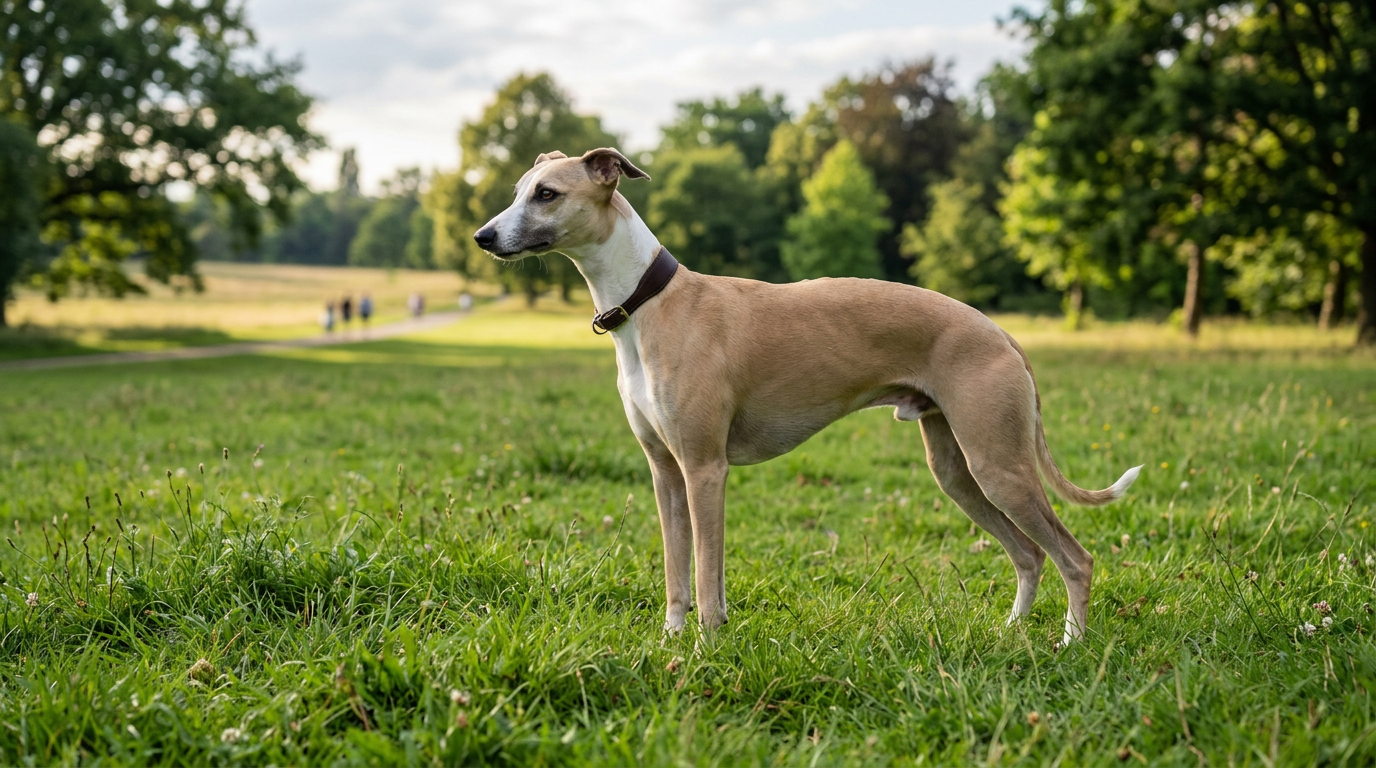
A Whippet combines explosive speed outdoors with a striking ability to relax at home. That contrast makes the breed appealing, but it also creates common misunderstandings. A Whippet does not need to run for hours every day, yet it does need safe opportunities to move, dependable containment and an owner who takes prey drive seriously.
This Whippet breed guide explains the practical details that matter before you choose a puppy or adult: size, temperament, exercise, grooming, feeding, health screening, training, family life and useful equipment. Individual dogs vary, so use breed tendencies as a planning tool rather than a guarantee.
Whippet ratings
| Trait | Rating | What the rating means |
|---|---|---|
| Family-friendly | 8/10 | Usually affectionate and gentle, provided children handle the dog calmly and adults supervise. |
| Exercise requirement | 7/10 | Needs daily walks and regular safe running, but usually settles well after appropriate activity. |
| Grooming | 3/10 | The short coat is easy to maintain, although nails, teeth, skin and cold-weather protection need attention. |
| Trainability | 7/10 | Learns quickly with rewards and short sessions; recall around moving animals remains a serious challenge. |
Breed overview
The Whippet is a medium-sized sighthound developed to spot and chase moving quarry. Its build is lean, deep-chested and aerodynamic rather than fragile. Powerful hindquarters allow rapid acceleration, while a flexible spine produces the double-suspension gallop associated with fast sighthounds.
At home, many Whippets seek soft furniture, warm blankets and close contact with their people. They are often quiet, clean and less demonstrative with strangers than exuberant sporting breeds. Their calm indoor manner can suit a range of homes, including apartments, but only when exercise, toilet access and safe management are reliable.
The defining ownership issue is not raw energy. It is the combination of speed, visual sensitivity and prey drive. A Whippet may appear perfectly responsive until a rabbit, cat or bird moves across its path. Once the chase begins, traffic awareness and learned recall can disappear. Secure fencing and sensible lead use are essential safety measures, not optional restrictions.
Size and weight
Adult males generally stand 19 to 22 inches at the shoulder, while females are usually 18 to 21 inches. Many adults weigh about 25 to 40 pounds, although healthy weight depends on height, frame, muscle and sex. A fit Whippet should look lean. Visible contours are normal in this breed, but the dog should not appear weak or depleted.
Use hands as well as eyes when assessing condition. You should be able to feel the ribs with light pressure and see a defined waist from above. Sudden weight loss, reduced muscle over the back or hindquarters, or a persistent change in appetite warrants veterinary attention. Conversely, excess weight places avoidable strain on joints and reduces heat tolerance and athletic function.
Puppies grow quickly and can be awkward for several months. Protect developing joints by favouring free play on safe surfaces, short training sessions and age-appropriate walks. Avoid forced distance running, repetitive high jumps and hard stops until growth is substantially complete and your veterinarian considers the activity appropriate.
Lifespan
A typical Whippet lifespan is about 12 to 15 years. Genetics, preventive care, dental health, body condition, accident prevention and prompt treatment all influence longevity. Because the breed can remain athletic into later life, subtle changes are easy to miss. Track mobility, appetite, sleep, breathing, stamina and behaviour rather than assuming slowing down is simply old age.
Plan for senior care before it is needed. Non-slip flooring, warm padded beds, shorter but more frequent walks and periodic veterinary assessments can preserve comfort. Older Whippets lose muscle and body heat more readily, so review food portions and cold-weather protection as their needs change.
Temperament
Most Whippets are affectionate, sensitive and physically close with familiar people. Many dislike harsh voices or chaotic handling and respond better to calm, predictable routines. Sensitivity does not mean the dog should be shielded from normal life. Gradual, positive exposure to surfaces, traffic, visitors, household sounds, veterinary handling and short periods alone builds resilience.
Whippets are often reserved but polite with strangers. A well-socialised dog should not be forced to greet. Give it space, let it approach at its own pace and reward relaxed observation. Persistent fear, freezing, lunging or inability to recover after a surprise deserves help from a qualified reward-based trainer or veterinary behaviour professional.
At home, a mature Whippet may sleep for long stretches between activities. Puppies are more energetic, mouthy and accident-prone. They need frequent toilet trips, structured rest and careful supervision. Bored adolescents may steal food, shred soft items or practise high-speed laps through unsafe spaces. Management prevents rehearsal while appropriate exercise and enrichment provide a better outlet.
Separation should be taught in small increments. Begin with the dog relaxed behind a gate or in another room for seconds, then increase duration gradually. Provide a safe resting place and avoid making every departure emotionally intense. Howling, drooling, escape attempts or refusal to eat when alone can indicate separation-related distress and should not be treated as disobedience.
Exercise requirements
An adult Whippet generally benefits from at least one substantial walk each day, additional toilet walks and several opportunities each week to run or play safely. Exact needs depend on age, health and temperament. A brisk lead walk develops fitness, but it does not fully replace the chance to stretch into a gallop in a secure area.
Secure means enclosed by fencing high enough and sound enough for a fast, athletic dog. Check gates, gaps and damaged panels before unclipping the lead. Public spaces with roads nearby are poor choices even if they seem empty. A long line can add freedom for sniffing and recall practice, but it should attach to a well-fitted harness and should not be used for full-speed sprinting because a sudden stop can injure dog and handler.
Warm up before vigorous activity with five to ten minutes of walking and easy movement. Start with short bouts rather than repeated all-out sprints. Stop if gait changes, the dog repeatedly lags, appears disoriented or cannot recover its breathing. Cool down with gentle walking and offer water. Weekend athletes are more likely to strain muscles, so build fitness progressively.
Whippets can enjoy lure coursing, straight racing, agility, scent games and structured hiking. Introduce any sport through a reputable club or instructor. Conditioning, safe surfaces and recovery matter more than speed. A dog with a history of collapse, heart disease, lameness or significant injury needs veterinary clearance before intense work.
Weather changes the plan. In heat, exercise early or late, choose shade and stop before exhaustion. In cold or wet conditions, many Whippets need a coat that covers the chest and back without restricting shoulders. Ice, rough scrub and debris can cut thin skin, so inspect legs, feet and pads after outdoor activity.
Mental work helps on days when running is unsuitable. Use food searches, cardboard-box games, short obedience sessions, trick training and scent trails. Ten focused minutes can be more satisfying than aimless repetition. Rotate activities instead of buying a large collection of toys that are always available.
Grooming
Whippet grooming is simple but not nonexistent. Brush the short coat once a week with a soft rubber grooming mitt or gentle bristle brush. This removes loose hair, spreads skin oils and creates a regular opportunity to find cuts, swelling, parasites or tender areas. Bathe when dirty with a mild dog shampoo, then dry the dog thoroughly and keep it warm.
The breed’s skin is relatively thin and has little protection from rough play, wire, sharp vegetation or hard edges. Examine the body after running. Small surface scrapes can be cleaned according to veterinary guidance, but deep cuts, gaping wounds, punctures, persistent bleeding or swelling require prompt care. Do not give human pain medicine unless a veterinarian specifically directs it.
Trim nails frequently enough that they do not click heavily on hard floors or alter the foot’s position. Long nails reduce traction and can make high-speed turning less secure. Introduce the grinder or clippers one nail at a time, pairing handling with food. Check dewclaws separately because they may not wear down naturally.
Brush teeth daily with dog-safe toothpaste if possible. Dental chews may supplement brushing but do not replace it. Lift the lips and look for red gums, heavy tartar, fractures, odour or reluctance to chew. Ask the veterinarian to assess dental health at routine visits.
Check ears weekly and after swimming. A healthy ear should not smell strongly or contain heavy discharge. Repeated head shaking, redness, pain or dark debris needs veterinary assessment. Avoid pushing cotton buds into the ear canal. Eye discharge, squinting, cloudiness or sudden redness also deserves prompt attention because eye problems can deteriorate quickly.
Feeding
Feed a complete and balanced diet appropriate for the dog’s life stage. Use the package guide only as a starting point, then adjust the measured daily amount according to body condition, weight trend and activity. Divide an adult’s food into two meals if that suits the dog. Puppies usually need more frequent meals under guidance from the breeder and veterinarian.
Do not try to make a Whippet look like a heavier breed. Extra body fat does not provide healthy protection and can impair performance. Equally, do not withhold adequate food to exaggerate a lean outline. Monitor weight every few weeks during growth and after changes in exercise, neuter status, illness or medication.
Treats should be small and counted within the daily intake. Reserve part of the normal meal for training, or use low-calorie rewards when sessions are frequent. Secure bins and food because some Whippets counter-surf with surprising reach. Foods such as chocolate, grapes, raisins, onions, xylitol products and cooked bones can be dangerous.
Change diets gradually over about a week unless a veterinarian recommends another plan. Sudden diarrhoea, repeated vomiting, abdominal swelling, unproductive retching, collapse or severe restlessness requires urgent veterinary advice. Supplements are not automatically beneficial; discuss them first, particularly for a puppy eating a formulated growth diet.
Common health considerations
Responsible breeding reduces risk but cannot guarantee a problem-free dog. Ask to see verifiable health results for both parents rather than accepting phrases such as “vet checked.” The American Whippet Club highlights cardiac, eye and hearing evaluation in its health-testing guidance. Confirm the current recommended tests with the breed club and check results through the relevant public database.
Cardiac disease can occur, including structural problems and rhythm disturbances. A routine examination may identify a murmur, but some conditions require a cardiologist’s assessment or echocardiogram. Seek veterinary help for collapse, fainting, unusual exercise intolerance, persistent coughing or difficult breathing.
Eye screening helps breeders identify inherited or potentially inherited abnormalities. At home, watch for squinting, rubbing, discharge, changes in vision or a cloudy appearance. Eye pain is urgent. Hearing evaluation is also relevant because congenital deafness can occur; a BAER test measures the auditory pathway rather than relying on casual observation.
Whippets can sustain muscle, toe and skin injuries during fast running. Sudden lameness should end the activity immediately. Resting a dog without assessment may be reasonable for a very mild transient issue, but inability to bear weight, obvious deformity, severe pain or lameness that persists needs veterinary care.
Like other deep-chested dogs, a Whippet can experience gastric dilatation-volvulus, although risk varies. Learn the emergency signs: a swollen abdomen, repeated unsuccessful attempts to vomit, heavy drooling, restlessness, weakness or collapse. This is an emergency; contact a veterinary hospital immediately rather than waiting for symptoms to settle.
Sighthounds have physiological differences that can affect interpretation of laboratory results and anaesthetic planning. This does not mean necessary procedures should be avoided. Tell the veterinary team the dog’s breed, medical history and medications, and use a clinic comfortable with sighthound patients when possible. Never rely on internet dosing advice.
Maintain routine vaccination, parasite control and dental care based on local risk and veterinary advice. Record unusual episodes on video when safe because footage of gait, breathing or collapse can help the veterinarian. Insurance or a dedicated emergency fund is useful before symptoms appear.
Training
A useful Whippet breed guide must be realistic about recall. Train it carefully, but never assume training removes prey drive. Begin indoors with the dog’s name, a marker word and a generous reward. Progress to a quiet garden, then a fenced field using increasing distraction. Reward the dog for turning away from movement and checking in voluntarily.
Use a distinctive emergency recall cue only when you can reward exceptionally well. Practise it occasionally in easy situations so it retains value. If the dog ignores an ordinary cue, avoid repeating it ten times. Reduce distance or distraction, regain attention and make the next repetition achievable.
Loose-lead walking is easier with frequent reinforcement beside you before pulling starts. A comfortable Y-shaped harness can provide control without restricting shoulder movement. Avoid retractable leads near roads and crowded paths; they allow momentum to build and can tangle people or dogs.
Teach a mat settle by rewarding any interaction with the mat, then calm standing, sitting and lying down. Gradually add duration and household distractions. This skill is useful for visitors, cafes and family meals. Also teach “leave it,” “drop,” waiting at doors and calm entry to the car.
Cooperative care pays lifelong dividends. Touch a paw, reward and release. Briefly lift a lip, look in an ear or place a coat over the back, always stopping before the dog struggles. Build duration slowly. Restraint by force can make future handling harder and increase bite risk.
Keep sessions short and end while the dog is engaged. Whippets may disengage when drilling becomes repetitive or corrections create pressure. Food, toys, access to sniffing and the chance to run can all function as rewards. If behaviour changes suddenly, rule out pain or illness before treating it as a training failure.
Is a Whippet good with children?
Whippets can be excellent family companions when children are calm and respectful. Their gentle manner is a strength, but their thin skin and dislike of rough handling make supervision essential. Teach children not to climb on the dog, grab legs, disturb sleep or approach while it is eating.
Create a protected resting area behind a gate where children cannot follow. Adults should manage all interactions and watch for avoidance, lip licking, freezing, a tucked posture or attempts to leave. A dog that moves away is communicating appropriately; never corner it for affection.
Fast puppy play can knock over a toddler, and shrieking running games may trigger chasing. Keep high-energy play structured and separate when necessary. Family-friendly does not mean any dog should be left alone with a child.
Is a Whippet good with cats?
Some Whippets live peacefully with cats, especially when raised with them, but prey drive makes outcomes individual and management important. A dog that accepts a familiar indoor cat may still chase cats outdoors. Ask a rescue or breeder for honest behavioural history rather than relying on breed generalisations.
Introduce through barriers, keep the dog on lead initially and reward calm glances and disengagement. Give the cat high escape routes and dog-free rooms containing food, water and litter. Do not force face-to-face contact or allow a chase “to see what happens.” Small pets such as rabbits and guinea pigs need secure, completely separate housing.
Apartment suitability
A Whippet can suit apartment living surprisingly well. Adult dogs are often quiet and relaxed indoors, and they do not need a large house. Success depends on daily outdoor access, thoughtful exercise and management of lifts, corridors and shared entrances.
An apartment does not reduce prey drive. Clip the lead on before opening the door and avoid unsecured communal areas. Provide a warm bed away from draughts and teach a settle to reduce pacing. If the dog vocalises when alone, address the underlying separation problem rather than relying on anti-bark devices.
Consider stairs, toilet frequency and recovery from injury. A young healthy adult may cope easily, while a puppy, senior or injured dog could require carrying or lift access. Confirm pet rules, nearby safe walking routes and emergency veterinary transport before committing.
Similar breeds
The Greyhound offers a similar sighthound temperament in a larger body and is often calm indoors. The Italian Greyhound is much smaller, more delicate and frequently harder to housetrain. The Saluki is typically larger and may be more independent, while the Basenji is compact, athletic and distinctive but can be challenging in different ways.
Compare the actual adult size, prey drive, grooming, noise, exercise and health needs rather than choosing by appearance. Meeting several mature dogs is more informative than seeing only puppies. Breed-specific rescue groups can also explain how adult temperaments vary.
Recommended Whippet products
| Product | Best for | What to look for | Rating |
|---|---|---|---|
| Y-shaped harness | Everyday walking | Three-point or escape-resistant fit with free shoulder movement | 9/10 |
| Martingale collar | Backup security | Correct adjustment that cannot slip over the narrow head | 9/10 |
| Insulated dog coat | Cold and wet weather | Chest coverage, non-restrictive shoulders and secure fastenings | 9/10 |
| Deep padded bed | Joint and skin comfort | Washable cover, supportive fill and enough length to stretch | 9/10 |
| Soft grooming mitt | Weekly coat care | Flexible rubber tips that will not scratch thin skin | 8/10 |
| Long line | Sniffing and recall practice | High-visibility material used with a harness, not for sprinting | 8/10 |
| Food puzzle | Indoor enrichment | Washable, stable and matched to the dog’s skill level | 8/10 |
| Nail grinder | Frequent nail care | Quiet motor, gradual speed and careful conditioning | 8/10 |
Fit matters more than brand. Whippets have deep chests, narrow waists and relatively small heads, so generic sizing can slip or rub. Measure the neck, chest and back, check the maker’s chart and inspect fit while the dog walks and bends. Affiliate recommendations should be updated when products change and should never replace veterinary or professional fitting advice.
Questions to ask a breeder or rescue
- What cardiac, eye and hearing tests have been completed, and where can the results be verified?
- How do the parents or the adult dog respond to strangers, children, dogs and small animals?
- Has the dog shown separation distress, escape behaviour, resource guarding or noise sensitivity?
- What exercise, food, toilet and sleep routine is familiar?
- What support is available after adoption, and must the dog be returned if you can no longer keep it?
A responsible source asks you detailed questions too. Avoid sellers who will not show records, want to exchange a puppy immediately in a car park, or market unusual colour as more important than health and temperament. If adopting an adult, request all available veterinary and behaviour notes and plan a quiet settling period.
Conclusion
This Whippet breed guide points to the right match: an owner who wants a gentle indoor companion but will manage a genuine sighthound outdoors. Daily walks, secure running opportunities, warm bedding, careful recall training and strict safety around traffic and small animals are the core responsibilities.
Choose this breed only if those needs fit an ordinary week, not an ideal one. When exercise, containment and companionship are dependable, the Whippet’s balance of athleticism and calm affection can make it an exceptionally rewarding household dog.
Related breed guides
Compare the Whippet with the German Shorthaired Pointer breed guide for a more versatile sporting dog, and use our Vizsla breed guide to assess another athletic companion. For shared-home considerations, see our guide to dog breeds for apartment living.
Does this breed fit your life?
Use the dog lifestyle quiz to compare this breed with your home and routine, browse the breed database, or compare breeds side by side before deciding.