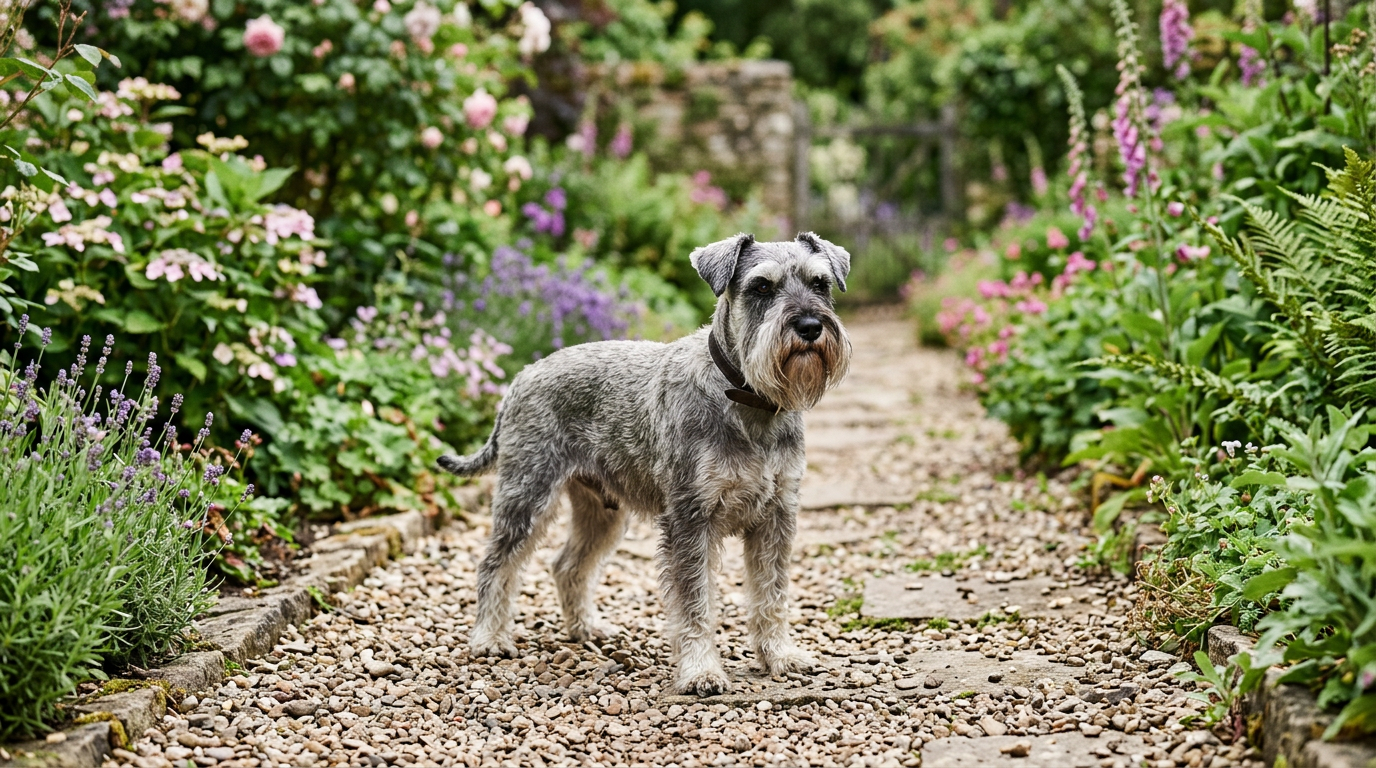
A Miniature Schnauzer combines a portable frame with an alert, busy mind. This Miniature Schnauzer breed guide explains the work behind the distinctive beard: scheduled coat care, early barking training, measured feeding and consistent outlets for a dog developed from practical farm stock. The breed can be an adaptable family companion, but it is not maintenance-free.
Look beyond the tidy outline. A Schnauzer may announce every delivery, chase a moving animal and find greasy food before you do. The right household enjoys training, accepts professional grooming costs and takes breed-related eye, metabolic and urinary concerns seriously.
Miniature Schnauzer ratings
These are editorial suitability ratings, not scientific scores or guarantees about an individual. Higher family and trainability scores indicate an easier fit. Higher exercise and grooming scores indicate more owner effort.
| Trait | Rating | Practical meaning |
|---|---|---|
| Family-friendly | 8/10 | Often engaged and affectionate; needs respectful handling and supervision around children. |
| Exercise requirement | 6/10 | Daily walks, play and mental work without extreme endurance demands. |
| Grooming requirement | 8/10 | Low shedding does not mean low maintenance; clipping, brushing and beard care are routine. |
| Trainability | 8/10 | Bright and responsive when household rules and rewards are consistent. |
Breed overview
| Breed | Miniature Schnauzer |
|---|---|
| Origin and purpose | German farm dog developed for vermin control and general utility |
| Group | Terrier in the AKC; utility in some other registries |
| Height reference | 12–14 inches (30–36 cm) |
| Weight reference | 11–20 lb (5–9 kg) |
| Lifespan reference | 12–15 years |
| Coat | Double coat with a wiry outer texture in a traditionally maintained coat |
| Daily priorities | Exercise, barking management, coat and beard care, measured food and rest |
| Best fit | Owners who want an involved small dog and can maintain grooming and training |
The AKC Miniature Schnauzer profile describes the breed as outgoing, long-lived and low-shedding. Low shedding can reduce loose hair around the home, but it does not make the dog allergy-proof or remove coat-care work.
Size and weight
Miniature Schnauzers are small but sturdy. Their 12–14-inch height makes transport and urban living practical, while an adult’s terrier energy still requires secure equipment. Measure chest girth and neck rather than buying by a generic “small” label.
Weight charts describe a breed range, not an ideal for every frame. Ask the veterinarian to assess body and muscle condition by touch. A thick coat can hide the waist, and a neatly clipped outline can make excess weight less obvious.
Track growth during puppyhood without pushing for rapid gain. In adulthood, weigh under similar conditions and record trends. An unexpected change in weight, appetite, thirst or urination deserves attention rather than an automatic food adjustment.
Lifespan and long-term planning
A 12–15-year planning range means grooming, dental care, veterinary costs and daily companionship may continue for well over a decade. Consider who provides care during work travel, illness and changes in housing. Price local grooming before choosing a puppy.
Teach future-care skills early: standing on a non-slip mat, accepting paw handling, opening the mouth briefly and settling in a carrier or vehicle restraint. Short positive practice when the dog is healthy makes later care easier.
For an older dog, preserve comfortable movement and enrichment while adjusting intensity. New house-soiling, night waking, hesitation on stairs or handling sensitivity is not simply “old age”. Record the change and arrange a veterinary assessment.
Temperament and everyday behaviour
Many Miniature Schnauzers are lively, observant and deeply interested in household activity. They can be charming conversationalists, but alertness easily becomes repeated barking if every sound predicts a rush to the door. Begin a calm door routine before the habit is established.
Confidence varies. Allow a dog to approach visitors at its own pace and maintain an escape route. Do not pass a reluctant dog from person to person because it is small. Watch for turning away, stiffening or repeated lip licking and reduce pressure.
Vermin-control ancestry may appear as digging, rapid pursuit or intense interest in rustling spaces. Provide safe searching and toy games, but physically separate the dog from pet rodents, rabbits and birds. Breed size does not make contact safe.
Barking management
Identify the trigger. Corridor sounds, window movement, attention-seeking and separation distress require different plans. Move the bed from the busiest window, block the doorway with a gate during deliveries and reward the dog for moving to a mat.
Practise with mild versions of predictable sounds. Let a quiet knock prompt a food search away from the door. If the dog cannot disengage or take a normal reward, increase distance or reduce intensity. Shouting adds noise without teaching the next action.
Suddenly increased vocalisation can accompany pain, hearing changes or anxiety. Veterinary assessment is appropriate when behaviour changes without a clear environmental reason. Prolonged barking and panic during absences need a separation-specific plan.
Exercise requirements
Most healthy adult Miniature Schnauzers suit a routine of daily walks, sniffing and short training or play. An illustrative starting point might be two moderate outings plus an indoor activity, adjusted for age, fitness, weather and health. The goal is engagement, not a fixed number of minutes.
Use varied routes and allow time to investigate. Controlled retrieving, scent searches and low-impact obstacle skills can add interest. Avoid endless high throws and abrupt turns on slippery flooring. More intensity is not automatically better.
Puppies and adolescents
Puppies need short self-paced exploration, social learning and substantial sleep. Avoid forced jogging and repeated jumping. Ask your veterinarian how vaccination status and growth affect safe activity.
Adolescence can bring louder opinions and renewed chasing. Continue using leads, gates and long lines instead of testing unfinished skills. Reward check-ins before a distraction becomes overwhelming.
Weather and recovery
Choose cooler times in hot conditions, carry water and avoid hot pavement. In cold or wet weather, keep the dog comfortable and dry the beard, belly and feet after returning. Clothing must fit without matting the coat or restricting movement.
Observe recovery. Limping, repeated stiffness, lagging, unusual panting or reluctance to rise needs reassessment. An easier day can include sniffing and calm training without leaving the dog mentally idle.
Grooming
The signature furnishings do not maintain themselves. Most pets are professionally clipped on a regular schedule, while show-style hand stripping preserves a different coat texture and requires specialised skill. Discuss the desired finish, interval and home maintenance with an experienced groomer.
Clipping versus hand stripping
Clipping is practical for many companion dogs and usually softens coat texture or colour over time. Hand stripping removes dead outer hairs and is labour-intensive. Choose according to the dog’s role, skin and tolerance rather than status. Welfare and maintainability come first.
Book the first groom before the coat becomes overgrown. Ask the groomer to explain which areas need brushing between visits. If the dog becomes distressed, shorten sessions and develop cooperative handling rather than waiting until severe matting makes restraint unavoidable.
Brushing and beard care
Comb through furnishings at the legs, armpits, chest and beard. Work from ends towards the skin while supporting the hair. A brush can skim over knots, so confirm with a comb. Tight mats near skin should be handled by a professional; do not cut them with household scissors.
Check the beard after meals and drinking. Rinse or wipe as appropriate, then dry it. Persistent odour, redness around the mouth or skin discomfort is not only a cosmetic problem and should be assessed.
Nails, ears and teeth
Maintain nails before length changes the dog’s stance or traction. Introduce equipment gradually and use professional help if needed. Check ears for redness, discharge, pain or smell without inserting cotton buds into the canal.
Brush teeth with dog toothpaste as advised by the veterinary team. Small breeds can develop significant dental disease, and home care does not remove existing disease. Bad breath, bleeding gums, dropped food or reluctance to chew warrants a dental check.
A workable grooming calendar
A useful Miniature Schnauzer breed guide should put the coat commitment on a calendar. Daily or near-daily attention may be needed for a longer beard and leg furnishings, while full-body brushing can follow the dog’s coat length and lifestyle. Professional clipping commonly occurs every several weeks; ask your groomer for the interval that keeps this dog comfortable.
Between professional appointments
After walks, remove obvious debris from legs and beard and check between the toes. Dry wet furnishings rather than leaving damp hair against skin. Comb friction points under the collar or harness before a knot tightens.
After meals, inspect the beard. Food residue can harden and pull hair or irritate skin. Use a damp cloth or rinse as suitable, then dry gently. If facial handling is difficult, divide the process into brief rewarded steps rather than holding the dog until it stops resisting.
Once or twice a week, conduct a calm full-body check. Part hair to see skin, feel for lumps or tender areas and inspect nails, ears, eyes and mouth. Write down a new finding instead of relying on memory. Grooming reveals changes; it does not identify their cause.
Preparing for the grooming salon
Practise car travel, entering the premises and standing on a textured mat. Ask whether the groomer prefers the dog to arrive with a particular coat condition and how long the appointment is likely to take. Explain known skin, ear, mobility or behaviour concerns before the session begins.
Agree on a practical style in plain terms. Photographs help, but the dog’s coat, matting and tolerance may limit the result. Authorise the groomer to prioritise comfort when removing tight mats. A shorter clip is better than prolonged painful detangling.
After each appointment, note any sensitive areas or handling exercises to practise. Check the skin for irritation and contact the groomer or veterinarian if problems develop. Rebook before leaving so coat length does not exceed what the home routine can maintain.
Feeding a Miniature Schnauzer
Choose a complete diet appropriate for life stage and any diagnosed condition. Measure the full daily amount and count training rewards, chews and table food. A small daily excess can produce a meaningful weight change over time.
Do not assume every Miniature Schnauzer needs a therapeutic low-fat food. The breed has recognised concerns involving hyperlipidaemia and pancreatitis, but dietary treatment should follow the individual dog’s history and veterinary findings. Equally, do not dismiss rich scraps as harmless because the dog is currently healthy.
Practical portion control
Use a kitchen scale where practical and keep the day’s allowance in one container. Every household member takes rewards from that supply. This prevents duplicated meals and makes it easier to discuss actual intake with the veterinarian.
Reserve part of the normal diet for training. Choose tiny rewards so several successful repetitions do not become an extra meal. If weight rises, review every source before sharply cutting the complete diet and potentially unbalancing intake.
Changing foods
Transition gradually unless the vet directs otherwise. Change one variable at a time and record appetite, stool and symptoms. Repeated vomiting, abdominal pain, severe lethargy or refusal to eat needs advice rather than a sequence of new foods.
The WSAVA nutrition toolkit provides questions about manufacturers, nutritional assessment and body condition. Marketing terms or an ingredient list alone cannot establish that a food suits a particular dog.
Common health considerations
These concerns support informed conversations; they do not predict that an individual will become ill. The American Miniature Schnauzer Club health page lists recommended eye and cardiac evaluations plus optional recommended DNA testing for myotonia congenita, Mycobacterium avium complex susceptibility and HIVEP3-associated PRA.
Hyperlipidaemia
Primary hyperlipidaemia involves elevated blood lipids and is recognised in the breed. A dog may not look ill, so ask your veterinarian whether fasting lipid testing is appropriate based on age, history and other findings. A standard chemistry panel may not answer every lipid question.
Do not begin supplements or drastically restrict dietary fat without a plan. Management depends on results and associated disease. Share the names and quantities of all treats and foods with the vet; “only a little” is difficult to assess.
Pancreatitis
Pancreatitis is inflammation of the pancreas and appears in the breed club’s health topics. Signs can include vomiting, abdominal pain, poor appetite, diarrhoea, weakness or a hunched posture, but other illnesses can look similar. Seek veterinary assessment rather than attempting diagnosis at home.
A known history may require a specifically controlled diet and strict avoidance of inappropriate extras. Follow the treating veterinarian’s advice. One dog’s prescription food should not be recommended automatically to every healthy Schnauzer.
Urinary stones
Urolithiasis means stones in the urinary tract. Watch for frequent attempts to urinate, straining, blood, discomfort or new accidents. A dog producing little or no urine may have an obstruction, which is an emergency.
Stone composition matters. Do not try to acidify urine or choose a urinary diet without diagnosis, because prevention and treatment vary. Support normal hydration with clean accessible water and provide regular toilet opportunities.
Eye disease
The breed club recommends annual eye examination for breeding dogs, with results registered through OFA in the United States. Ask to see current, identifiable results for both parents. A general veterinary check and a specialist breeding eye examination are not necessarily equivalent.
Recommended DNA tests address specific inherited conditions but do not replace examination. In a pet, squinting, cloudiness, redness, discharge or a sudden navigation change needs prompt assessment. Never use leftover eye medication.
Cardiac health
A cardiac evaluation is another recommended breeding test. Ask what type was performed, by whom and when. A seller’s statement that a veterinarian “listened to the heart” may not match the current parent-club protocol.
Collapse, reduced exercise tolerance, persistent coughing or unusual breathing warrants veterinary attention. Those signs have several possible causes. Severe breathing difficulty or collapse requires emergency help.
Myotonia congenita
Myotonia congenita affects muscle relaxation and has an available DNA test. The AKC Canine Health Foundation overview explains its autosomal-recessive inheritance and the value of avoiding carrier-to-carrier matings. A carrier is not the same as an affected dog.
Request reports and ask how results informed the pairing. Breeding decisions should consider overall health and genetic diversity as well as a single test. A pet with stiffness or unusual movement needs clinical examination regardless of a parent’s DNA result.
Mycobacterium avium complex susceptibility
The optional recommended MAC DNA test addresses a rare but serious breed concern involving susceptibility to infection. Ask the breeder to explain the result and limitations rather than relying on a coloured dashboard summary. Suspected illness belongs with veterinary specialists, not online interpretation.
Dental, skin and ear care
Routine concerns still matter. Schedule dental assessment, use parasite prevention appropriate to your location and seek help for persistent itching or ear pain. Grooming can reveal a change but cannot diagnose its cause.
Choosing a responsible breeder
Use the breed club’s current testing list as your starting checklist. Request registered names, report numbers, dates and results for the parents. Verify public records through the OFA database where applicable.
Ask about eye and cardiac findings, the recommended DNA tests, hyperlipidaemia, pancreatitis, urinary stones and longevity in close relatives. A good answer acknowledges uncertainty. No breeder can guarantee that a puppy will never develop disease.
Observe adult dogs if possible. Look for comfortable movement, a stable response to visitors and an ability to settle after excitement. Puppies should have clean space, appropriate social experiences, rest and veterinary records.
Read the contract before paying. It should identify the dog and parties, document relevant health information and explain return arrangements. Avoid sellers who prioritise unusual colour or extreme smallness while dismissing screening and temperament.
Training
Miniature Schnauzers learn quickly and notice inconsistencies. Use reward-based methods, make the desired behaviour easy and prevent unwanted habits from paying. The RSPCA training guide recommends short sessions with low distraction.
Foundation skills
Teach name response, recall, loose-lead walking, waiting at doors, object exchange, mat settling and cooperative grooming. Practise in a quiet room before moving to the hallway, garden and street. Increase distance, duration and distraction separately.
Reward useful choices you did not cue: looking away from a window, remaining on four paws when a visitor arrives or walking to the grooming mat. Capturing these moments makes calm behaviour part of daily life.
Recall and chasing
Practise recall on a long line in a suitable area before trusting it around wildlife. Say the cue once, reward generously and sometimes release the dog to sniff again. If it cannot respond, increase distance from the trigger.
Do not chase a dog that has stolen an object. Secure dangerous items in advance and teach exchange with low-value toys. Chasing can turn theft into a rewarding game.
Loose-lead walking
Begin where the dog can think. Reward a slack lead and pause when it tightens. Include planned sniffing rather than expecting formal heelwork for the whole outing. Every walker should apply the same rule about pulling gaining access.
Cooperative grooming
Teach the dog to stand on a mat, tolerate a brief comb stroke and offer a paw. Build one small step at a time and allow breaks. Grooming restraint should not be the first time the dog experiences handling.
If fear is already established, ask the groomer, veterinarian and reward-based trainer to coordinate. Medication may sometimes be part of a veterinary plan; it is not a training failure.
Good with children?
Many Miniature Schnauzers can live well with considerate children, but adults remain responsible for safety. A small dog can be injured by rough lifting, and an energetic terrier can chase, bark or guard resources. Match the individual dog to the household rather than relying on a breed score.
Teach children to invite contact, stroke shoulders instead of hugging and leave the dog alone while eating or resting. Provide a child-free bed behind a gate. Supervision means actively watching and intervening, not being elsewhere in the home.
Use calm shared activities: children can scatter part of a meal for a search, cue a hand target or help prepare a puzzle under adult direction. Keep running and squealing games separate if they trigger pursuit. Children should call an adult when the dog has an object instead of reaching into its mouth.
Growling, freezing or avoiding contact signals discomfort. Increase separation and get qualified help rather than punishing the warning. Sudden irritability also deserves a veterinary check for pain.
Good with cats and other pets?
Cat compatibility varies. A Schnauzer raised calmly with a confident cat may coexist; another may fixate on movement. Start with separate zones, scent exchange and brief visual access through a secure barrier.
Keep the dog far enough away to respond and reward looking away. Give the cat high escape routes plus access to food, water and litter without passing the dog. Never force a face-to-face greeting.
Pet rodents, rabbits and birds need secure physical separation. Vermin-control ancestry makes direct contact an unnecessary risk, even when the dog appears playful. Doors and sturdy enclosures should provide two layers of management where possible.
For another dog, introduce on neutral or spacious ground and allow breaks. Manage food, toys and beds while learning each dog’s habits. A crowded dog park is not required for healthy social life.
Apartment suitability
Miniature Schnauzers can suit apartments because of their size and moderate exercise needs, but barking is the decisive issue. Shared corridors, lifts and windows create frequent alert triggers. Assess the building’s noise, toilet route and rules before bringing a dog home.
Place the bed away from the front door, obscure the most stimulating window view and rehearse a mat routine. For real deliveries, use a gate and prepared food search. A balcony is not a substitute for walks or supervised toileting, and gaps must be secured.
Plan alone time gradually. Use a camera to distinguish occasional alert barking from prolonged distress. Pacing, drooling, destructive escape attempts or continuous vocalising requires a separation-focused plan with professional support.
Grooming logistics also matter. Decide where a wet beard and muddy furnishings will be cleaned, and ensure the dog can reach a groomer regularly. Compact housing does not reduce coat growth.
Time alone and travel
Teach independence in small steps while you are home. Let the dog rest behind a gate with a safe activity, then move briefly out of sight. Extend time according to calm behaviour, not a deadline.
For car travel, use a secured carrier or restraint appropriate to the dog’s size. Practise entering it before a long trip. Pack familiar food, medication, grooming tools and a care sheet; abrupt rich treats while travelling are especially unhelpful for a breed with metabolic concerns.
Confirm boarding or pet-sitting plans in advance. A carer needs exact feeding instructions, warning signs, grooming expectations and veterinary contacts. Do not describe measured portions as “a scoop” unless the scoop and amount are supplied.
Similar breeds to compare
| Breed | Why compare? | Decision to investigate |
|---|---|---|
| Standard Schnauzer | Shares the recognisable outline and working heritage in a larger frame. | Compare exercise, strength, guarding and grooming requirements. |
| Scottish Terrier | Small, distinctive terrier with professional coat-care needs. | Investigate independence, dog sociability and activity preferences. |
| West Highland White Terrier | Compact terrier often considered by similar households. | Compare skin considerations, prey drive and coat maintenance. |
| Miniature Poodle | Intelligent, low-shedding small dog needing regular clipping. | Compare temperament, training style, exercise and coat texture. |
| Border Terrier | Small working terrier with a practical size. | Investigate recall, prey drive and hand-stripping needs. |
Meet adults where possible and ask owners about noise, grooming intervals, prey interest and ability to settle. No low-shedding breed is guaranteed not to trigger allergies; spend time with the individual dog if allergy compatibility is important.
Recommended Miniature Schnauzer products
These editorial ratings reflect typical usefulness, not laboratory testing or endorsement of every product in a category. No affiliate purchase links are included. Confirm the item, fit and ingredients with the relevant professional where health is involved.
| Product | Best for | Rating | Selection criteria |
|---|---|---|---|
| Complete veterinarian-appropriate food | Measured daily nutrition | 10/10 | Life stage, individual lipid or pancreatic history and manufacturer expertise |
| Adjustable harness | Everyday walks | 9/10 | Secure fit, shoulder freedom and no coat matting under straps |
| Fixed-length lead | Road and doorway control | 9/10 | Reliable clip, comfortable handle and suitable length |
| Pin brush and metal comb | Checking furnishings for tangles | 9/10 | Comfortable teeth and advice matched to the chosen coat style |
| Grooming mat | Cooperative home maintenance | 8/10 | Non-slip base, washable surface and enough room to stand |
| Dog toothbrush and toothpaste | Daily dental routine | 9/10 | Correct head size, dog-specific paste and veterinary instruction |
| Washable food puzzle | Measured meal enrichment | 8/10 | No loose parts and space to clean beard after use |
| Secure gate | Visitors, doors and pet separation | 9/10 | Gap size, mounting and inability to climb or squeeze through |
| Washable bed | Mat settling and rest | 8/10 | Non-slip base, low entry and removable cover |
Buy essential equipment first and book the groomer. A large home-clipping kit is poor value if you do not understand coat preparation, blade safety and finish. Ask a professional which comb and brush suit the current style.
Inspect leads, harness stitching, gates and puzzles regularly. Beard hair can catch in poorly designed fasteners. Remove a toy if the dog chews off pieces rather than assuming a “small dog” cannot damage it.
Questions to answer before choosing the breed
Can you live with alert behaviour?
A Miniature Schnauzer is likely to notice sounds and movement. If the household requires near silence, or neighbours have little tolerance for training setbacks, consider whether the fit is fair. Management reduces barking; it does not guarantee a silent dog.
Can you fund grooming for years?
Obtain a local price and recommended interval, then multiply it across a year. Add home tools and occasional extra appointments for skin, matting or schedule changes. Low shedding shifts effort toward coat maintenance rather than eliminating it.
Will food rules be consistent?
Everyone must understand that rich scraps are not a harmless expression of affection, particularly when a dog has a diagnosed lipid or pancreatic concern. Decide how rewards will be measured and how rubbish, bags and children’s snacks will be secured.
Do you want terrier-like engagement?
The breed often enjoys searching, chasing and participating. Owners looking only for a decorative small companion may find the barking and persistence frustrating. Owners who enjoy teaching skills usually have more constructive ways to channel that energy.
First-month plan
Before arrival, arrange a veterinary visit, confirm the current food and book a grooming consultation. Secure rubbish and rich foods, prepare gates and choose the toilet area. Agree on door and barking routines across the household.
During week one, focus on sleep, eating, toileting and calm exploration. Begin name response, mat work and one-stroke grooming exercises. Limit visitors so the dog does not rehearse a full alarm routine repeatedly.
In weeks two and three, expand walks, practise recall on a suitable line and introduce grooming tools gradually. Monitor appetite, stool, urination and skin. Keep treats measured rather than using rich leftovers for rapid bonding.
By week four, review the real dog. Can it settle after a noise? Does the coat remain combable? Is the toilet schedule realistic? Adjust one weak point and arrange professional support before the problem becomes routine.
Adopting an adult Miniature Schnauzer
An adult can provide clearer information about final size, coat, barking and handling tolerance. Ask a foster carer for examples from a normal day, including time alone, visitors, grooming, cats and resource use.
Request medical records, diet details and history of pancreatitis, urinary signs, lipid testing, eye findings and dental care. Missing information does not make adoption unsuitable, but it should inform the initial veterinary workup and insurance decisions.
Allow a gradual transition. Keep routines predictable and use barriers while learning behaviour. A quiet first few days do not guarantee that alert barking or chasing will never appear after the dog becomes comfortable.
Senior care
Maintain comfortable walks and scent work while adjusting pace to the dog. Use non-slip runners, a low-entry bed and easier access to toilet areas if mobility changes. Keep nails and paw furnishings maintained for traction.
Older dogs still need grooming, but skin may be thinner and standing for long periods harder. Discuss shorter appointments, rest breaks and supportive positioning. New lumps, weight change, thirst, urinary changes or confusion deserves assessment.
Review food with the veterinarian rather than choosing by an “senior” label alone. Muscle loss can occur alongside stable or increasing body weight. Track appetite, body condition and strength, especially after illness.
Emergency planning
Know the regular and after-hours clinics and keep transport available. Repeated vomiting, marked abdominal pain, inability to urinate, collapse, severe breathing difficulty, seizures or a painful eye requires prompt or emergency veterinary advice.
Keep the dog’s current weight, medicines, food and known conditions in a shareable record. Do not rely on breed information to decide that a serious symptom is definitely pancreatitis or stones; other emergencies can look similar.
Conclusion: is this breed right for you?
This Miniature Schnauzer breed guide describes a compact, responsive dog with substantial personality and a real maintenance schedule. The strongest homes enjoy training, address barking early, keep the coat practical and treat feeding as part of preventive care.
Verify breeder health records, budget for professional grooming and prepare secure routines before arrival. With measured food, useful daily activity and calm reward-based training, a Miniature Schnauzer can be an adaptable and engaging companion.
Related breed guides
Compare the Miniature Schnauzer with the Poodle breed guide and Havanese breed guide when weighing trainability, grooming and small-home life. See our apartment-friendly dog breed guide for a wider comparison.
Does this breed fit your life?
Use the dog lifestyle quiz to compare this breed with your home and routine, browse the breed database, or compare breeds side by side before deciding.