Editorial note: ratings are practical ownership assessments, not scientific measurements. Health and behaviour decisions should be made with a veterinarian and qualified professional where appropriate.
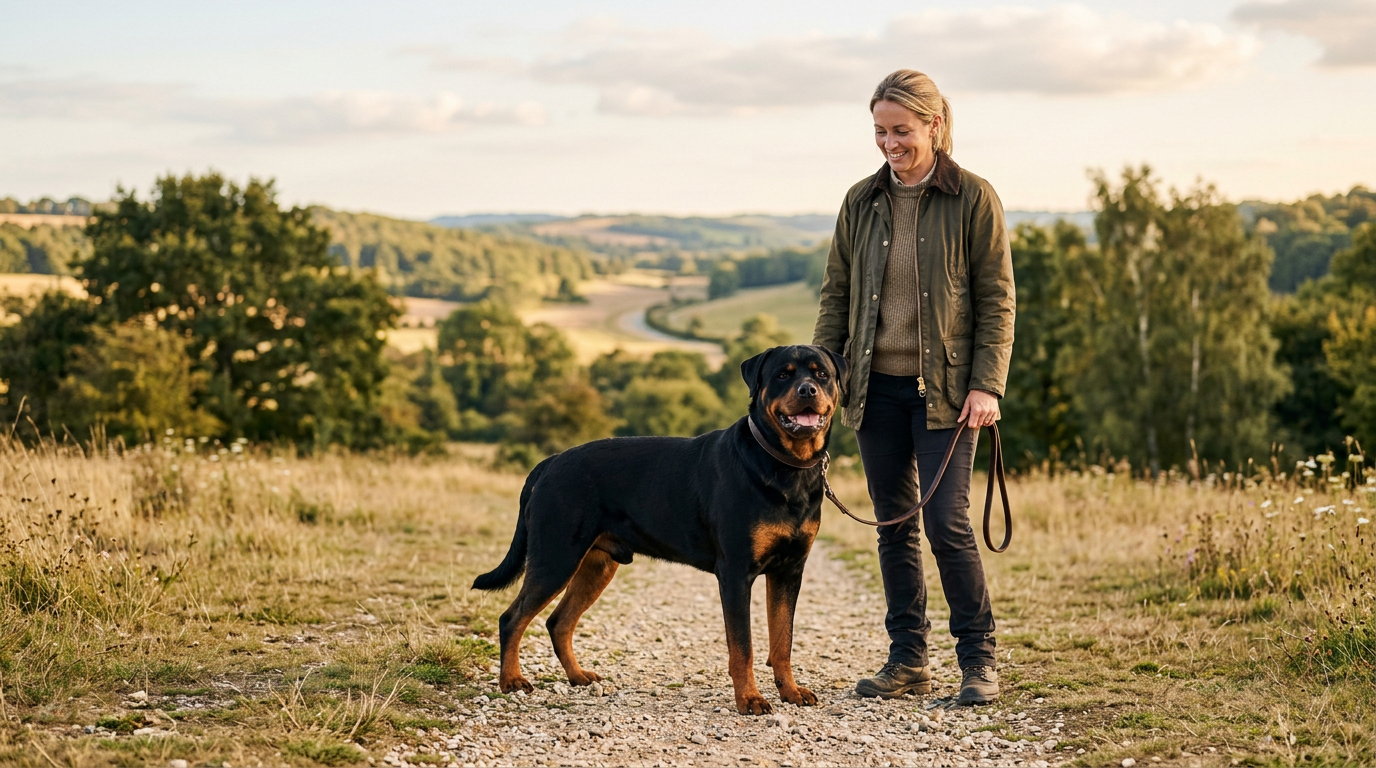
Rottweiler breed guide: A Rottweiler can be steady, affectionate and deeply loyal, but it is not a casual large-breed choice. This is a powerful guardian-type dog whose early socialisation, breeding and day-to-day handling shape whether its strength is manageable. A Rottweiler needs calm leadership, clear routines and responsible public management.
This Rottweiler breed guide sets out the practical questions that matter before you commit: daily exercise, coat care, training, family fit, health preparation and the equipment that makes responsible ownership easier.
Rottweiler ratings
| Trait | Rating | Owner takeaway |
|---|---|---|
| Family-friendly | 7/10 | Depends on supervision, socialisation and the individual dog. |
| Exercise requirement | 7/10 | Plan activity and enrichment into normal weekdays. |
| Grooming | 4/10 | Includes brushing, nails, teeth, ears and professional care where needed. |
| Trainability | 8/10 | Assumes consistent, reward-based training. |
Breed overview
| Size and weight | large, powerful working dog; adult weight commonly falls around 80–135 lb (36–61 kg), depending on sex and build |
|---|---|
| Lifespan | 9–10 years |
| Temperament | Individual temperament varies; early experience and handling matter as much as breed tendencies. |
| Best for | An owner whose daily routine matches the breed’s exercise, training and care requirements. |
Temperament and daily life
Well-bred Rottweilers are often devoted to their family and reserved with unfamiliar people rather than indiscriminately social. That distinction makes thoughtful exposure important. The aim is not to make every Rottweiler greet everyone; it is to teach the dog to stay neutral, responsive and safe around ordinary life.
Breed descriptions describe tendencies, not guarantees. Meet the individual dog, ask specific questions about its history and make room for a settling-in period. A calm routine, predictable sleep, supervised access to the home and rewards for the behaviour you want make the first months far easier.
Exercise requirements
Healthy adults need regular walks, structured training and low-impact conditioning. Avoid the idea that intense exercise alone creates a good dog. A Rottweiler benefits from learning to settle, walk calmly past distractions and wait for direction. Growing puppies should not be pushed into repetitive jumping, hard running or heavy pulling.
Increase activity gradually after illness, injury, adoption or a long inactive period. Watch recovery: a dog that is stiff the next day, reluctant to move, unusually tired or lame needs a reduction in activity and, if it persists, veterinary advice. Heat and hard surfaces change what is sensible, particularly for puppies and older dogs.
Grooming
The short double coat is straightforward but sheds, especially seasonally. Brush weekly, check nails and ears, and keep the dog accustomed to handling. A 50-kg dog that has never learned to cooperate with a vet examination is difficult for everyone, including the dog.
Grooming is also a health check. Look at the paws, skin, mouth and ears in good light. Reward calm cooperation, keep sessions brief and stop before the dog becomes frustrated. Pain, swelling, persistent itching, a bad smell or sudden sensitivity are reasons to contact a vet.
Feeding
Use a complete food appropriate for the dog’s age and size, measure portions and count treats, chews and scraps as part of the daily total. Adjust food according to body condition and activity rather than feeding by habit. Young dogs, seniors and dogs with a diagnosed condition need individual veterinary guidance. Keep fresh water available and change diets gradually unless a veterinarian advises otherwise.
Common health considerations
Discuss hips, elbows, cardiac screening, eye checks and other breed-appropriate tests with breeders and veterinarians. Large breeds also warrant careful attention to body condition, growth, mobility and sudden abdominal distress. Know your local emergency veterinary options before you need them.
Health testing is one part of responsible breeding, not a lifetime guarantee. Ask for records, understand what each test covers and keep up with routine preventive care after bringing a dog home. Book an appointment promptly for persistent changes in appetite, weight, thirst, breathing, stool, skin, sleep, movement or behaviour.
Training
Start immediately with calm handling, loose-lead walking, recall, a place cue and appropriate greetings. Use reward-based methods with clear boundaries; intimidation can worsen fear or conflict in a powerful dog. Work with a qualified trainer who has genuine experience with large guardian breeds, especially if the dog shows fear, reactivity or guarding.
- Reward the dog for responding to its name and looking back at you.
- Build recall first in easy places, then add distractions slowly.
- Teach a settle on a mat for meals, visitors and quiet time.
- Practise handling, grooming and car travel in small positive steps.
- Use management—gates, leads, secure storage and distance—while training is still developing.
Good with children?
Can live with children in a well-managed home, but size and power demand active supervision. Never make a Rottweiler responsible for supervising children, and do not allow wrestling, climbing or repeated disturbance while resting.
Good with cats?
Individual-dependent. Early introductions, barriers and a cat that has escape routes give the best chance, but you should never gamble on a large dog’s response around a cat.
Apartment suitability
Generally challenging. It can work only for an owner able to provide consistent exercise, training, calm indoor management and responsible control in shared spaces.
How to choose the right Rottweiler
Choose a Rottweiler only if every adult in the home is committed to training, secure management and a realistic plan for visitors, travel and public spaces. The breed is a poor fit for people who want a guard dog without investing time in socialisation and control.
Whether you choose a breeder or a rescue, ask about health records, household behaviour, handling tolerance, noise sensitivity and previous experience with children or other animals. Do not rush because a puppy is available. A good match begins with honest answers about your space, budget, workdays and the level of training you will actually maintain.
Home set-up and first-month plan
Before arrival, prepare a quiet sleeping area, secure bins and cables, a correctly fitted harness, food measured for the day and a plan for toilet breaks. Keep introductions small. In the first week, focus on rest, gentle handling, name response and a predictable routine rather than visitors or crowded outings. In the following weeks, add short training sessions, safe social exposure and controlled enrichment. Prevention is easier than unlearning rehearsed habits.
Similar breeds
- Doberman Pinscher — athletic guardian breed with a different exercise profile.
- Boxer — playful working breed, still strong and active.
- German Shepherd Dog — versatile and trainable, with a heavy-shedding coat.
- Cane Corso — another large guardian breed requiring experienced management.
Recommended Rottweiler products
These are practical product categories rather than products personally tested by this site. Select for fit, durability and the individual dog’s needs.
| Product | Best for | Rating |
|---|---|---|
| Large-breed complete food | Measured nutrition and body-condition control | 9/10 |
| Heavy-duty harness | Controlled walks while training | 8/10 |
| Raised-edge supportive bed | Comfortable rest for a large dog | 8/10 |
| Long line | Recall training in suitable open spaces | 8/10 |
| Durable food puzzle | Low-impact enrichment | 8/10 |
Frequently asked questions
Is this breed suitable for a first-time owner?
It can be when the owner has time to learn, access to good professional support and a routine that meets the dog’s needs. Choosing a breed because it is popular is not enough; daily management is what determines whether the match works.
What is the biggest avoidable mistake?
Waiting for a problem before training. Start with safe management, socialisation at the dog’s pace and daily practice of the behaviour you want to live with.
When should I get professional help?
Seek help early for pain, sudden behaviour change, fear, guarding, separation distress, persistent barking, aggression or difficulty coping with ordinary handling. Early support is safer and more effective than letting the issue grow.
Rottweiler ownership: breed-specific planning
Public management is part of responsible Rottweiler ownership. Use a well-fitted lead and equipment you can control, avoid forcing greetings, and give the dog enough distance to remain calm around strangers and other dogs. Practise neutral observation: see something, check back with the handler, receive a reward, move on. This is more useful than trying to turn the dog into a social butterfly.
Because the breed is strong, everyone who handles it needs the same plan. Decide the rules for doors, visitors, furniture, food and car travel before the dog arrives. A dog should never be expected to make its own decisions about guarding the home. If you cannot physically and calmly manage the dog, get help early.
Living with the breed: the details that decide whether it works
Every dog is an individual, but the most successful homes plan for the predictable pressures: busy mornings, visitors, wet weather, illness, holidays and the dog’s adolescent period. Write down who feeds, walks, trains and pays for preventive care. Then make the plan simple enough to carry out when no one has extra time. A routine that looks modest on paper but happens every day is better than an ambitious schedule that disappears after two weeks.
Dogs need more than physical exercise. Sniffing, chewing, food-searching, calm observation and short training sessions use time in a way that does not create a permanently over-aroused dog. Rotate activities rather than buying a pile of toys. Put toys away between sessions, supervise chews appropriate to the dog and remove damaged items. Enrichment should be safe enough that you do not need to worry about it while the dog uses it.
Socialisation without pressure
Socialisation is not a checklist of strangers touching a puppy. It is repeated experience of ordinary life at a level the dog can handle: sounds, surfaces, traffic, grooming, calm visitors, other dogs at a distance and short car trips. Pair those experiences with food, play or space. If the dog freezes, tries to leave, cannot eat or becomes frantic, increase distance and make the next exposure easier.
Continue this work after puppyhood. Adolescence often changes a dog’s confidence and attention. Do not interpret a new fear, barking problem or reluctance as defiance. Reduce the difficulty, protect the dog from rehearsing the problem and get qualified help when it is not improving. The same rule applies to adult rescue dogs; settling in before asking for big social encounters is fairer and safer.
Money, time and preventive care
The purchase or adoption fee is rarely the major cost. Plan for quality food, parasite prevention, vaccination discussions, dental care, grooming where needed, insurance or an emergency fund, training support and pet care when you travel. Large dogs raise the cost of beds, crates, boarding and medication; coat-intensive dogs add regular grooming. A realistic budget protects the dog when something unexpected happens.
Book a veterinary examination soon after bringing home a puppy or rescue. Record the dog’s normal appetite, stool, energy and gait so changes are easier to recognise. Keep identification current, practise handling before an appointment is urgent, and ask your vet what a healthy body condition looks like for your individual dog. Prevention is practical care, not an optional extra.
Food, treats and body condition
Most food-related mistakes are small ones repeated each day. A handful of treats from several family members, leftovers from a child’s plate and a large chew can quietly change the dog’s daily intake. Decide what the dog earns in training, measure it out in the morning and make the whole household use that allowance. Weigh the dog or have body condition checked regularly instead of waiting until a collar no longer fits.
Food can also be useful training currency. Reserve part of the meal for recalls, grooming practice, calm visitor behaviour and walking near distractions. That approach avoids stacking extra calories on top of a full meal and makes the dog’s routine more interesting. If appetite changes suddenly, or the dog loses weight without a planned change, contact a veterinarian.
Adolescence, adulthood and old age
Dogs do not mature on the same timeline as their bodies. A dog can look powerful or fully grown while still needing close supervision around greetings, leads and exciting environments. Keep training easy enough for success, prevent unwanted habits from becoming normal and expect progress to be uneven. Revisit basic cues when the dog enters adolescence rather than assuming early puppy classes were the finish line.
As the dog ages, trade intensity for comfort. Consider traction on slippery floors, easy access to a bed, shorter but more frequent walks and a prompt veterinary review for stiffness or changes in sleep. Older dogs still benefit from training and enrichment; they simply need activities suited to their body on that day.
Responsible ownership around other people
Do not make other people responsible for managing your dog. Ask before greetings, keep the dog close around food and children, and use a lead or gate when tradespeople or visitors arrive. A dog that is friendly at home may find a crowded path, a veterinary waiting room or a noisy café difficult. Leaving early is good handling, not failure.
If the dog growls, stiffens, avoids touch, guards items or reacts to people or dogs, take it seriously. Do not punish the warning; it is useful information. Create distance, prevent another incident and speak with a veterinarian and a properly qualified reward-based professional. Safety comes first, and early action usually offers the best outcome.
Questions to ask before bringing one home
- Can I meet the dog or its parents and review concrete health information?
- Who will provide care on long workdays, holidays and emergencies?
- Are my housing rules, fencing, transport and nearby exercise areas suitable?
- Can every adult in the home use the same training and management plan?
- Can I afford routine care and an unexpected veterinary bill?
Answering those questions honestly is not pessimistic. It is how a person chooses a dog for its lifetime rather than only for the first exciting weeks.
Creating a calm routine at home
Calm behaviour is trained by repetition. Reward the dog for choosing its bed, resting while people move around, waiting at an open door and checking in during a walk. Those small moments are easy to ignore, but they form the habits that make a dog pleasant to live with. Build pauses into games: ask for a brief wait before a toy is thrown, finish before excitement becomes frantic, and give the dog a predictable cue that the activity is over.
Management is not a failure of training. Gates protect a dog from a busy doorway, a lead prevents rehearsal of chasing, and a covered crate or quiet room can give an overtired dog a break. Use the tools kindly and pair them with rest, food and predictable routines. Then practise the skill separately, in a setting where the dog can succeed.
Travel, boarding and emergencies
Prepare for travel before you need it. Teach the dog to rest in its car restraint, leave it with a trusted carer for short periods and keep copies of veterinary records and medication details accessible. Confirm that sitters understand feeding amounts, exercise limits, leads and any behaviour plan. For emergency planning, save the number and route for an after-hours veterinary clinic and know who can help transport the dog if you cannot.
A clear plan is particularly valuable when a dog is ill, recovering from surgery or suddenly less mobile. Good owners do not try to diagnose from a webpage; they notice a change, reduce risk and seek appropriate help.
Final owner checklist
- Daily physical activity and mental enrichment are scheduled, not optional.
- Everyone uses the same cues and household rules.
- Food, treats and weight are monitored.
- Grooming and handling are routine, not a crisis before an appointment.
- The dog has a quiet place to rest away from children and visitors.
- Veterinary and behaviour support are sought early when something changes.
Conclusion
A Rottweiler can be a rewarding companion when its real needs match your home. Choose the individual dog carefully, build routines before problems appear and keep health, training and safety decisions practical. That is the foundation for a stable relationship over the dog’s lifetime.
Sources and further reading
American Kennel Club breed information; OFA Canine Health Information Center; AAHA nutrition and weight-management guidance.
Does this breed fit your life?
Use the dog lifestyle quiz to compare this breed with your home and routine, browse the breed database, or compare breeds side by side before deciding.