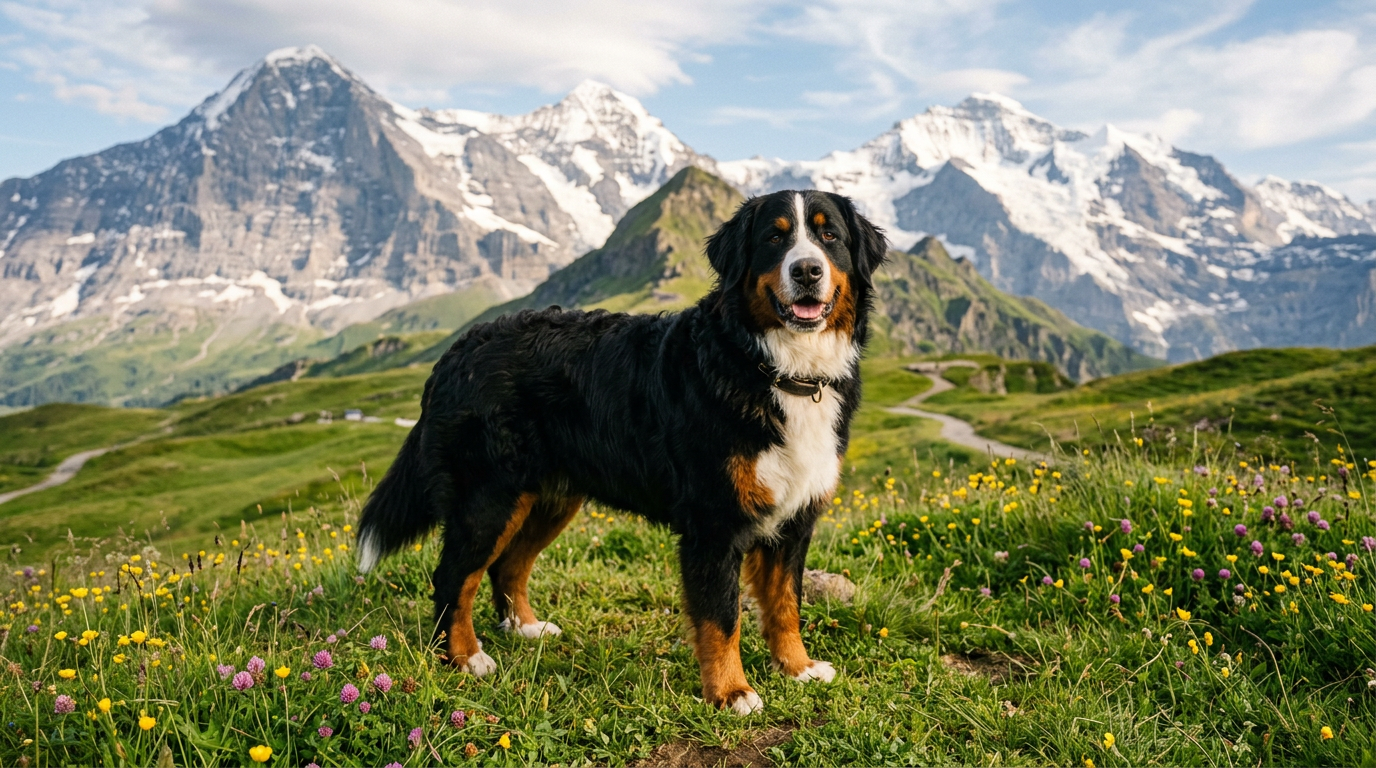
Bernese Mountain Dog breed guide research needs to address more than the breed’s gentle expression and tricolour coat. A well-bred Berner can be affectionate, trainable and deeply attached to family, but it is also a large working dog with heavy shedding, limited heat tolerance and significant health risks. Food, equipment, medication and emergency care cost more than they do for a medium dog, while the breed’s typical lifespan is painfully short.
This guide explains daily ownership in practical terms. It covers size, temperament, exercise, grooming, feeding, health testing, training, children, cats, apartment living, similar breeds and useful products. It also explains puppy growth, cancer awareness and how to evaluate a breeder. Individual dogs vary, so combine breed tendencies with the actual dog’s health, confidence and history.
Bernese Mountain Dog ratings
| Category | Rating | Practical meaning |
|---|---|---|
| Family-friendly | 9/10 | Usually affectionate and patient, but size requires manners and active child supervision. |
| Exercise requirement | 7/10 | Needs purposeful daily activity without being an extreme endurance breed. |
| Grooming requirement | 8/10 | Dense double coat sheds heavily and needs regular brushing, drying and debris checks. |
| Trainability | 8/10 | Often eager to cooperate; sensitive dogs learn best with rewards and clear routines. |
Ratings are planning tools, not promises. A calm adult may be easier than an adolescent puppy, and pain can change behaviour. Meet a prospective dog more than once and arrange an independent veterinary examination before committing.
Breed overview
| Breed group | Working |
|---|---|
| Height | Males 25–27.5 inches; females 23–26 inches |
| Weight | Males 80–115 pounds; females 70–95 pounds |
| Lifespan | Approximately 7–10 years |
| Coat | Long, dense double coat with heavy seasonal shedding |
| Typical character | Affectionate, steady, social and willing to work with people |
| Best suited to | Owners with space, cool conditions, training time and a large-dog health budget |
The breed developed in Switzerland as an adaptable farm dog, helping with work that included driving cattle, guarding property and pulling carts. That background helps explain its strength, attentiveness and desire to remain near its people. Modern companion dogs still benefit from jobs such as carrying a light pack after maturity, scent games, obedience or controlled drafting.
A stable Berner should be approachable and recover after a surprise. Some are initially reserved, but chronic panic or aggression should not be excused as normal guarding. Responsible breeding and thoughtful socialisation matter because a fearful 45-kilogram dog is difficult to manage safely.
Size and weight
AKC ranges place males at 80–115 pounds and females at 70–95 pounds. Frame and body condition matter more than reaching the top of the range. Ribs should be easy to feel under the coat, with a visible waist from above. Thick hair can hide weight gain, so use hands and a scale.
Household equipment must be sized for the adult. Measure crate interiors, bed length, gate height and car space. A product labelled “large” may be too small or lightly built. Provide nonslip routes through the house because slick floors can undermine developing joints and senior mobility.
Plan transport before an emergency. Teach a stable ramp gradually and secure the dog in the vehicle with a suitable restraint or crate. One adult may not be able to lift an injured Berner. Keep a blanket or stretcher aid and the emergency clinic’s number accessible.
Lifespan and long-term planning
Bernese Mountain Dogs commonly live about seven to ten years. Cancer and other serious disease contribute to this limited lifespan. Prospective owners should understand the emotional and financial reality rather than assuming every dog will reach the top of the range.
Track a healthy baseline: appetite, weight, resting breathing, gait, exercise tolerance and willingness to rise. Examine the body during weekly grooming for new lumps, swelling or pain. A new mass, unexplained weight loss, persistent lethargy, pale gums or reduced appetite deserves veterinary assessment.
Insurance should be arranged before symptoms create exclusions, or owners should maintain a substantial emergency fund. Specialist imaging, chemotherapy, orthopaedic surgery and emergency abdominal procedures can be expensive. Read policy limits and hereditary-condition wording carefully.
Bernese Mountain Dog temperament
Many Berners are gentle, affectionate and strongly attached to family. They often lean against people and prefer to stay within sight. That closeness is appealing, but owners should also teach calm independence so brief absences do not become distressing.
Puppies can be exuberant and physically clumsy. Teach four paws on the floor, waiting at doors, loose-lead walking and settling before the dog reaches adult weight. Do not rely on physical strength to control behaviour that could have been trained earlier.
Adolescent fear periods may make an otherwise social dog wary. Avoid forcing greetings. Let the dog observe at a comfortable distance, pair new experiences with food and leave before stress escalates. Seek qualified help if fear or reactivity grows.
Berners often coexist well with dogs, but compatibility is individual. Choose known play partners and interrupt body slamming or relentless chase. Large dogs can injure smaller companions accidentally. Feed separately and manage high-value chews.
Exercise requirements
A healthy adult needs daily walking, sniffing, training and opportunities to move freely in a secure area. Many enjoy moderate hikes in cool weather, but they are not ideal hot-climate distance runners. Split activity into two outings and judge the dog’s recovery rather than chasing a universal minute target.
Mental work prevents boredom without endless mileage. Hide food, practise tracking, teach object retrieval or use short obedience sequences. Drafting and cart work can suit mature, conditioned dogs when taught through an experienced club, with veterinary approval and properly fitted equipment.
Puppy exercise and growth
Bernese puppies grow quickly. Feed for controlled growth and avoid repetitive forced running, frequent high jumping and uncontrolled pounding on hard surfaces. Puppies still need free movement, varied terrain and play; the goal is sensible development, not confinement.
There is no evidence-based need to follow a rigid “five minutes per month of age” formula. Adjust for the individual puppy, surface, pace and recovery. Ask the veterinarian about lameness or a puppy that suddenly avoids movement.
Heat and cold
The dense dark coat retains heat. Exercise early or late, use shade, carry water and avoid parked vehicles. Heavy panting that does not settle, weakness, vomiting, confusion or collapse requires rapid cooling and emergency veterinary advice.
Cold tolerance is generally better, but wet fur can chill and hide skin problems. Dry the undercoat after snow or rain and remove ice balls from feet. Seniors and dogs with illness may need shorter outings regardless of weather.
Grooming
Brush thoroughly at least two or three times weekly, and more often during seasonal shedding. Use a pin brush or slicker suited to the coat, then check with a metal comb. Work to the skin in sections, particularly behind ears, under the collar, in armpits, trousers and tail.
An undercoat rake can help during shedding if used gently. Do not repeatedly scrape one spot or use tools that cut healthy coat. The double coat helps provide weather protection; routine shaving is generally unnecessary and does not solve heat risk. Clip only for medical reasons or severe matting with professional advice.
Bathe when dirty with dog shampoo, rinse completely and dry the undercoat. Damp coat close to skin can encourage irritation. A high-velocity dryer is useful for some dogs but must be introduced gradually and kept away from eyes and ears.
Check ears weekly for odour, redness or debris. Trim nails before they alter foot placement and brush teeth daily where possible. Train grooming cooperatively: touch, reward; lift a paw, reward; run the brush once, reward. A large dog that accepts handling is safer at home and in the clinic.
Coat and skin warning signs
Persistent itching, hot spots, odour, hair loss or recurrent ear infections needs diagnosis. Thick coat can hide wounds and ticks. Part the hair after outdoor activity and check armpits, groin, ears and between toes.
Feeding a Bernese Mountain Dog
Feed a complete diet appropriate for life stage. Puppies should receive food formulated for growth including growth of large-size dogs. Controlled growth is the goal; excess calories and unbalanced supplements can stress developing joints. Do not add calcium or vitamins unless a veterinarian or veterinary nutritionist has assessed the full diet.
Measure portions and adjust to body condition. The feeding guide is a starting point, not a target. Thick coat makes visual assessment difficult, so feel ribs and weigh regularly. Keep training treats small and deduct substantial extras from meals.
Divide the ration into multiple meals rather than one huge serving. Dogs that gulp may benefit from a slow feeder. Keep routines calm around meals and discuss GDV risk with the veterinarian. No feeding method eliminates risk.
Change food gradually unless directed otherwise. Persistent diarrhoea, vomiting, poor appetite, weight loss or abdominal swelling warrants veterinary attention. Homemade diets require formulation by a board-certified veterinary nutritionist.
GDV and emergency awareness
Large, deep-chested dogs can develop gastric dilatation-volvulus, a life-threatening emergency in which the stomach distends and twists. Signs include repeated unproductive retching, drooling, pacing, abdominal enlargement, weakness or collapse. The abdomen may not look swollen early.
Leave for an emergency clinic immediately if GDV is suspected. Do not wait, give home remedies or try to induce vomiting. Ask the veterinarian about prophylactic gastropexy, which reduces twisting risk but does not prevent all stomach dilation or remove the need for urgent care.
Common health considerations
Cancer
Bernese Mountain Dogs have substantial cancer risk, including histiocytic sarcoma. Symptoms vary with the organ involved and can include lethargy, appetite loss, weight loss, lameness, coughing or abdominal change. No home screening can rule it out. Report persistent or unexplained changes promptly.
The BMDCA includes a histiocytic sarcoma risk test as one optional component of its recommended screening protocol, but a genetic risk result is not a diagnosis or guarantee. Breeders should combine available tests with open family health and longevity records.
Hip and elbow dysplasia
Both can lead to pain and arthritis. Signs include lameness, stiffness, reluctance to rise or reduced endurance. Maintain lean weight, provide traction and build fitness gradually. Diagnosis may require properly positioned radiographs; supplements should not replace examination.
Degenerative myelopathy
DM is a progressive neurological disease that can cause hind-limb weakness and loss of coordination. DNA testing identifies genetic status but does not predict with certainty that a dog will become clinically affected. New weakness or toe dragging needs veterinary evaluation because other treatable diseases can look similar.
Eyes and eyelids
Entropion and ectropion can expose or irritate the eye. Squinting, discharge, redness, rubbing or cloudiness requires prompt care. The parent club recommends eye screening for breeding dogs.
Cardiac disease
Reduced stamina, coughing, fainting, rapid breathing at rest or abdominal swelling can signal heart disease. The BMDCA recommends cardiac screening. A normal result at one age cannot guarantee lifelong health.
Bleeding and thyroid concerns
Von Willebrand disease and thyroid evaluation are among optional screening routes in the parent club protocol. Unexpected bleeding, bruising or prolonged bleeding after injury needs urgent advice. Weight or coat change alone cannot diagnose thyroid disease; laboratory interpretation belongs with a veterinarian.
Health testing and choosing a breeder
The BMDCA minimum recommendations are hips, elbows, eyes, heart and degenerative myelopathy, plus one optional test from von Willebrand disease, thyroid or histiocytic sarcoma risk. Verify registered names and actual results through OFA and Berner-Garde. A CHIC number means required tests were completed and disclosed, not that every result was normal.
Ask about longevity, cancer diagnoses, causes of death, GDV, orthopaedic disease and temperament across parents, siblings and previous litters. Open sharing matters in this breed. Responsible breeders track entire families, not only the two dogs being mated.
Good breeders raise puppies in a clean, enriched environment, introduce handling and household sounds, match temperaments to homes, supply a contract and take back a dog they bred if needed. They do not promise that testing guarantees health.
Avoid sellers who lack verifiable results, always have litters, market size or markings above health, or dismiss questions about cancer. Registration and a basic veterinary check are not substitutes for screening.
For rescue dogs, request veterinary records, mobility history, behaviour observations, response to children and pets, separation behaviour and bite history. Arrange an independent examination and a quiet transition period.
Training a Bernese Mountain Dog
This Bernese Mountain Dog breed guide emphasises early practical manners. Teach name response, recall, hand target, loose-lead walking, wait, leave, drop, mat settle and cooperative handling. Practise in short sessions and add distraction gradually.
Use a fixed lead and comfortable harness. Reward slack lead before pulling starts and choose routes where success is possible. Equipment cannot replace training, and physical corrections can frighten a sensitive dog or create conflict.
For greetings, manage with a gate or lead and reward four paws down. Ask visitors to withhold attention during jumping. Teach a mat behaviour for deliveries and meals. Consistency prevents a friendly puppy from becoming a powerful nuisance.
Practise veterinary skills: standing on a scale, chin rest, paw presentation, ear checks and comfortable basket-muzzle training. A muzzle must allow panting, drinking and treats. Positive preparation reduces stress if pain or emergency treatment changes behaviour.
Recall should be built indoors, then on a long line attached to a harness. Reward heavily and do not use the cue only to end fun. Never test recall near traffic, livestock or wildlife.
For fear, guarding, reactivity or separation distress, consult a credentialed reward-based professional. Growling is warning information. Punishing it can suppress communication without changing the underlying emotion.
Are Bernese Mountain Dogs good with children?
Many Berners are affectionate and patient, supporting a 9/10 family rating. Their size can still knock down a child or block an exit. Adults must supervise every interaction and separate during high-energy play.
Give the dog a child-free bed. Children should not climb on the dog, pull coat, disturb sleep or take food and chews. Teach them to call an adult if the dog has something forbidden.
Watch for moving away, lip licking, yawning, freezing or showing the whites of the eyes. End the interaction before a growl. A dog should never be required to tolerate rough handling to prove it is good with children.
Are Bernese Mountain Dogs good with cats?
Many live peacefully with cats when introductions are controlled. Use gates and a lead, reward calm observation and give the cat high escape routes and dog-free resources. Do not allow chasing.
Compatibility depends on the individual. A rescue with a verified cat history offers more certainty than breed reputation. Progress only when both animals eat, rest and move normally.
Apartment suitability
A calm adult can live in a spacious apartment if daily exercise, cooling and toilet access are excellent. Size, shedding, deep barking, lift access and emergency mobility make apartments less convenient than houses.
Consider a lift failure or a dog recovering from surgery. Frequent puppy toilet trips from a high floor are difficult. Check weight limits, building rules and nearby shaded walking routes.
A yard is not a substitute for companionship or exercise. Conversely, a house without indoor family access is not suitable; Berners are social dogs that should not live isolated outdoors.
Similar breeds
| Breed | Why compare | Key difference |
|---|---|---|
| Greater Swiss Mountain Dog | Related Swiss working heritage | Shorter coat, larger build and different energy profile |
| Newfoundland | Gentle, family-oriented giant | Water-dog instincts, heavier drool and greater coat mass |
| Saint Bernard | Large, calm family companion | Heavier body, different coat options and substantial drool |
| Leonberger | Large, trainable long-coated companion | Larger size and greater grooming and exercise logistics |
| Golden Retriever | Friendly, trainable family dog | Generally more athletic and longer-lived, with different health risks |
Recommended Bernese Mountain Dog products
| Product | Best for | Rating | Buying note |
|---|---|---|---|
| Large-breed puppy food | Controlled puppy growth | 10/10 | Choose complete food labelled for growth of large-size dogs. |
| Supportive large bed | Joints and sleep | 9/10 | Look for dense foam, waterproof liner and washable cover. |
| Pin brush and metal comb | Routine coat care | 10/10 | Comb to the skin after brushing. |
| Undercoat rake | Seasonal shedding | 9/10 | Use gently and avoid cutting healthy coat. |
| Y-front harness | Everyday walking | 9/10 | Allow shoulder freedom and check fit during growth. |
| Fixed-length lead | Controlled walking | 9/10 | Choose strong stitching and hardware. |
| Nonslip runners | Indoor traction | 9/10 | Place along main routes and turning points. |
| Vehicle ramp | Car access | 8/10 | Check grip, width and rated load. |
| Cooling mat | Warm indoor rest | 8/10 | Use under supervision in a genuinely cool room. |
| Large food puzzle | Mental enrichment | 8/10 | Avoid swallowable components and supervise. |
Affiliate links should be disclosed clearly when added. Ratings reflect breed usefulness, not a warranty. Confirm dimensions and weight limits and replace damaged equipment.
Seasonal coat-care schedule
In an ordinary week, brush the entire dog in sections and check the comb reaches skin. During spring and autumn shedding, daily work may be needed. A brief daily pass is usually kinder and more effective than one aggressive weekly session.
Pay attention to the dense coat behind ears, around the neck, in armpits, on the trousers and between toes. Remove small tangles before they tighten. If a mat lies against skin, use a professional groomer rather than scissors; folded skin is easily cut.
After swimming, rinse lake or sea residue and dry the undercoat. Persistent dampness can encourage skin irritation. During muddy weather, keep towels by the door and use washable floor runners. Check paws for grit, split nails and interdigital redness.
Professional grooming can help with bathing, drying, nails and heavy shedding, but owners still need to maintain the coat between appointments. Ask the groomer to report lumps, sore skin, ear odour or areas the dog resists having touched.
Travel, boarding and veterinary handling
A Bernese Mountain Dog needs more vehicle space than its standing height suggests because it should be able to lie comfortably without blocking the driver. Pre-cool the car in warm weather, secure the dog and schedule shaded breaks. Never leave it in a parked vehicle.
Condition a ramp with food and low-angle practice before it is needed. Keep the surface dry and support it according to manufacturer instructions. Jumping from a high cargo floor adds impact, especially for puppies, older dogs and dogs recovering from treatment.
Boarding facilities should have climate control, large resting areas and staff comfortable with giant dogs. Provide written feeding, medication, grooming and emergency instructions. Trial a day visit before a long stay. A home sitter may suit a social dog, but verify skill with large-dog handling.
Cooperative veterinary training is practical safety. Teach the dog to step on a scale, stand for examination, present a paw and rest its chin in a hand. Inform staff about fear, pain or mobility needs before arrival so the clinic can prepare a nonslip area and sufficient assistance.
Senior Bernese Mountain Dog care
Berners may need senior adjustments earlier than owners of smaller breeds expect. Shorten exercise before eliminating it; regular controlled movement supports muscle and joint function. Several easy walks can be better than one long weekend outing followed by days of stiffness.
Add runners on slick floors, a low-entry supportive bed and a vehicle ramp. Keep bowls and sleeping areas accessible without stairs. Ask the veterinarian about pain management rather than giving human medications, many of which are toxic to dogs.
Monitor resting respiratory rate, appetite, body weight, thirst, urination, bowel habits and willingness to rise. Write changes down. Gradual deterioration can be missed when family members see the dog every day.
Quality-of-life discussions are difficult but useful before a crisis. Identify activities the dog values, such as greeting family, eating, walking to a favourite spot and resting comfortably. Regular review helps the veterinarian and family make decisions based on comfort rather than one frightening day.
Common ownership mistakes
- Letting a puppy grow too fast: excess calories do not create a healthier or more impressive adult.
- Waiting to teach lead manners: pulling becomes harder to change as strength increases.
- Exercising through heat: willingness to follow the owner does not prove the dog is coping safely.
- Brushing only the topcoat: mats and skin disease can remain hidden underneath.
- Accepting incomplete health claims: verify every result and examine family longevity.
- Ignoring intermittent lameness: young dogs can have meaningful orthopaedic disease.
- Assuming a yard is enough: Berners need shared activity, training and companionship.
- Underbudgeting veterinary care: diagnostics and medication scale with body size.
Most problems improve when owners act early. The breed’s gentle nature should not be used to tolerate pain, heat stress or isolation quietly. Observe function and seek help when the baseline changes.
Frequently asked questions
Do Bernese Mountain Dogs shed?
Yes. They shed year-round and often heavily during seasonal coat changes. Regular brushing, a suitable vacuum and washable furnishings make the workload manageable, but no product stops normal shedding.
Can a Berner live in a warm climate?
Some do, but safe ownership requires strong climate control, shaded early or late walks and willingness to cancel exercise during heat. A home without reliable cooling is a poor match.
When is a Bernese Mountain Dog fully grown?
Height develops before full muscular and mental maturity. Large dogs may continue filling out well beyond the first year. Feed for controlled growth and avoid using weight gain as a sign of success.
Are Berners good first dogs?
A committed beginner can succeed with support, but cost, grooming, strength and health burden make the breed demanding. Puppy classes, breeder mentoring and early reward-based training are valuable.
First-month plan
Before arrival, choose a veterinarian and emergency hospital, install gates and runners, and measure the vehicle. Buy an age-appropriate food, harness, fixed lead, crate or pen, large bed and grooming tools.
Keep the first week predictable. Continue the previous food, allow generous sleep, begin toilet training and reward the name, following and calm handling. Socialisation should be positive and controlled rather than a crowded tour.
At the first veterinary visit, discuss growth, body condition, nutrition, joints, parasite control, vaccination, insurance, GDV and emergency signs. Bring all breeder or rescue records.
Ownership costs and practical checklist
Budget for large food volumes, higher medication doses, grooming equipment, boarding, insurance and emergency care. Price local orthopaedic imaging and specialist services. Keep a reserve even with insurance because clinics may require upfront payment.
- Measure food and refresh water daily.
- Provide cool, age-appropriate exercise and mental work.
- Brush several times weekly and inspect skin.
- Check ears, teeth, paws and nails weekly.
- Practise lead manners and calm settling.
- Track weight and body condition monthly.
- Inspect for new lumps and changes in gait.
- Review harness fit and equipment wear.
Is a Bernese Mountain Dog right for you?
A Berner may suit you if you want a large, affectionate companion, enjoy training and grooming, live in a suitable climate and can fund major veterinary care. You must accept shedding, mud, transport challenges and the possibility of a short lifespan.
Choose another breed if hot conditions cannot be controlled, the dog would live outdoors alone, or early large-dog training is unrealistic. This is not a low-cost or low-maintenance family accessory.
Conclusion
A responsible Bernese Mountain Dog breed guide balances the breed’s warmth with its workload and health burden. The best homes provide controlled growth, consistent manners, cool exercise, thorough grooming and rapid investigation of health changes.
Verify the BMDCA testing protocol and family records, choose stable temperament and prepare financially. With those foundations, a healthy Berner can be a deeply affectionate and cooperative family companion.
Related breed guides
For other large family dogs, compare the Great Dane breed guide and our Golden Retriever breed guide. If you are considering a giant breed in a smaller home, review the space and routine questions in our apartment-living guide.
Does this breed fit your life?
Use the dog lifestyle quiz to compare this breed with your home and routine, browse the breed database, or compare breeds side by side before deciding.