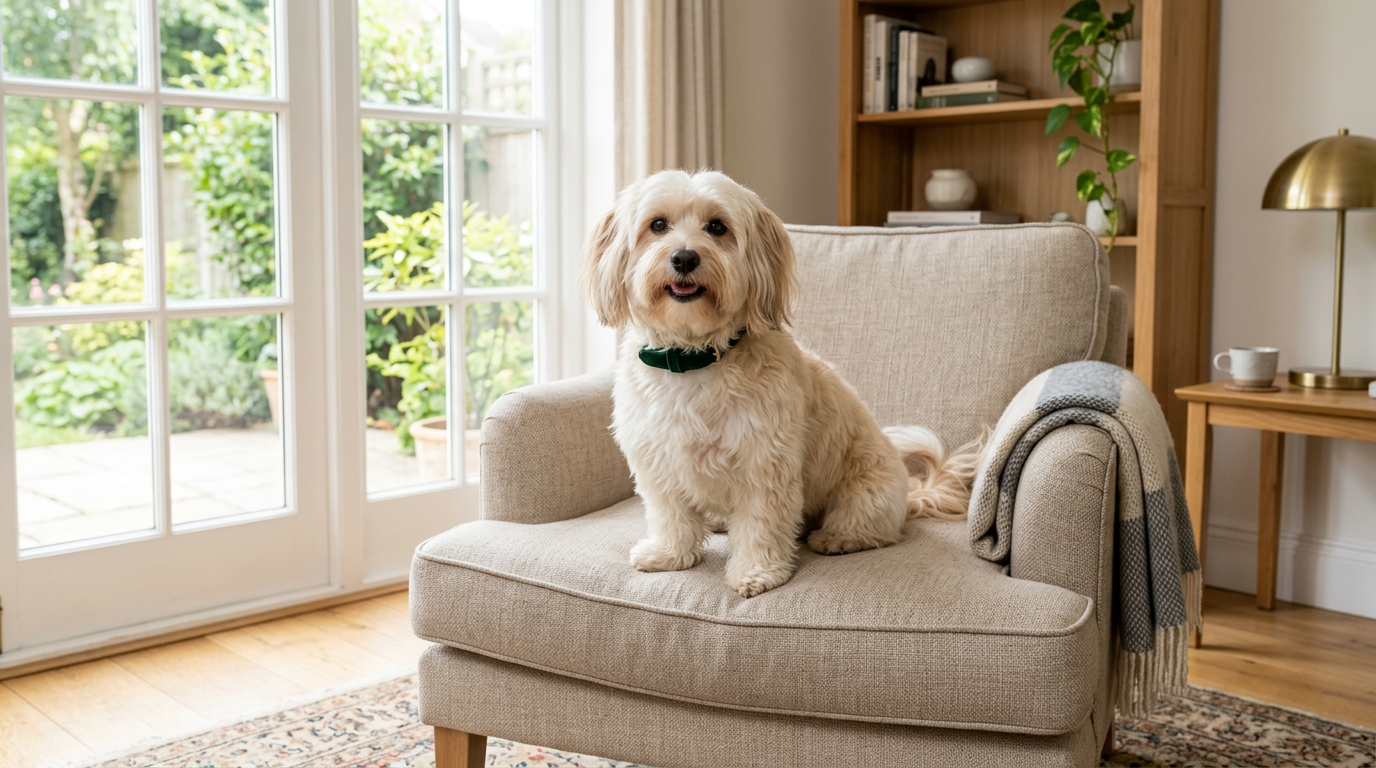
Havanese breed guide research should go beyond the breed’s cheerful face and silky coat. Havanese are bright, people-focused companion dogs that often fit family homes and apartments well. They also need steady grooming, daily interaction, dental care and deliberate independence training. A Havanese that is carried everywhere or never left alone can become less confident and more vocal.
This guide covers practical ownership: ratings, size, temperament, exercise, grooming, feeding, health screening, training, children, cats, apartment living and useful products. Breed traits are starting points only. Evaluate the individual dog’s health, confidence and history before choosing a puppy or rescue.
Havanese ratings at a glance
| Category | Rating | Practical meaning |
|---|---|---|
| Family-friendly | 9/10 | Usually affectionate and playful, but adults still need to supervise handling. |
| Exercise requirement | 5/10 | Daily walks, play and training are needed without requiring endurance sport. |
| Grooming requirement | 9/10 | Long hair mats easily; clipped coats still require frequent brushing and salon visits. |
| Trainability | 9/10 | Often quick to learn with rewards, varied sessions and consistent household rules. |
Breed overview
| Breed group | Toy |
|---|---|
| Height | 8.5–11.5 inches |
| Weight | About 7–13 pounds |
| Lifespan | Approximately 14–16 years |
| Coat | Long, soft and abundant; straight, wavy or corded |
| Typical character | Social, lively, expressive and closely bonded to people |
The Havanese developed in Cuba as a companion dog. It is small but not merely decorative: most enjoy learning tricks, scent games and gentle outdoor activity. The coat insulates but does not make a dog safe in heat or exempt it from daily care.
Size and weight
AKC lists the Havanese at 8.5–11.5 inches and 7–13 pounds. Frame varies, so body condition is more useful than aiming for a number. Ribs should be easy to feel under a light covering, with a visible waist from above. Weigh monthly; even a modest gain can affect knees and stamina in a small dog.
Small size requires household safeguards. Block balcony gaps, supervise stairs and high furniture, and check recliners and blankets before moving them. Use a secure carrier or tested restraint for travel rather than allowing the dog loose in a vehicle.
Lifespan and long-term planning
Havanese commonly live 14–16 years, so this is a long commitment. Plan for professional grooming, dentistry, insurance or an emergency fund, boarding and senior care. Low food costs do not mean low lifetime costs; eye treatment, dental work, allergy management or orthopaedic care can be significant.
Record a healthy baseline for appetite, weight, gait, sleep and behaviour. For older dogs, add nonslip mats, low-entry beds and ramps where useful. Investigate pain, confusion, weight loss or changes in toilet habits rather than dismissing them as normal ageing.
Havanese temperament
Most Havanese are friendly, observant and interested in being near their people. They often learn behaviours that reliably make family members laugh. That intelligence is useful, but it can also reinforce demand barking if barking produces attention every time.
Reward calm behaviour before it is requested. Reinforce resting on a bed, independent play and quiet check-ins. Socialisation should mean positive, low-pressure exposure to people, dogs, traffic, surfaces, grooming and veterinary handling—not compulsory greetings with strangers.
Some dogs are initially reserved. Give them distance and choice rather than holding them in place to be petted. Freezing, moving away, lip licking and growling are useful information. Create safety and reduce difficulty instead of punishing warnings.
Exercise requirements
Healthy adults usually enjoy one or two walks daily plus games and training. The useful measure is whether the dog returns content and can settle, not a universal time target. Sniff walks, toy retrieval, hide-and-seek and food searches offer activity without repetitive high-impact exercise.
Puppies need free movement, exploration and plenty of sleep. Avoid forced running, high jumping and relentless play with much larger dogs. Persistent skipping, lameness, reluctance to move or sudden weakness requires veterinary assessment.
Walk early or late in hot weather, offer water and use shade. A clipped or senior dog may appreciate a light coat in cold rain, provided it allows free shoulder movement and is removed indoors if the dog becomes warm.
Grooming a Havanese
Long coats need brushing and combing most days. Work in small sections to the skin with a pin brush or suitable slicker, then use a metal comb to find hidden tangles. Check behind ears, under the collar, in armpits, around feet, the groin and tail.
Use a dog-safe conditioning spray rather than pulling dry mats. If a comb cannot pass through, separate the tangle gently or ask a groomer to clip it. Do not use scissors close to a mat; folded skin can be cut easily.
A short companion clip reduces daily work but does not remove it. Brush several times weekly, keep face and sanitary areas clean and schedule professional grooming about every four to eight weeks according to length and coat texture. A comfortable short clip is better than preserving length through painful dematting.
Bathe when dirty or according to the groomer’s plan. Rinse fully and dry while brushing because damp tangles tighten. Corded coats are a specialised presentation requiring careful separation and complete drying; seek hands-on guidance from an experienced Havanese groomer before attempting them.
Face, ears, nails and teeth
Keep hair from rubbing the eyes. Squinting, redness, discharge, cloudiness or sudden staining needs veterinary care rather than stronger cosmetic cleaner. Check ears weekly for odour and redness, and trim nails before they change foot placement.
Brush teeth daily with dog toothpaste. Small mouths are prone to crowded teeth and periodontal disease. Bad breath, bleeding gums, loose teeth, facial swelling or chewing on one side needs veterinary attention. Awake cosmetic scaling does not clean below the gumline.
Feeding a Havanese
Feed a complete and balanced diet suitable for puppy growth, adult maintenance or a diagnosed medical need. Measure portions accurately. A gram scale is more reliable than a large measuring cup for a dog this size. Keep treats tiny and deduct substantial extras from meals.
Puppies may need several scheduled meals. Sudden weakness, trembling, disorientation or collapse in a young small-breed puppy needs urgent veterinary advice. Persistent vomiting, diarrhoea, appetite loss or weight change should be diagnosed rather than managed with repeated random food changes.
Change diets gradually unless a veterinarian gives different instructions. Homemade diets need formulation by a board-certified veterinary nutritionist; an ingredient list that sounds wholesome is not automatically complete.
Common health considerations
Hip dysplasia and patellar luxation
Small dogs can still develop hip dysplasia and kneecaps that slip from their normal groove. Repeated skipping, lameness, stiffness, reduced jumping or reluctance to rise is not a harmless breed quirk. Maintain lean body condition and arrange veterinary assessment.
Eye disease
Inherited and acquired eye concerns can affect Havanese. Responsible breeding programs use regular ophthalmic screening. Owners should seek prompt care for painful eye signs because ulcers and injuries can worsen quickly.
Hearing
BAER testing objectively assesses hearing. A dog can respond to vibration or sight, so clapping behind a puppy is not a substitute. Ask breeders for verifiable hearing results and accurate disclosure of any affected relatives.
Dental and skin disease
Dental disease is common in toy dogs. Daily brushing and professional care protect comfort. Itching, recurrent ear trouble, paw licking or skin infection needs diagnosis because parasites, allergy and infection can overlap.
Orthopaedic and neurological signs
Persistent pain, weakness, an altered gait, toe dragging or loss of bladder control needs urgent evaluation. Do not give human pain medicine. Videos of the abnormal movement can help the veterinarian when recorded safely.
Health testing and choosing a breeder
Check the Havanese Club of America and OFA for the current protocol before choosing a litter. Commonly recommended screens include hips, patellas, annual eye examinations and BAER hearing tests. Protocols change, so verify current requirements rather than relying on a dated checklist.
Ask for both parents’ registered names and search OFA records. A CHIC number means required tests were completed and publicly disclosed; it does not mean every result was normal. Read results, ages and family history.
Responsible breeders discuss longevity, eyes, hearing, hips, knees, allergies and temperament in relatives. They raise puppies in an enriched home, introduce grooming and brief absences, supply records and take back a dog they bred if necessary. Avoid sellers who cannot show results, promote rare colour over health or promise unusually tiny adults.
Training a Havanese
This Havanese breed guide treats training as daily practical care. Teach name response, recall, hand target, loose-lead walking, wait, leave, drop and a mat settle. One- to three-minute sessions, repeated through the day, usually suit the breed better than long drills.
Use a comfortable harness and fixed lead. Reward slack lead before pulling starts. Avoid neck corrections and retractable leads around traffic. Build recall indoors, then on a long line attached to a harness; never test it near cars or wildlife.
House training and barking
Take puppies out after waking, eating, drinking, play and training. Reward immediately after elimination and supervise or use a safe pen between trips. Punishing accidents teaches hiding. If weather makes access difficult, create a sheltered toilet route and remain consistent about the chosen surface.
For barking, manage window views and hallway noise. Acknowledge one alert, then reward the dog for moving to a mat or checking in. Practise with quiet recorded sounds before real visitors. Shouting usually increases arousal.
Separation and cooperative care
Start independence training while you are home: offer a food toy behind a gate, step briefly out of view and return before distress. Increase gradually. A camera can show whether the dog rests or panics. Ongoing howling, pacing, escape attempts or panic elimination requires qualified behaviour support.
Pair brushes, combs, toothbrushes and nail tools with food before using them. Work on one body area and stop while the dog remains comfortable. This makes grooming and veterinary care safer for life.
Are Havanese good with children?
Many are playful, affectionate family dogs, supporting a 9/10 rating. They are still small enough to be hurt by drops or rough play. Adults must supervise. Children should not carry the dog, climb on it, disturb sleep or take food and chews. Give the dog a gated rest area children never enter.
Are Havanese good with cats?
Many coexist successfully with cats when introductions are gradual. Use gates, reward calm observation and give the cat high escape routes and separate food and litter areas. Do not allow chasing simply because the dog is small. A rescue with verified cat history offers more certainty than breed reputation.
Apartment suitability
Havanese are excellent apartment candidates because of their size, moderate exercise needs and social nature. They still need outdoor walks, enrichment and training. Alert barking and separation distress are the main neighbour risks, so practise quiet settling and calm absences early.
Check balcony gaps, stairs, lift access and building pet rules. A house is not automatically better if the dog spends its day isolated; this breed usually thrives as part of daily family life.
Similar breeds
| Breed | Why compare | Key difference |
|---|---|---|
| Maltese | Small, long-lived companion | Smaller frame and straight white coat |
| Coton de Tulear | Cheerful long-coated companion | Cotton-textured coat and different build |
| Bichon Frise | Friendly and trainable family dog | Curly coat requiring structured professional grooming |
| Shih Tzu | Apartment-friendly companion | Shorter muzzle and greater breathing concerns |
| Miniature Poodle | Small, intelligent and low-shedding | More athletic with a curly clip-maintenance coat |
Recommended Havanese products
| Product | Best for | Rating | Buying note |
|---|---|---|---|
| Pin brush and metal comb | Coat maintenance | 10/10 | Choose smooth pins and a comb that reaches skin. |
| Conditioning spray | Reducing coat breakage | 9/10 | Use a dog-safe formula and avoid eyes. |
| Small Y-front harness | Daily walks | 10/10 | Allow shoulder movement and recheck fit. |
| Dog toothbrush kit | Dental care | 10/10 | Use dog toothpaste and introduce gradually. |
| Washable bed | Independent rest | 9/10 | Choose a stable base and removable cover. |
| Secure travel carrier | Vehicle travel | 9/10 | Confirm ventilation and vehicle fastening. |
| Small food puzzle | Mental enrichment | 8/10 | Avoid detachable swallowable parts. |
| Nonslip runner | Indoor traction | 8/10 | Place near turning points and furniture. |
| Enzymatic cleaner | Toilet accidents | 9/10 | Follow label directions completely. |
Affiliate links should be disclosed clearly when added. Ratings reflect likely usefulness for the breed, not a warranty. Confirm dimensions, supervise new items and replace damaged equipment.
Detailed coat-care routine
Set a regular grooming location with a nonslip mat and good light. Begin with a gentle hands-on check: feel ribs, legs, skin and ears, then inspect the coat for debris and tangles. This creates an early-warning habit while keeping grooming predictable for the dog.
For a long coat, mist one small section, brush from the ends inward, then pass the comb through to the skin. Start at the feet and work upward so finished areas do not tangle again. Avoid rushing the face; use a small comb and hold the hair away from the eye without pulling.
For a companion clip, focus on areas that still mat: ears, collar line, underarms, rear legs and tail. Schedule a professional groom before the dog becomes overgrown. Ask the groomer to show you the appropriate brush pressure and report any skin or ear concerns.
Grooming should not become a weekly argument. If the dog resists, reduce the task until it can succeed—one brush stroke, reward, then stop. Pain, fear or mats may require a shorter clip and a reset. Holding the dog down can create a stronger aversion next time.
| Task | Long coat | Short clip |
|---|---|---|
| Brush and comb | Most days | Several times weekly |
| Face check | Daily | Daily |
| Bath | Often every one to three weeks | Every few weeks or when dirty |
| Professional appointment | As needed for maintenance | Usually every four to eight weeks |
| Teeth | Daily brushing | Daily brushing |
Travel, boarding and time away
Condition the travel carrier at home with meals, toys and short rests before expecting the dog to travel calmly. Secure it in the vehicle as instructed by the manufacturer. Never leave a Havanese loose on a passenger’s lap or alone in a parked car.
Pack measured food, medication, a harness, lead, grooming supplies, veterinary records and familiar bedding. Identify an emergency clinic at the destination before leaving. Keep the dog leashed near unfamiliar doors and lifts; a small dog can disappear quickly in a busy arrival area.
For boarding, choose a climate-controlled facility that understands small dogs and coat maintenance. Provide written instructions covering meals, toilet routine, grooming, medication, fear triggers and emergency contact details. A trial day or short overnight stay is useful before a longer trip.
A home sitter can be ideal for a dog that finds kennels stressful, but introduce the sitter gradually. A camera helps show whether the dog settles. Do not use remote talking features to repeatedly interrupt resting; observation should guide training, not create constant stimulation.
Ownership costs and common mistakes
Food may be a modest cost, but grooming and dentistry are ongoing. Budget for salon appointments, brushes, shampoo, parasite prevention, insurance, boarding, dental treatment and emergency care. Compare insurance wording for hereditary, congenital, dental and prior-condition exclusions before illness appears.
- Surface brushing only: mats form under the outer hair and pull at skin.
- Ignoring bad breath: dental pain can be significant before appetite changes.
- Constant companionship: dogs need gradual practice being calm alone.
- Letting barking rehearse: manage windows and teach an alternate behaviour.
- Carrying the dog everywhere: it reduces normal fitness and confidence.
- Waiting on lameness: intermittent skipping still needs assessment.
- Buying for colour or extreme size: health, family history and temperament matter more.
- Assuming an apartment means indoor-only life: walks, scent work and social exposure remain important.
Most ownership problems respond best to early, low-drama action. A calendar for grooming, weight checks, veterinary visits and training goals keeps the workload manageable across a long lifespan.
Is a Havanese right for you?
The breed may suit you if you want a small, interactive companion, enjoy training and can commit to coat and dental care. Havanese often adapt well to apartment life and remain playful into old age.
Choose another breed if frequent grooming is unrealistic, young children cannot be managed safely, or the dog would routinely spend long days alone. A friendly appearance does not make the breed low-maintenance.
Questions to ask before bringing one home
Ask the breeder or rescue about grooming tolerance, appetite, toilet habits, reaction to being alone, handling by children, experience with cats and any history of eye, knee, hip, hearing or dental problems. For puppies, ask how the litter has been introduced to brushes, nail tools, carriers, household sounds and short separations. For adults, ask what daily routine produces the calmest behaviour.
Meet mature related dogs if possible. Observe how they recover after a normal greeting, whether they move comfortably and how they cope with brushing. Then compare practical local costs for grooming, insurance, boarding and veterinary dentistry. This is a better predictor of a successful match than choosing by coat colour or a social-media photo.
First-month plan and checklist
Before arrival, choose a veterinarian and groomer, secure balconies and stairs, and prepare a pen, carrier, bed, harness, grooming tools and measured food. Keep the first week predictable: toilet trips, naps, short grooming sessions and tiny absences. Introduce people and places at a comfortable pace.
- Measure meals and refresh water daily.
- Provide walks, play and training.
- Check eyes and facial hair daily.
- Brush according to coat length.
- Brush teeth daily.
- Check ears, paws and nails weekly.
- Practise calm independence.
- Track weight monthly.
Keeping a Havanese engaged at home
Rotate food puzzles, hide a few pieces of kibble around a room, practise hand targets and teach a relaxed mat settle while family members work. Keep sessions short and end before the dog loses interest. This style of enrichment helps an apartment dog use its mind without encouraging frantic indoor games. It also creates routine opportunities to reward calm behaviour, voluntary handling and independence.
Conclusion
A sound Havanese breed guide balances the breed’s charm with genuine care needs. Coat and dental maintenance, thoughtful independence training, measured feeding and early attention to eye or joint changes matter throughout a long life.
Verify current parent-club health tests, choose stable temperament and start grooming cooperation immediately. With those foundations, a Havanese can be an adaptable, lively and affectionate companion.
Related breed guides
Compare the Havanese with our Chihuahua breed guide and Maltese breed guide when weighing small-companion temperament and grooming. For the practical side of a compact home, see our apartment-friendly dog breed guide.
Does this breed fit your life?
Use the dog lifestyle quiz to compare this breed with your home and routine, browse the breed database, or compare breeds side by side before deciding.