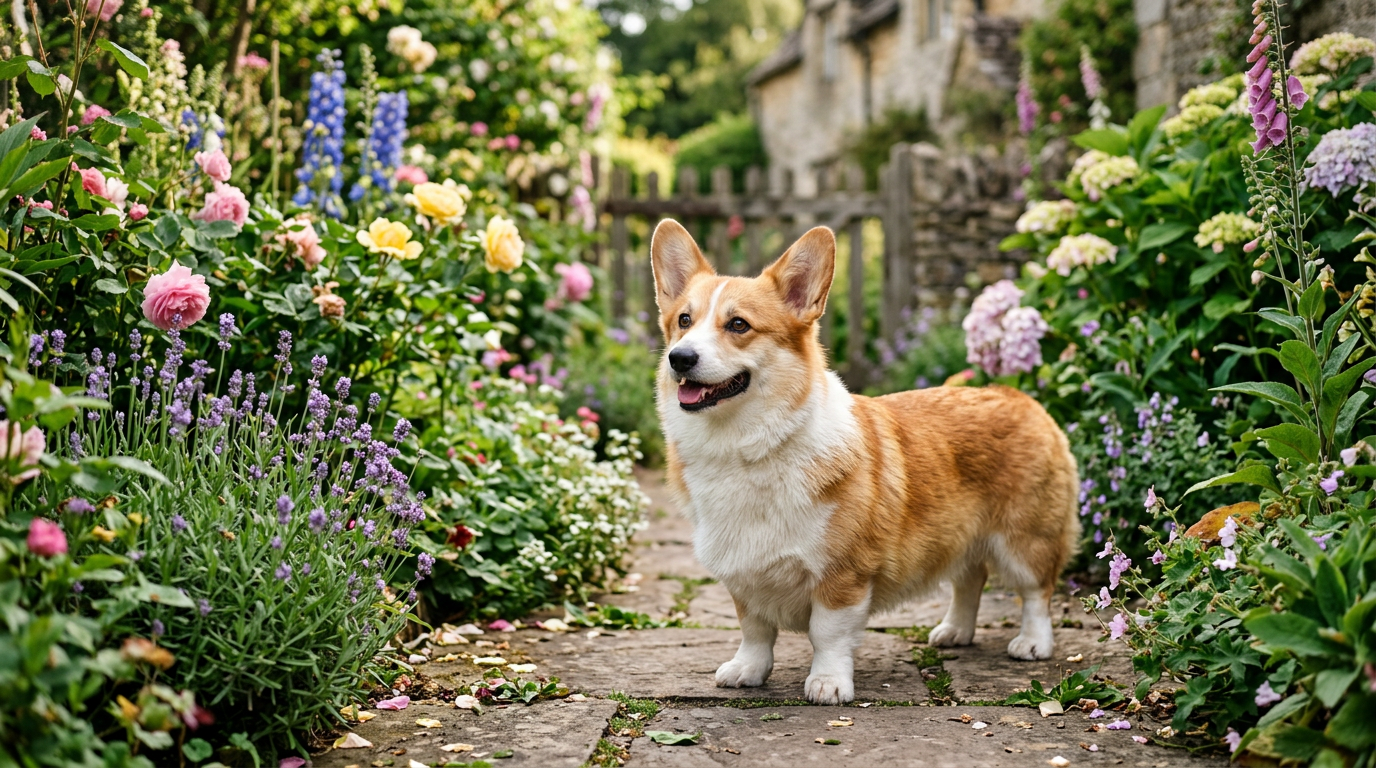
A Pembroke Welsh Corgi is a compact cattle-herding dog, not a low-energy lapdog with short legs. This Pembroke Welsh Corgi breed guide explains the practical consequences: daily exercise, frequent shedding, alert barking, strong food motivation and careful management of jumping and body weight. The breed can be a warm, entertaining companion when its working instincts have useful outlets.
Before choosing one, picture an ordinary weekday. Can you provide walks that include sniffing, short training sessions and a quiet place to settle? Can every family member respond consistently to barking and heel-nipping? Can you keep a persuasive food-seeker lean? Those details matter more than the breed’s popularity or photogenic expression.
Pembroke Welsh Corgi ratings
These editorial ratings describe a typical ownership workload, not a scientific score or promise about an individual dog. Higher family and trainability scores suggest an easier fit. Higher exercise and grooming scores indicate more owner effort.
| Trait | Rating | Practical meaning |
|---|---|---|
| Family-friendly | 8/10 | Often social and engaged, but herding behaviour and energetic play need supervision. |
| Exercise requirement | 7/10 | Needs purposeful activity every day; short legs do not mean low stamina. |
| Grooming requirement | 7/10 | The double coat is manageable but sheds heavily, especially during seasonal coat changes. |
| Trainability | 9/10 | Quick to learn, including habits owners accidentally reinforce. |
Breed overview
| Breed | Pembroke Welsh Corgi |
|---|---|
| Origin and purpose | Welsh herding dog developed to work livestock |
| Group | Herding or pastoral, depending on the registry |
| Height reference | 10–12 inches (25–30 cm) at the shoulder |
| Weight reference | Up to 30 lb (13.6 kg) for males and 28 lb (12.7 kg) for females in the AKC standard |
| Lifespan reference | Commonly about 12–13 years; not a prediction for an individual |
| Coat | Weather-resistant double coat with regular shedding |
| Daily priorities | Measured feeding, physical activity, mental work, brushing and calm-behaviour practice |
| Best fit | Active owners who enjoy training and can manage noise, shedding and stairs |
The American Kennel Club Pembroke profile is a useful reference for the breed standard and parent-club screening recommendations. A standard describes the breed, not the exact pet in front of you. Assess the dog’s real size, gait, confidence and ability to settle.
Size and weight
At roughly 10–12 inches tall, a Pembroke is low to the ground but substantial for its height. The body is long, the chest is comparatively deep and the legs are short. Do not choose equipment from height alone: measure chest girth, neck and back length, then follow the manufacturer’s fitting instructions.
The AKC reference weights are limits for the show standard, not ideal targets for every pet. Your veterinarian should assess body condition and muscle as well as the number on the scale. A dog can meet a breed-chart weight while carrying excess fat, and a larger-framed healthy dog may weigh differently.
Record weight under similar conditions every few weeks while a puppy grows and periodically in adulthood. Look for trends, not daily fluctuations. A dense coat can conceal the waist and ribs, so learn a hands-on body-condition check from the veterinary team.
Home layout for a long-backed, short-legged dog
Provide traction on polished floors with secured runners in routes the dog uses often. Block access to steep stairs when supervision is not possible. A ramp can help with a vehicle or furniture only if it is stable, wide enough, shallow enough and taught gradually; a narrow, slippery ramp adds another hazard.
Prevent repeated launches from sofas and beds. Place a comfortable floor-level resting space near the family so the dog does not need furniture to stay involved. Lift only when necessary, supporting the chest and hindquarters while keeping the body level. If lifting causes pain or resistance, stop and seek veterinary advice.
Lifespan and long-term planning
A planning range around 12–13 years makes the puppy decision a long commitment. Include routine veterinary care, dental treatment, training support, grooming equipment and emergency costs in the budget. Consider how exercise and toilet access would work if the dog develops reduced mobility later.
Build useful habits before age makes them essential. Teach the dog to use a stable ramp, accept a harness and rest behind a gate. Practise brief paw and body checks. A senior dog learns, but introducing equipment while it feels well avoids pairing every new object with discomfort.
Changes in sleep, movement, appetite, hearing or toilet habits deserve attention. Ageing itself is not a diagnosis. Early assessment may identify pain, dental disease or another treatable problem. Adapt walk length to the dog in front of you while preserving comfortable movement and mental engagement.
Temperament and daily behaviour
Pembrokes are often bright, attentive and ready to participate. Many monitor doorways, visitors and family movement closely. That responsiveness makes training rewarding, but it can also produce barking, shadowing or overarousal if every movement becomes an event.
Create deliberate off-duty periods. Put a bed away from the busiest doorway, offer a suitable chew or food activity, and reward the dog for remaining settled while people move around. Start when the house is calm. Expecting a dog to learn relaxation for the first time during a party is unrealistic.
Herding behaviour may appear as circling, blocking paths, barking at movement or nipping near heels. Do not encourage children to run faster while the dog chases. Interrupt early, separate safely and redirect to an appropriate activity. Persistent or intense behaviour benefits from a qualified reward-based trainer.
Individual temperament varies. Meet a breeder’s adult dogs when possible and ask what they do after excitement: a dog that recovers and rests offers valuable information. For a rescue, request specific observations around visitors, handling, dogs, food and time alone rather than relying on labels such as “friendly”.
Barking and alertness
Acknowledge that some alert barking is normal communication, then teach what happens next. Practise a pattern in which a mild sound predicts moving away from the door to a mat or finding scattered food. Reward the turn away and the quiet pause. Do not shout over the dog; the extra noise can increase arousal.
Reduce rehearsal by blocking the most stimulating window view and using a gate during deliveries. If the dog cannot eat, respond or move away, the trigger is too difficult for a training repetition. Increase distance and seek help if reactions include panic or aggression.
Exercise requirements
A healthy adult Pembroke generally needs substantial daily activity, divided into manageable sessions. An illustrative day might include two purposeful walks plus training or play. There is no universal minute target: age, fitness, weather and medical history should determine the plan.
Prioritise controlled walking, sniffing, searching and skill work over repetitive high-impact activity. Long fetch sessions with abrupt turns, frequent stair sprints and jumping for toys are not necessary to tire a dog. Increase duration and terrain gradually, especially after illness, a sedentary period or adolescence.
A balanced weekly activity plan
Vary the job rather than increasing intensity every day. One walk can focus on relaxed sniffing; another can include short loose-lead and recall practice. At home, hide food in easy locations, teach toy tidy-up or practise calm positions on a mat. Schedule easier days after unusually active outings.
Watch recovery. Persistent stiffness, lagging, reluctance to rise, scuffing paws or a change in gait needs assessment. Video an intermittent change if it is safe, but do not delay veterinary care to collect footage. Sudden weakness, severe pain or inability to walk is urgent.
Puppy exercise
Puppies need frequent short opportunities to explore, not forced endurance. Let the puppy choose its pace on safe surfaces and include plenty of sleep. Avoid repetitive jumping and slippery games. Ask the veterinarian how vaccination status affects safe outdoor exposure in your area.
Socialisation means calm, positive exposure at a level the puppy can manage. It does not require greeting every person or dog. Observe traffic from a comfortable distance, walk over different safe surfaces and practise being handled briefly. Leave before the puppy is exhausted or overwhelmed.
Grooming and shedding
The Pembroke’s double coat sheds throughout the year and often releases much more undercoat during seasonal changes. Brushing cannot stop shedding, but it removes loose hair before it spreads through the home and lets you inspect the skin. Owners who require a nearly hair-free house should compare other breeds.
Brushing routine
Brush in small sections while the dog stands or lies on a non-slip surface. Work through the outer coat gently, then confirm that the tool reaches loose undercoat without scraping the skin. Pay attention behind the ears, under the collar or harness, around the thighs and at the tail area.
Choose tools with a groomer’s guidance. An undercoat rake that is comfortable for one coat may be too aggressive for another. Stop if skin reddens or the dog repeatedly flinches. Coat removal should not create bald patches or damage healthy guard hairs.
During heavy shedding, shorter daily sessions are usually easier than one long weekly struggle. Use gates to keep the dog away from hair piles and clean tools afterwards. A high-velocity dryer may help a trained groomer remove loose coat, but the dog must be introduced safely to the sound and airflow.
Bathing, nails, ears and teeth
Bathe when needed with a dog-appropriate product, rinse thoroughly and dry the dense undercoat. Moisture held against skin can contribute to irritation. A wet dog smell that persists, greasy skin or repeated itching needs veterinary assessment rather than stronger perfume.
Check nails often enough that length does not change the dog’s stance or traction. Introduce clippers or a grinder in tiny steps: show the tool, reward, touch a paw, reward, and build gradually. If nails are overgrown or the dog struggles, ask a veterinary nurse or groomer for help.
Look at ears for redness, pain, discharge or odour without inserting cotton buds into the canal. Brush teeth with dog toothpaste as advised by the veterinary team. Dental chews do not replace examination or brushing, and hard objects can fracture teeth.
Should a Corgi be shaved?
Routine shaving is not a solution to normal double-coat shedding. Discuss any major clip with a veterinarian or experienced groomer, particularly when skin disease, surgery or severe matting is involved. Keep the coat clean and brushed, provide shade and adjust outdoor activity to the weather.
Feeding and body-weight control
A useful Pembroke Welsh Corgi breed guide should make weight control concrete: portion food, count extras and reassess the amount when activity or body condition changes.
Feed a complete diet appropriate for life stage and any diagnosed condition. The WSAVA nutrition toolkit includes resources on selecting food and assessing body and muscle condition. Ingredients marketed as fashionable do not by themselves establish a food’s quality or suitability.
Measure the whole day’s portion, including training food. Take rewards from that allowance where practical. If several people feed the dog, use a container or written chart so everyone can see what remains. Table scraps and chew calories count even when they are not served in the bowl.
Ask the veterinary team to demonstrate the desired body condition. The ribs should be assessable through a sensible covering, and there should be an appropriate waist for the individual. The long body and coat can make visual judgement unreliable, so combine weighing with hands-on assessment.
Change portions based on trends, not a single hungry look. Corgis may be highly persuasive around food, and begging can be reinforced quickly. Reward lying on a mat during meals instead of feeding from the table. If appetite, weight or thirst changes unexpectedly, arrange a health check.
Feeding puppies and seniors
A growing puppy needs a complete growth diet and a schedule suited to its age. Avoid adding calcium or supplements unless the vet recommends them. Track growth without trying to produce a heavier puppy; rapid weight gain is not proof of good development.
Senior dogs may need adjustments for activity, dental comfort or medical conditions, but age alone does not identify the right food. Monitor muscle as well as fat. A dog can gain fat while losing muscle, which a stable scale reading may conceal.
Common health considerations
This section identifies concerns to discuss with a veterinarian and breeder; it cannot diagnose a dog. Many Pembrokes live active lives. Screening, appropriate body condition and prompt attention to symptoms improve decision-making without guaranteeing a particular outcome.
Hip dysplasia and joint health
The national breed club recommends hip evaluation for breeding dogs. Hip dysplasia involves abnormal joint development and can contribute to pain or arthritis, but outward appearance does not reliably establish hip status. Ask to see the identifiable reports for both parents rather than accepting “good hips” as a verbal assurance.
In a pet, signs such as difficulty rising, reduced willingness to exercise, stiffness or an altered gait warrant assessment. Management depends on the diagnosis and may include weight control, suitable activity, rehabilitation, medication or surgery. Do not give human pain medicine unless a veterinarian directs it.
Eye conditions
An ophthalmologist evaluation is another parent-club recommendation. Ask when the parents were examined and how to verify the result. A DNA panel does not replace a physical eye examination, and a normal result is not a lifetime guarantee.
For your dog, squinting, redness, cloudiness, discharge, a sudden change in navigation or a painful eye needs prompt veterinary attention. Do not use leftover eye drops: medications that are appropriate for one condition can be harmful for another.
Degenerative myelopathy
Degenerative myelopathy, or DM, is a progressive spinal-cord disorder associated with loss of hind-limb coordination and later weakness. The Orthopedic Foundation for Animals explanation notes that an “at-risk” DNA result means increased risk, not certainty that a clinically normal dog will develop disease.
Request the parents’ results and ask how the breeder used them within a balanced breeding program. Do not interpret a DNA result in isolation from hips, eyes, temperament and genetic diversity. In an older dog with weakness, a veterinarian needs to rule out other causes; a consumer DNA result is not a stand-alone diagnosis.
Von Willebrand disease
Von Willebrand disease affects blood clotting and is among the concerns the Pembroke Welsh Corgi Club of America health page discusses. Ask whether testing was appropriate for the parents and request the actual reports. Tell the veterinarian about any known status before surgery or dental procedures.
Unexpected or prolonged bleeding, frequent unexplained bruising or blood in urine or stool requires veterinary advice. These signs have multiple possible causes. Do not assume a dog has inherited vWD or delay care while ordering an online test.
Back pain and disc disease
A long-backed, short-legged structure makes spinal comfort an important practical consideration. Intervertebral disc disease can cause pain, wobbliness, weakness, scuffing feet or paralysis. The Cornell IVDD overview advises keeping dogs trim and fit while reducing repeated stair use and jumping from furniture.
Sudden inability to stand, dragging limbs, severe pain or loss of bladder control is an emergency. Restrict movement and contact an emergency clinic rather than stretching the dog, testing its walking repeatedly or trying a massage. Early veterinary assessment matters.
Risk reduction is not total prevention. Provide traction, control body weight and choose sensible exercise, but do not keep a healthy dog inactive. Regular controlled movement supports fitness and muscle, which are useful for everyday stability.
Other changes worth acting on
Skin problems, dental disease, ear infections and urinary issues are not unique to Corgis, but they still affect welfare. Schedule preventive checks and parasite control appropriate to your location. Seek advice for persistent itching, ear pain, bad breath, increased thirst or repeated toilet accidents.
Keep a short timeline of symptoms, including when they started and whether activity or appetite changed. Bring medication and supplement names to appointments. Precise information is more helpful than deciding in advance that every problem must be “a Corgi thing”.
Health testing and choosing a breeder
The AKC lists hip and ophthalmologist evaluations as the national parent club’s recommended tests. Review the current requirements at the time you buy, because recommendations can change. Search the OFA database using registered names or numbers and confirm that reports belong to the stated dogs.
Ask about DM and vWD results, why a pairing was chosen, longevity in close relatives and any history of mobility or eye problems. A responsible explanation includes limitations. “Clear for everything” is not meaningful without named tests, dates and identifiable results.
Observe how puppies are raised and handled. They should have clean living space, appropriate social experiences, rest and veterinary records. Avoid sellers who always have many litters available, refuse to show documentation, will not discuss return arrangements or offer to ship immediately without learning about your home.
A contract should identify the puppy, seller, buyer, health information and what happens if circumstances change. Read it before paying. Breed-club membership or a marketplace listing can guide a search, but neither replaces your own verification.
Training a Pembroke Welsh Corgi
Use reward-based training and set the environment so the desired behaviour is easy. The RSPCA dog-training guide recommends short sessions that begin with few distractions. Food is often effective with Corgis, but praise, play and access to sniffing can also reinforce behaviour.
First skills to teach
Start with name response, recall, loose-lead walking, waiting at doors, exchanging objects and settling on a mat. Add cooperative care: standing for a body check, offering a paw and remaining comfortable while a brush approaches. Two or three useful minutes repeated through the day beat one exhausting drill.
Teach cues in a quiet room, then practise in slightly more difficult places. A dog that can lie on a mat in the kitchen may not yet understand the same cue beside a busy café. Increase distance, duration and distractions separately so you know what made the task harder.
Recall and chasing
Build recall on a lightweight line in a safe location before relying on it around wildlife, livestock or traffic. Say the cue once, move away encouragingly and reward the dog for turning and coming. Sometimes release it back to sniffing so returning does not always end the fun.
If the dog ignores you, reduce the difficulty next time; do not chase it or repeat the word until it becomes background noise. Use a secure lead where failure would be dangerous. Herding ancestry does not make access to livestock safe or appropriate without specialist guidance and the landowner’s permission.
Heel-nipping and movement control
Prevent rehearsal around running children, bicycles and busy household movement. Use gates or a lead before arousal builds. Teach the dog to follow you away, target your hand or find food on a mat. Reward an alternative before it has already chased several laps.
If contact occurs, stop the activity calmly and separate. Screaming, running faster or physically confronting the dog can intensify the sequence. A qualified trainer can observe the trigger and design controlled practice, especially when the behaviour is frequent or hard.
Loose-lead walking
Begin where the dog can concentrate. Reward the lead being slack and change direction before reaching full tension. Allow planned sniff breaks so the entire outing is not a formal heel exercise. A harness should fit securely without restricting the shoulders or rubbing behind the front legs.
Pulling is practised whenever it gets the dog where it wants to go. Stop or change direction safely, then reward returning to slack. Everyone who walks the dog needs the same rule; occasional towing can maintain the habit even when most walks are careful.
Preventing resource guarding
Do not repeatedly remove meals or valued items to prove control. Approach at a comfortable distance, add something better and move away. Teach an exchange with low-value toys, then build gradually. Management prevents access to dangerous objects while the skill develops.
Freezing, hovering over an item, growling or snapping means the situation needs more space and professional guidance. Respect the warning and protect children from approaching. Punishing growling can suppress a useful signal without resolving the underlying concern.
Good with children?
Many Pembrokes can live happily with children, especially when adults manage herding behaviour and protect rest. The breed’s sturdy appearance does not make rough handling acceptable. Suitability depends on the particular dog’s history and the children’s ability to follow rules.
Teach children to invite the dog rather than corner it, stroke shoulders instead of hugging and leave it alone while eating or sleeping. Keep chase games separate from dog time. Adults should actively supervise, and a gate should provide reliable separation when supervision is divided.
Give the family a simple plan for overexcitement: children stop moving, an adult calls the dog to a prepared area and rewards calm behaviour. Do not make a child responsible for resolving nipping. If the dog guards, knocks children down or cannot disengage, involve a qualified professional early.
Good with cats and other pets?
A Pembroke may live with cats, but individual chasing drive and previous experience matter. Start with separate zones, scent exchange and controlled viewing through a secure barrier. The cat needs high escape routes and access to food, water and litter without passing the dog.
Reward the dog for looking away and responding to you. Keep initial sessions brief and end before fixation or chasing. Do not restrain the cat for a face-to-face greeting, and do not leave the animals together unsupervised merely because the first meeting was quiet.
Choose canine companions by play style and temperament, not size alone. Manage toys and feeding until you understand both dogs. For livestock or poultry, physical separation is essential unless a knowledgeable professional is supervising structured work; a pet Corgi’s ancestry is not proof of safe stock manners.
Apartment suitability
Pembrokes can live in apartments, but they are not automatically easy apartment dogs. Barking travels through shared walls, and frequent stairs may be impractical. Evaluate lift reliability, nearby toilet space, floor traction and access to suitable walking routes before committing.
Put the resting area away from the front door and busiest window. Practise mat behaviour and quiet responses to corridor sounds when the environment is calm. During real deliveries, use a gate and prepared rewards rather than repeatedly letting the dog rush the door.
A balcony is not a substitute for walks or supervised toilet trips. Secure all gaps and never leave the dog there unattended. Plan for heat: low dogs are close to hot pavement, and a dense coat requires sensible timing, shade and water.
Also consider alone time. Exercise before departure can support a routine, but exhaustion does not treat separation distress. Build absences gradually, observe whether the dog settles and arrange care when your required absence exceeds what it can handle.
Similar breeds to compare
| Breed | Why compare? | Key difference to investigate |
|---|---|---|
| Cardigan Welsh Corgi | The other Welsh Corgi breed, also low-set and developed for herding. | Compare size, structure, temperament and coat colours; it is a distinct breed, not a Pembroke variety. |
| Shetland Sheepdog | A smaller herding breed known for responsiveness and a substantial coat. | Consider vocal tendency, sensitivity and grooming requirements. |
| Swedish Vallhund | A low-set, active cattle dog with a different breed history and look. | Investigate availability, activity level and individual working drive. |
| Australian Shepherd | Another highly trainable herding breed. | Expect a larger dog and often greater exercise and training demands. |
Do not compare only height. Ask how each breed handles strangers, frustration, movement and periods without activity. Meet adults where possible and speak with breed-specific rescues as well as responsible breeders.
Recommended Pembroke Welsh Corgi products
These are editorial ratings of product categories for typical usefulness. They are not laboratory scores, personal product-test claims or endorsements of every item in a category. There are no affiliate purchase links here. Confirm fit, age guidance and suitability for your dog.
| Product | Best for | Rating | Selection criteria |
|---|---|---|---|
| Complete measured diet | Nutrition and weight management | 10/10 | Appropriate life stage, manufacturer information and veterinary guidance |
| Adjustable Y-front harness | Everyday walks | 9/10 | Secure fit without shoulder restriction or armpit rubbing |
| Fixed-length lead | Controlled walking and training | 9/10 | Reliable hardware and a length suited to the environment |
| Non-slip runners | Traction on smooth floors | 9/10 | Secure backing, flat edges and washable material |
| Stable low-gradient ramp | Vehicle or approved furniture access | 8/10 | Weight rating, width, grip and safe attachment |
| Undercoat brush and finishing comb | Routine shedding control | 9/10 | Coat-appropriate teeth and a groomer’s technique advice |
| Washable floor-level bed | Comfortable rest without jumping | 8/10 | Support, low entry, non-slip base and removable cover |
| Simple food puzzle | Supervised meal-based enrichment | 8/10 | Washable design, suitable difficulty and no loose swallowable parts |
| Secure gate | Door safety and separating children or pets | 9/10 | Height, gap size, solid mounting and no climbable features |
Buying priorities
Start with equipment that supports the routine: food storage and measuring tools, a fitted harness, lead, bed, gate and coat-care tools. Add puzzles after you learn how the dog manipulates objects. More products do not compensate for insufficient exercise or unclear training.
Inspect gear frequently. Replace frayed leads, loose clips and damaged puzzles. Recheck harness fit during growth and after major coat changes. Teach ramp use on a flat surface before placing it at an incline, and never force the dog across.
A realistic first month
Before arrival, arrange a veterinary appointment, identify an emergency clinic and confirm the existing food and schedule. Secure stairs, improve floor grip and establish the sleeping and toilet areas. Agree on cues and household boundaries so the dog does not receive conflicting rules.
In the first week, prioritise rest, eating, toilet success and a few calm handling exercises. Keep visitors limited and outings appropriate to the dog’s age and health. Begin logging meals, toilet trips and any concerning symptoms.
During weeks two and three, build short walks, mat work, recall games and grooming tolerance. Introduce household sounds and visitors gradually. If a problem appears, reduce difficulty instead of repeatedly testing it.
By week four, review the actual dog rather than the plan you imagined. Adjust activity, feeding and alone-time practice to its response. Book a reward-based class or individual support if you need help; early advice is usually easier than correcting a rehearsed habit months later.
Ongoing owner checklist
- Measure food and account for training rewards.
- Provide physical activity and purposeful mental work every day.
- Brush regularly and check skin, ears, nails and teeth.
- Prevent repeated uncontrolled stair running and furniture jumps.
- Practise calm behaviour around doors, movement and visitors.
- Monitor gait, weight and recovery after exercise.
- Keep veterinary, microchip and emergency information current.
Weather, travel and emergency planning
Adjust exercise to conditions rather than relying on the usual clock. In hot weather, walk during cooler periods, carry water and test pavement before setting out. Heavy panting that does not ease, weakness, confusion or collapse requires urgent veterinary attention. A dense coat is not a reason to shave routinely, and it does not protect a dog from overheating.
For car travel, use a properly secured restraint or carrier that suits the dog’s weight and the vehicle. Practise stationary sessions and short drives before a long trip. A ramp may reduce repeated jumping, but it must be anchored and taught; keep the dog on a lead while loading in an unsecured area.
Prepare a written care sheet with food quantities, medication, movement restrictions, usual cues and veterinary contacts. Confirm that a sitter can safely manage stairs, gates and the dog’s response to visitors. Bring enough familiar food for a trip rather than depending on an abrupt brand change at the destination.
Know which clinic provides out-of-hours care and how long the journey takes. Keep the dog’s microchip and tag information current. For collapse, breathing difficulty, severe pain, suspected poisoning, repeated unproductive retching or sudden loss of limb function, call an emergency veterinary service rather than waiting for an online answer.
Adopting an adult Pembroke
An adult may offer clearer information about size, coat, energy and established behaviour. Ask the rescue or foster carer for examples from a normal day: response to door sounds, time left alone, grooming tolerance, toilet habits and interactions with dogs or cats. “Good in a home” is less useful than specific observations.
Request available veterinary records, weight history and details of any lameness, back pain, allergies or medication. Missing history does not rule out adoption, but it should shape the initial veterinary assessment and insurance decisions. Ask what post-adoption support and return arrangements are available.
Allow decompression after the move. Keep the schedule predictable, limit demanding introductions and use barriers while learning the dog’s habits. Behaviour may change as it becomes comfortable, so continue supervision even after an easy first week.
How to measure progress
Track outcomes that improve daily life rather than chasing perfect obedience. Can the dog hear a corridor noise and return to rest? Does it walk for several minutes on a slack lead? Can it move away from running children, allow a brief paw check and finish play without prolonged barking?
Review one or two targets each week. If progress stalls, make the exercise easier by reducing distraction, distance or duration. Record pain, fatigue or sudden behaviour change and involve the veterinarian before treating it solely as a training problem.
Conclusion: is a Pembroke right for you?
This Pembroke Welsh Corgi breed guide points to a dog that offers intelligence, character and close involvement in family life, along with real work. The right owner enjoys training, accepts shedding, manages barking and keeps exercise purposeful rather than treating short legs as a reason for inactivity.
Choose the individual with care, verify health records and prepare the home before arrival. A lean body, steady routine and prompt response to mobility changes give a Pembroke the best practical foundation for an active life.
Related breed guides
Compare the Pembroke Welsh Corgi with the Border Collie breed guide and Shetland Sheepdog breed guide for different herding-dog profiles. For a realistic view of compact-home routines, read our apartment-friendly dog breed guide.
Does this breed fit your life?
Use the dog lifestyle quiz to compare this breed with your home and routine, browse the breed database, or compare breeds side by side before deciding.