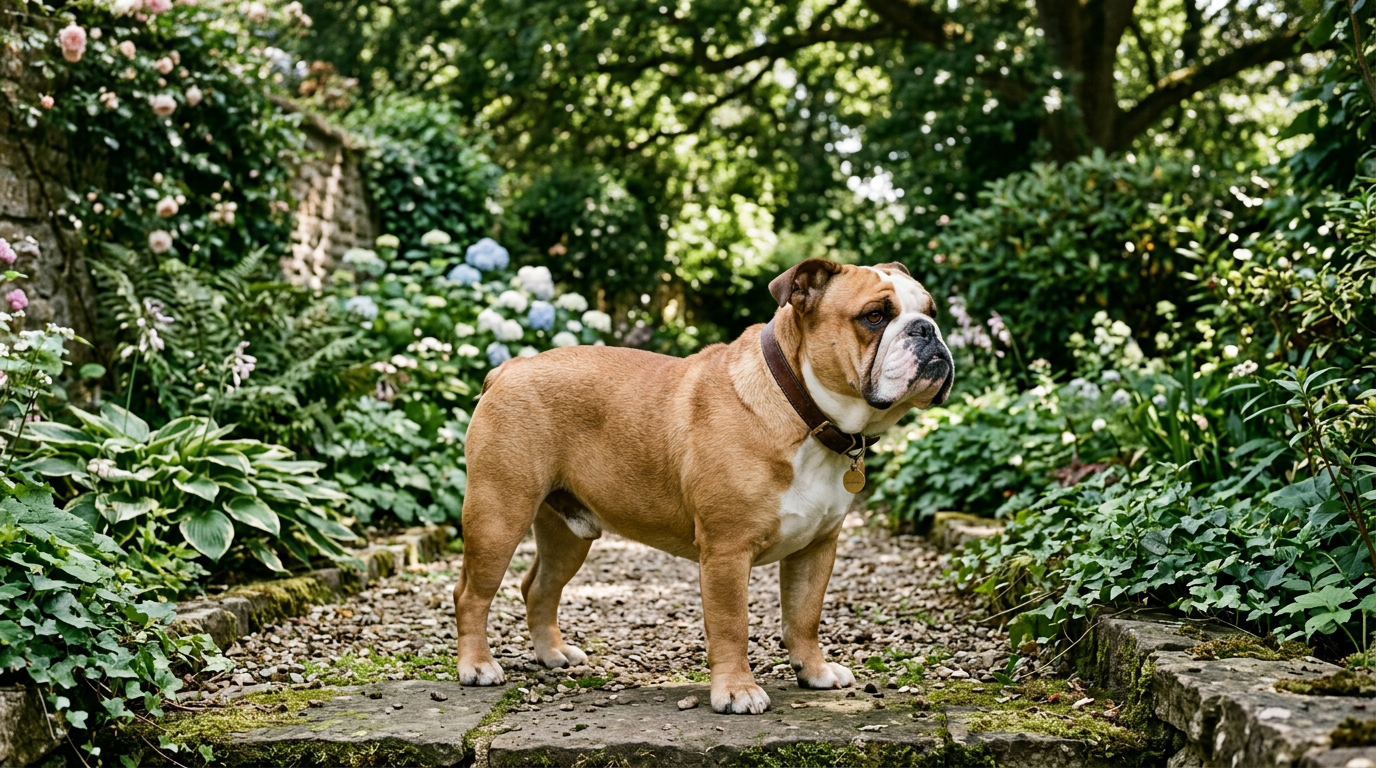
A Bulldog can be affectionate, funny and content to share a quiet evening at home. It can also need substantial help with breathing, skin care, weight control and veterinary treatment. This Bulldog breed guide covers the English or British Bulldog—not the French Bulldog or American Bulldog—and puts those responsibilities alongside the breed’s appeal.
If you want a jogging partner, an outdoor-only dog or a pet with minimal health-related expenses, look elsewhere. A better match is someone who enjoys close companionship, can keep the home cool, notices small changes in comfort and is willing to organise care around the individual dog. Short walks do not necessarily mean low-maintenance ownership.
Use the quick-reference tables to compare the breed, then read the sections relevant to your home. The care plans below are practical starting points, not prescriptions for a dog with an existing condition. Your veterinarian should set exercise limits, treatment and feeding targets when health problems are involved.
Bulldog ratings: a practical ownership scorecard
These scores are editorial assessments of typical ownership demands, not scientific measurements or guarantees about a puppy. Family-friendly and trainability scores run from lower to higher suitability or responsiveness. Exercise and grooming scores run from lower to higher owner effort. Grooming includes skin, teeth and nails, not just brushing a coat.
| Category | Rating | How to interpret it |
|---|---|---|
| Family-friendly | 7/10 | Often affectionate, but a heavy body, discomfort and individual temperament affect safe interaction with children. |
| Exercise requirement | 4/10 | Usually modest endurance demands; still needs regular comfortable movement and indoor enrichment. |
| Grooming and routine skin care | 7/10 | The short coat is simple; folds, feet, teeth and any prescribed skin treatment can take considerably more attention. |
| Trainability | 6/10 | Can learn useful household skills well with clear rewards, comfortable conditions and patient handling. |
A low exercise score must not be read as permission to accept poor breathing. Likewise, a friendly reputation does not make a Bulldog a safe unsupervised companion for a child. Assess the dog in front of you rather than treating a breed score as a decision by itself.
Breed overview: English Bulldog facts
| Names covered here | Bulldog, English Bulldog and British Bulldog. |
|---|---|
| General build | Medium-sized, low-standing and heavy-bodied, with a broad chest and short muzzle. |
| Reference height | Approximately 14–15 inches, or 36–38 cm, at the shoulder. |
| Reference adult weight | AKC reference figures are 50 lb for males and 40 lb for females—approximately 23 kg and 18 kg. |
| Reference lifespan | 8–10 years in the AKC breed profile; individuals may live shorter or longer lives. |
| Coat | Short coat; routine shedding and separate skin-fold care. |
| Household priorities | Comfortable breathing, cooling, lean body condition, accessible resting places and cooperative handling. |
The height, weight and lifespan references above come from the American Kennel Club’s Bulldog profile. They describe a breed, not an ideal target for every dog. A veterinarian may recommend a different healthy weight for an individual with a different frame.
Check the exact breed named in an advertisement or rescue profile. The American Bulldog is a different, usually much larger dog; the French Bulldog is also a separate breed. Terms such as “mini,” “exotic” or a colour-based sales label do not provide a medical assessment or a reliable description of adult care needs.
Size, weight and lifespan: planning beyond the puppy stage
Bulldogs take up less vertical space than many dogs of similar weight, which can make them look easy to manage. Try thinking in terms of lifting and access instead. Could you safely help an adult into a vehicle or transport one that cannot walk? Can a sitter manage that task? A heavy dog in a small body can create a practical problem in a flat with several flights of stairs.
Measure the resting space, vehicle opening and routes through the home before buying equipment. Choose a bed that allows the dog to lie fully stretched out; do not size it only from a photograph of the dog curled into a ball. Secure non-slip runners along frequently used smooth floors and choose an accessible resting place rather than making furniture the only comfortable option.
Monitor weight alongside body and muscle condition. Take a side and overhead photograph periodically under similar conditions, and ask the veterinary team to demonstrate what to feel for around the ribs. The WSAVA nutrition resources distinguish fat stores from muscle condition. A stable scale reading can hide changes in both.
The breed’s reference lifespan is a reason to plan carefully, not to assume illness or set an expiry date. Discuss the individual dog’s needs at regular veterinary visits. Keep records of comfortable activities, sleep and appetite so that later changes are easier to recognise and explain.
Bulldog temperament: affectionate does not mean effortless
Many owners are drawn to the Bulldog’s close companionship and comic expressions. For a prospective owner, the useful question is what that looks like during an ordinary day. Meet an adult in a calm setting if possible. Watch whether it can relax near people, move away when it needs space and recover after an ordinary interruption.
A sociable dog may still dislike being leaned over, having a painful fold touched or losing a resting place. Do not translate every refusal into “stubbornness.” If a Bulldog suddenly stops on walks, avoids its harness or objects to handling, check comfort and health before increasing training pressure. A behaviour plan cannot compensate for untreated pain or respiratory difficulty.
Set expectations for greetings early. Ask visitors to remain quiet while the dog approaches, and reward four feet on the floor. With a low, powerful dog, leaning and pushing can be as disruptive as jumping. A gate lets the dog observe without rehearsing body-slamming a guest in a narrow entrance.
Build a choice of resting places away from doorways and busy kitchens. If the dog is always in everyone’s path, change the layout before blaming it for being underfoot. The aim is an affectionate companion that can participate in family life without needing to follow every movement or defend a crowded sleeping spot.
Bulldog exercise requirements and heat safety
Plan exercise around comfortable breathing and recovery, not a mileage target. For a healthy adult whose veterinarian approves routine walking, several manageable outings may be more practical than one long route with no easy way home. Start close to home, choose level ground and let the dog investigate smells without being pulled at a human exercise pace.
There is no universal safe temperature or compulsory daily walking duration for every Bulldog. Humidity, excitement, fitness and airway health all matter. The RSPCA’s hot-walk guidance identifies flat-faced dogs as especially vulnerable to overheating. A calendar entry saying “walk time” does not override unsafe conditions.
A flexible activity menu
- Comfortable outdoor conditions: take a short exploratory walk with an easy return route. Choose quieter times so greetings do not add unnecessary excitement.
- Hot or humid conditions: keep activity in a comfortably cool indoor space. Use easy food searches, a brief training exercise or a supervised puzzle instead of replacing a missed walk with frantic indoor fetch.
- Wet or slippery routes: select a safer surface. Check feet afterwards and dry wet areas gently rather than leaving moisture trapped against skin.
- Recent illness, surgery or new symptoms: follow the veterinary plan, even if the dog appears keen to do more.
Record the route, conditions and how the dog behaved afterwards when establishing a routine. Did it keep a comfortable pace? Did breathing settle normally once home? Was it reluctant to move later? These observations help the veterinary team advise you; deliberately pushing a dog to discover its limit does not.
Recognising an urgent problem
Marked breathing difficulty, collapse, weakness or rapidly worsening panting requires urgent veterinary advice. If overheating is suspected, stop activity, move to a cooler place, start cooling with water and airflow while arranging veterinary help, and follow the clinic’s instructions. Do not wait for a particular thermometer reading before acting. See the RSPCA’s heatstroke guidance for recognition and first-aid information.
Save the nearest emergency clinic’s contact details on every regular carer’s phone. Decide who can provide transport. For a heavy dog, the practical difficulty of getting help can become significant precisely when the owner is most distressed.
Grooming: short coat, more involved maintenance
Separate coat care from medical skin care. A soft brush or rubber mitt can make short-coat grooming straightforward, but it will not treat inflamed folds, painful feet or an infected ear. Keep the routine gentle enough that you can inspect the dog without turning each session into a struggle.
Face folds and the tail area
Ask the veterinary team to demonstrate how to inspect and, where needed, clean and dry this dog’s folds. Anatomy varies: do not assume advice for one Bulldog fits another. Use only products recommended for the area, and avoid aggressive scrubbing or leaving cleaning fluid trapped against skin.
A tightly curled tail may conceal a deep fold. Recurrent smell, scooting or discomfort around it deserves an examination rather than repeated cosmetic cleaning. VCA’s corkscrew-tail guidance explains why these folds can develop difficult infections. Ask the vet whether the dog needs a specific management plan and when that plan should be reviewed.
Feet, nails, ears and teeth
Use a quiet inspection routine: one paw, a reward, then a break. Check between the toes rather than only looking at the pads. Persistent licking, swollen areas or a limp can reflect painful interdigital inflammation; the VCA guide to interdigital cysts describes why these problems need proper assessment.
Keep nail care frequent enough that it remains a small task. If you cannot trim safely, book professional help and practise calm foot handling separately. For teeth, use dog-safe toothpaste and a brush the dog tolerates; ask for a demonstration around the individual dog’s mouth rather than forcing access.
Tell a groomer about breathing concerns, previous reactions and prescribed products before the appointment. Ask how the dog will be kept comfortable and monitored. A short coat does not justify rushing a stressed dog through a hot, noisy grooming environment.
Feeding a Bulldog without encouraging weight gain
Begin with a complete food appropriate for the dog’s life stage and medical needs. “For Bulldogs” on a bag is not enough information to judge it. Ask how the product is formulated, whether it provides complete nutrition for the intended life stage, and how its energy density fits the feeding plan.
Use the pack’s guide as a starting point for discussion, not a fixed lifelong ration. Have the veterinary team set an appropriate target and review progress. Do not restrict a growing puppy aggressively to make it look lean, and do not give calcium or other growth supplements without a specific veterinary recommendation.
A food system the household can follow
- Write down the actual food name and the daily allowance recommended for the individual dog.
- Weigh food consistently rather than estimating differently with several cups or handfuls.
- Put the day’s training allowance in a separate container so rewards are accounted for.
- Record extras, including chews, food used for medication and anything given by visitors.
- Review body condition and growth with the veterinary team before making further changes.
Place meals where the dog can eat undisturbed on a stable surface. If a puzzle causes frustration, face rubbing or obvious difficulty reaching food, simplify it. The aim is a comfortable meal, not making a short-muzzled dog work around an unsuitable design.
Persistent vomiting, regurgitation, difficulty swallowing or a sudden appetite change needs a veterinary discussion. Do not respond by repeatedly switching foods and losing track of symptoms. If an elimination diet is prescribed for suspected allergy, ask exactly which treats and chews are allowed so the trial remains interpretable.
Common Bulldog health considerations
Health should be central to the buying or adoption decision. A 2022 VetCompass study of English Bulldogs in UK veterinary care found a substantially different disorder profile from other dogs, including increased risk of several conformation-related conditions. A population study cannot predict one dog’s future, but it is a strong reason to investigate health before committing.
Breathing and brachycephalic obstructive airway syndrome
BOAS refers to airway problems associated with short-headed anatomy. Narrowed nostrils and internal soft-tissue obstruction can make breathing difficult. Noise, poor exercise tolerance or disrupted sleep should not be dismissed as harmless breed character. Veterinary assessment is needed to establish the problem and discuss management or surgery where appropriate. VCA’s BOAS overview explains the condition and treatment considerations.
Write down when symptoms occur rather than relying on a description such as “he snuffles a lot.” A short video of an ordinary episode may help the vet, provided filming never delays care. Never create strenuous exercise or excitement to demonstrate a problem.
Skin, ears and eyes
Face folds, the tail region and feet each need their own inspection; checking one area does not clear the others. Keep a note of recurrent problems and previous treatment so the vet can distinguish a new issue from one that never fully resolved.
Squinting, holding an eye closed, rubbing or a sudden change in its appearance warrants prompt examination. Flat-faced dogs can have several ocular vulnerabilities; see the Royal Veterinary College’s ophthalmology information. Avoid using leftover eye medication unless your veterinarian specifically instructs you to.
Movement, procedures and follow-up
Bring changes in walking, rising or willingness to use familiar routes to the vet’s attention. Do not assume every unusual movement is simply “the Bulldog walk.” Ask whether the individual needs joint assessment and what activity is suitable while waiting.
Before an anaesthetic or sedated procedure, disclose breathing history and previous complications. Ask about airway assessment, monitoring and recovery arrangements. The Bulldog Club of America’s health-care guidance highlights the importance of veterinary experience with the breed.
Request a written follow-up plan after treatment: what should improve, what requires an earlier review and who to contact outside normal hours. This prevents a carer from assuming an unresolved problem is expected.
Health screening: questions that produce useful answers
Use this Bulldog breed guide to prepare specific questions before meeting a breeder. “Vet checked” and “health tested” are not interchangeable. Ask for the names of tests, the individual results, dates and identifying details for both parents. Check that records belong to those dogs, and discuss their significance with your own veterinarian before paying a deposit.
The Bulldog Club of America’s published testing information identifies cardiac, patella and trachea testing in its CHIC guidance and also refers to additional testing. Requirements can change; verify the current scheme rather than using an old screenshot as a complete checklist.
Where available, ask about the Respiratory Function Grading Scheme. It assesses breathing function and uses grades from 0 to 3; grades 2 and 3 indicate clinical BOAS. A result describes the assessed dog at that time. It is not a guarantee for every offspring, nor does a tracheal measurement substitute for a full functional breathing assessment.
For a rescue adult, request records of previous airway surgery, skin treatment, eye problems, current medication and exercise tolerance. Ask what was observed in a home, rather than only at a busy kennel. An adult with a known history may offer more concrete information than a puppy, although uncertainty remains.
Training: useful skills for a strong, low-standing dog
A good training plan should reduce everyday wrestling. Teach the Bulldog to move towards equipment, stand on a mat and turn with you at a door, so handling does not depend on hauling a heavy body into position. Keep practice in a cool setting and stop if breathing or comfort changes.
Harness and lead skills
Present the harness, reward interest, and gradually build towards putting it on. Check fit while the dog stands and walks, not only while it is lying still. Reward a few steps on a loose lead in a quiet area before expecting polite behaviour beside traffic.
If the dog plants its feet, pause. Check heat, surfaces, equipment and whether the route is worrying. A food lure is not a reason to coax a dog through physical distress. Once comfort is established, train short willing movements and finish successfully.
Settling and greetings
Put a mat where the dog can watch without blocking a doorway. Reward looking at it, stepping onto it and then relaxing. Add mild household movement gradually. For visitors, begin with the gate closed and reward quiet attention; opening access should not require the dog to push through people.
Trading and cooperative care
Teach exchanges with low-value safe items: offer something better, let the dog release, and return the original item when appropriate. Do not repeatedly take food to “test” tolerance. For care, pair a brief touch near a shoulder or paw with a reward, building towards the inspection actually needed.
Freezing, guarding or repeated avoidance needs a change in approach, not a contest. A veterinarian can check pain, and a suitably qualified reward-based trainer can help create a safe plan. The household should know how to prevent another incident while that work happens.
Are Bulldogs good with children?
A Bulldog may enjoy family company, but its weight and low centre of gravity can knock a child over during an enthusiastic greeting. Separate arrivals from play: let the dog settle first, then invite a short calm interaction with an adult actively supervising.
Choose activities that do not put a child’s face near the dog’s mouth. An adult can guide a child in tossing a treat to a mat or hiding an easy food search while the dog waits behind a gate. Avoid wrestling, riding, pulling folds or taking toys out of the dog’s mouth.
Teach children to leave a sleeping or eating dog alone and to let it walk away. If an adult cannot supervise, use physical separation. A breed’s family-friendly reputation cannot tell you whether an individual dog in pain, recovering from surgery or worried about handling will tolerate a particular interaction.
Are Bulldogs good with cats and other dogs?
Possible compatibility is not the same as a safe introduction. Give the resident cat a dog-free room, protected litter and food access, and routes that do not require passing the dog’s bed. Begin with separation, then short controlled views at a distance where both animals remain comfortable.
Reward the Bulldog for looking away from the cat and responding to its handler. End a session before fixation or chasing begins. Do not hold the cat in place or let the dog rush it to “get introductions over with.” If pursuit persists, get professional advice and maintain separation.
With other dogs, assess the individual rather than assuming a quiet appearance predicts easy sharing. Use separate meals and resting spaces initially. Choose calm introductions with room to move away, and interrupt play before one dog is overwhelmed. A busy dog park is not a required socialisation exercise.
Apartment suitability: the building matters as much as floor area
Bulldogs can fit some apartments well, but ask practical questions before deciding. Is the main room cool through summer? How far is the toilet area? Are there lifts, and what happens if they fail? Can you evacuate with a heavy dog that is unwell?
A top-floor flat that overheats may be a worse fit than a small, shaded ground-floor home. Check the conditions at the hottest part of the day rather than relying on how the property feels during a morning viewing. A balcony is neither a cooling plan nor a secure unsupervised living area.
Plan shared-space etiquette too. Teach waiting inside the door, use a lead before entering corridors and avoid crowding neighbours in a lift. If outside noise triggers repeated barking, move the resting area away from the entrance and work on calm responses with manageable recordings or real sounds at low intensity.
For room layout ideas, our French Bulldog apartment setup checklist covers related household planning. Adapt the equipment and handling arrangements to an English Bulldog’s greater weight rather than treating the breeds as identical.
A realistic first month with a Bulldog
The aim is to learn this dog’s comfortable routine before adding lots of outings. Record the diet and medication already in use, arrange a veterinary appointment, and agree who handles each daily task. Avoid changing food, equipment and exercise intensity all at once unless a professional has identified a reason.
| Stage | Priorities | What to avoid |
|---|---|---|
| Arrival and first few days | Quiet sleep, familiar food, easy toilet access, observation of breathing and movement. | A stream of visitors and demanding walks intended to tire the dog out. |
| Remainder of week one | Vet review, equipment fit, short name-response and mat exercises. | Assuming refusal or restlessness has no health component. |
| Weeks two and three | Gentle care practice, brief comfortable outings, carefully introduced alone time. | Increasing several challenges simultaneously. |
| Week four | Review routines, follow-up needs and any problems recorded by household members. | Judging progress only by walking distance or obedience around distractions. |
For a puppy, arrange frequent toilet opportunities around waking, food and play. Wait nearby and reward successful outdoor toileting promptly. Clean accidents without punishment and adjust supervision. Access problems are particularly relevant when a flat requires a long lift journey; plan a consistent route before bringing the puppy home.
For a rescue adult, ask the previous carer which handling methods and sleeping arrangements were successful. Keep those useful details while the dog settles. Do not assume housetraining transfers perfectly to a new building, especially when access, anxiety or medication changes the timing.
Budgeting for Bulldog ownership
The purchase price is only the first expense. Build a local budget using quotes rather than a universal monthly figure. Include routine examinations, food, prevention recommended for your location, dental care, suitable transport and any ongoing skin or airway follow-up identified by the vet.
Before selecting insurance, read how the actual policy treats pre-existing conditions, exclusions, limits, excesses and continuing treatment. Do not assume a future operation will be covered because a policy uses broad words such as “comprehensive.” Ask the provider specific questions in writing; compare them with the dog’s known history.
Price a carer who is comfortable with the dog’s weight and medical routine. Give that person written instructions and a demonstration, not just a list of products. If your home depends on powered cooling, decide where the dog can go during an outage or equipment failure.
Set aside time as well as money. A ten-minute examination, prescription collection and treatment at home do not appear on a food bill, yet they affect a working week. Honest planning is more useful than describing the breed as cheap to keep because it does not need a long haircut.
Caring for an older Bulldog
Review the home from the dog’s level. A threshold that once meant a small step may now interrupt every trip outside. A bed tucked behind furniture may be difficult to reach without turning tightly. Move essentials onto an accessible route and discuss any mobility change with the vet before assuming it is simply ageing.
Keep comparisons specific. Note whether the dog is slower getting up from the same bed, avoids a previously comfortable surface or needs longer to recover from an unchanged outing. A short record of these observations is more useful at an appointment than describing the dog as “getting old.” Ask which activities to maintain, which to modify and when to review the plan.
Adapt companionship too. Place an easy scent search within a small area instead of asking the dog to patrol several rooms. Offer a comfortable resting spot near family activity, with the option to withdraw. If a carer is involved, explain any new handling restrictions and demonstrate how the dog prefers to approach its bed, food and toilet exit.
Regularly discuss comfort and quality of life with the veterinary team when chronic problems affect daily activities. The aim is to preserve enjoyable experiences, not to make the dog meet the exercise or training expectations it had when younger.
Similar breeds: compare the trade-offs
If what attracts you is affection, a short coat or moderate household activity, compare those needs separately. A dog that looks similar may share the very health concerns you hoped to avoid. Meet adults and consider a rescue dog whose energy level is already understood.
| Alternative | Why compare it? | Important difference |
|---|---|---|
| French Bulldog | Smaller companion with a short coat. | Also flat-faced; not an escape from airway and heat concerns. See our French Bulldog breed guide. |
| Boston Terrier | Another compact, short-coated companion. | Also needs careful consideration of flat-faced health risks and may have a livelier household rhythm. |
| Boxer | Appeals to people who enjoy a playful, substantial dog. | Typically requires a more active routine; its own health assessment remains essential. |
| Adult dog of another breed or mixed ancestry | A rescue may be able to describe actual companionship and activity needs. | Assess that dog’s medical and behavioural history; mixed ancestry is not a guarantee of health. |
These comparisons are starting points, not rankings of which dog is best. For a household whose preferred activity is long outdoor exercise, changing the shortlist may be kinder than trying to make a Bulldog fit an unsuitable routine.
Recommended Bulldog products
The ratings below score the usefulness of a product category for the needs discussed here. They are editorial suitability scores—not customer-review averages, laboratory results or claims that named products were tested. No retailer or affiliate purchase links are included in this draft. Medical products should follow the individual dog’s veterinary plan.
| Product | Best for | Rating | Selection check |
|---|---|---|---|
| Adjustable, well-fitted walking harness | Daily lead handling without relying on neck pressure. | 9/10 | Check movement and fit on the dog; no rubbing behind the forelegs. |
| Complete life-stage-appropriate food | Measured daily feeding. | 9/10 | Suitable nutrition and calorie information; medical diets chosen with a vet. |
| Digital kitchen scales | Consistent portions across household members. | 9/10 | Easy to use, clean and reset with the food container. |
| Low-entry washable bed | Accessible rest for a heavy-bodied dog. | 9/10 | Enough room to stretch, stable base and a removable cover. |
| Non-slip floor runners | Grip along routes to the bed and toilet exit. | 8/10 | Lie flat without becoming a trip or chewing hazard. |
| Soft rubber grooming mitt | Gentle short-coat brushing. | 8/10 | Comfortable on healthy skin; not used over inflamed areas. |
| Easy, washable food puzzle | Low-exertion indoor activity. | 7/10 | The dog can reach food without scraping or forcing its muzzle. |
| Fixed-length walking lead | Controlled walking in shared areas. | 9/10 | Sound fittings and a comfortable length for the handler. |
What the shopping list cannot solve
A cooling mat cannot make a hot walk safe or treat airway obstruction. A supportive bed cannot diagnose why a dog is reluctant to rise. A “skin-friendly” wipe is not a substitute for checking painful folds. Buy equipment to support a suitable routine, not to work around an unresolved medical problem.
Try fit-dependent equipment on the dog and check the return policy before committing to expensive items. Take chest and body measurements according to the manufacturer’s instructions rather than buying from weight alone. Keep packaging until you know a harness and bed actually work in the intended setting.
A retractable lead is not the default choice in this guide. In corridors and crowded paths, a fixed-length lead makes the available distance predictable. The right equipment should help you prevent a sudden approach, not require a last-second reaction from the dog or another person.
Bulldog ownership questions
Is a Bulldog a good first dog?
Potentially, but not because it is an easy health-care choice. A first-time owner should have veterinary support, a suitable home and the ability to manage a heavy dog. Consider fostering or meeting adult rescue Bulldogs before deciding what the routine would feel like.
Does a Bulldog need daily walks?
It needs suitable activity and toilet access, but conditions and health determine what is appropriate that day. Comfortable short walks may fit a veterinary-approved routine. Unsafe heat or a medical restriction is a reason to adapt the plan, not push through to complete a daily target.
Is loud snoring just part of owning one?
Do not use the breed label to dismiss breathing concerns. Tell your vet about sleep noise, interrupted rest and any change in exercise tolerance. Describe what you observe and let the clinician decide whether investigation is needed.
Can a Bulldog live in a home with stairs?
Consider the individual’s mobility, weight and the number of daily journeys. More importantly, plan for illness or recovery when it may not manage stairs at all. A workable assistance or relocation plan is needed before this becomes an emergency.
Can I leave one while I work?
Judge the individual dog and the care timetable. It needs reliable toilet access, safe indoor conditions and any prescribed treatment. Introduce absences gradually and check actual behaviour rather than assuming a dog that sleeps beside you will also settle alone.
Will careful breeding eliminate every health concern?
No. Testing supplies important information but does not guarantee lifelong health. Ask for meaningful records, consider the effects of the dog’s physical structure and discuss uncertainties with your own veterinarian before committing.
Conclusion: choose for comfort, not just appearance
A responsible Bulldog breed guide should make the decision clearer, not sell you a dog. This breed can offer affectionate companionship, but its short muzzle, heavy build and skin anatomy create responsibilities that deserve serious attention. Choose with breathing, movement, care access and your ordinary household routine in mind.
If those needs fit, prepare the home and veterinary relationship before arrival. If they do not, change the shortlist. For a dog already in your care, the most useful next step is specific: address the uncomfortable walk, the recurring fold problem or the missing cooling plan, rather than accepting it as an unavoidable feature of the breed.
Related breed guides
Compare the English Bulldog with our French Bulldog breed guide and Boxer breed guide, while recognising their different exercise and care needs. For compact-home planning, use our apartment-living guide.
Does this breed fit your life?
Use the dog lifestyle quiz to compare this breed with your home and routine, browse the breed database, or compare breeds side by side before deciding.