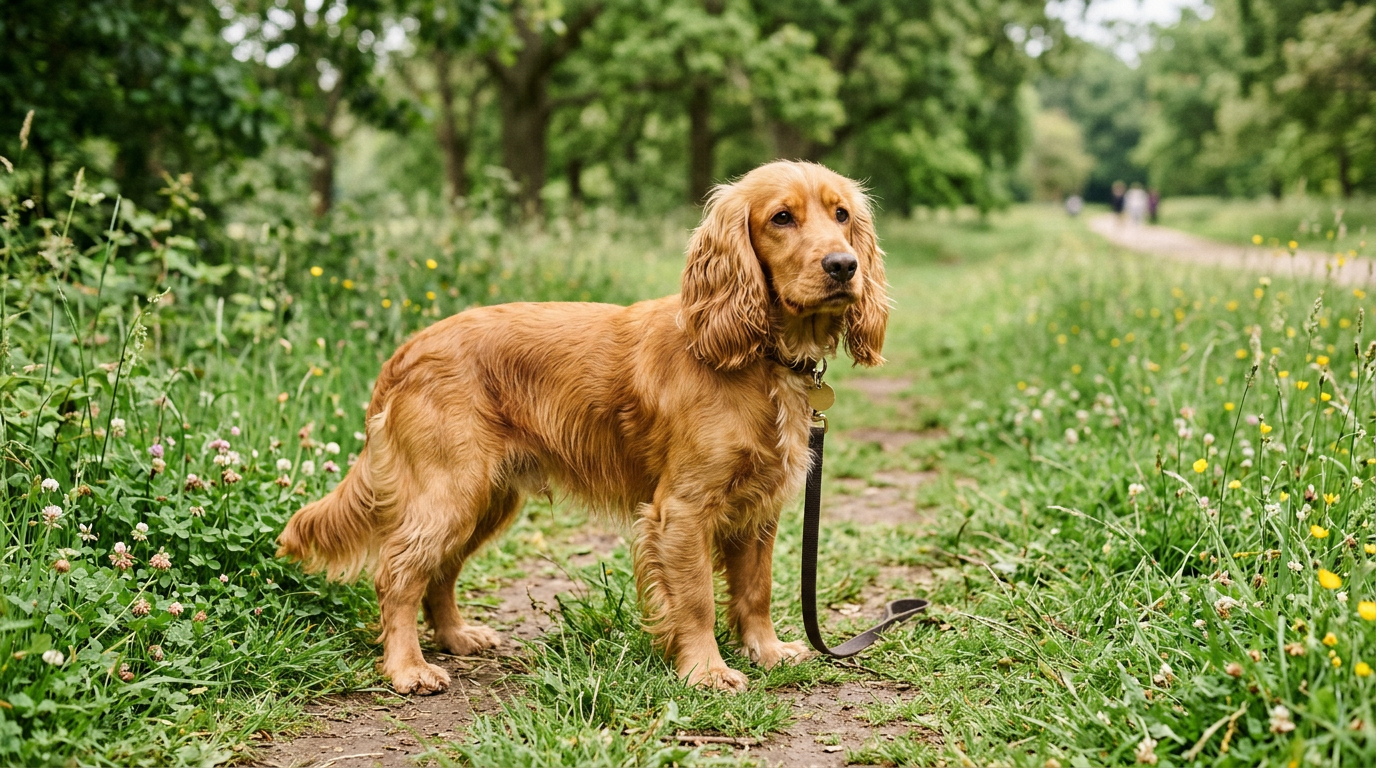
Cocker Spaniel breed guide: Cocker Spaniels are affectionate, active dogs that usually thrive on close involvement with their family. They need more than a pretty coat and a garden. Regular exercise, careful ear care, grooming and gentle training are the foundations of a happy Cocker.
Breed-specific care
Plan daily walks, sniffing, retrieving in moderation and training games. Many Cockers enjoy scent work and swimming, but ears need drying and checking after water. Avoid turning play into nonstop frantic fetching.
Exercise requirements
Brush and comb the ears, feathering, chest and legs regularly. Professional grooming is usually part of ownership. Check ears for heat, redness, odour or discharge and get veterinary advice instead of repeatedly cleaning a painful ear.
Grooming
Discuss hips, eyes, ears, skin, thyroid and other breed-relevant health issues with a vet and breeder. Keep the dog lean and take ear discomfort seriously; ear problems can make even a friendly dog reluctant to be handled.
Common health considerations
Use reward-based training and protect a sensitive dog from rough treatment. Teach recall, loose-lead walking, grooming cooperation, a settle cue and calm behaviour around food and visitors.
Training
Often a good family dog with supervision and respectful children.
Good with children?
Often compatible with cats after gradual introductions, but individual prey drive matters.
Good with cats?
Can suit an apartment if the owner provides daily walks, coat care and manages barking.
Apartment suitability
undefined
Editorial note: ratings are practical assessments, not scientific measurements. Health information should be discussed with a veterinarian.
Cocker Spaniel breed guide should answer practical ownership questions before you bring one home. The Cocker Spaniel is appealing for a reason, but its size, energy, coat, temperament and inherited health risks need to fit your actual routine. This guide gives you a clear starting point for choosing, training and caring for the breed.
Cocker Spaniel ratings
| Trait | Editorial rating | What it means |
|---|---|---|
| Family-friendly | 9/10 | Consider age, supervision and the dog’s individual temperament. |
| Exercise requirement | 8/10 | Plan purposeful activity, not only quick toilet walks. |
| Grooming | 5/10 | Higher scores require more frequent coat or skin maintenance. |
| Trainability | 9/10 | Ratings assume reward-based training and consistent handling. |
Breed overview
Cocker Spaniel is a medium dog weighing About 9–14 kg with a typical lifespan of 10–14 years. The breed is generally merry, sensitive, people-oriented. Those labels are useful only when turned into a daily plan: Daily walks and retrieving games, reward-based training, frequent ear ventilation checks, regular brushing and professional trimming..
Size, weight and lifespan
Expect variation between sex, family line and individual dog. Use the breed range as a guide rather than a target. A healthy adult should have a visible waist, ribs that can be felt without heavy pressure, and movement that remains comfortable. Your veterinarian can assess growth, body condition and weight changes more accurately than a scale alone.
Temperament and daily life
Cocker Spaniel often bonds closely with its household, but temperament is shaped by genetics, early experiences, training and environment. Provide predictable routines, calm handling and rewards for behaviours you want repeated. Do not use intimidation, physical corrections or forced interactions. Watch for stress signals such as turning away, freezing, lip licking, tucked posture or repeated escape attempts.
Exercise requirements
Cocker Spaniel has a moderate to high exercise requirement. Start puppies and newly adopted adults gradually. Combine walking with sniffing, simple retrieves, food puzzles and short training sessions so the dog works both body and brain. Increase duration only when recovery, appetite, sleep and movement remain normal. Avoid exercising in dangerous heat, and seek veterinary advice for limping, collapse, breathing difficulty or unexplained fatigue.
Grooming
This breed needs high grooming. Check the skin, ears, eyes, paws and nails weekly. Brush in small sections rather than pulling through knots, and make grooming rewarding from the first day. Use only products intended for dogs. A professional groomer can help with coat maintenance, but grooming does not replace veterinary care for redness, odour, pain or persistent itching.
Feeding
Prevent overfeeding and keep ears and coat comfortable. A veterinarian can help select food if allergies or chronic ear problems occur. Divide food according to your veterinarian’s advice, especially during puppy growth, pregnancy, senior years or high activity. Treats, chews and table scraps count toward daily calories. Do not change food abruptly; transition over several days unless a veterinarian gives different instructions.
Training plan
- Teach the dog its name and reward eye contact.
- Build a reliable “come” response indoors before adding distractions.
- Practise loose-lead walking in short, successful sessions.
- Teach a settle on a mat so the dog can rest in the home.
- Introduce grooming, handling, visitors and car travel gradually.
Keep sessions brief and end while the dog is still engaged. If behaviour includes fear, guarding, aggression or separation distress, involve a qualified force-free trainer and your veterinarian early.
Good with children?
Usually good with kind, supervised children. No breed should be left unsupervised with a child. Give the dog a child-free resting area, teach children not to hug, climb on, chase or disturb the dog while eating, and separate them when either becomes overexcited.
Good with cats?
Often possible with patient introductions. Use gates, leads and escape routes for the cat. Reward calm observation and never force face-to-face contact. A dog’s prey drive and the cat’s confidence matter more than a breed label.
Apartment suitability
Apartment living may be difficult unless you can provide substantial daily activity, sound management, training and dependable access to outdoor exercise. Space alone does not meet a dog’s needs; routine and supervision do.
Common health considerations
Reported concerns for Cocker Spaniel include ear disease, eye disease, hip dysplasia, skin allergies and dental disease. This is not a diagnosis or a guarantee that an individual dog will develop any condition. Ask breeders for documented, breed-appropriate health testing and discuss preventive examinations with your veterinarian. The Orthopedic Foundation for Animals and the Canine Health Information Center provide breed-specific screening information, but no screening removes every risk.
Arrange veterinary care for persistent changes in appetite, water intake, weight, breathing, stool, skin, movement, sleep or behaviour. Keep vaccinations, parasite prevention, dental care and identification current.
Recommended Cocker Spaniel products
These are practical categories, not products personally tested by this site. Choose fit, durability and safety over branding.
| Product | Best for | Rating |
|---|---|---|
| ear-drying towel | Daily routine | 9/10 |
| slicker brush | Rest and enrichment | 8/10 |
| lightweight retrieve toy | Breed-appropriate care | 8/10 |
| secure everyday harness | Safe handling | 8/10 |
Related reading
Compare this breed with our best dog breeds for apartment living guide, and explore the existing Golden Retriever breed guide, German Shepherd breed guide, and French Bulldog breed guide for comparison.
Frequently asked questions
Is a Cocker Spaniel a good first dog?
It can be, if the household can meet the breed’s exercise, training, grooming and supervision needs. A realistic routine matters more than experience alone.
What is the biggest mistake owners make?
Most avoidable problems begin with mismatched expectations: too little enrichment, inconsistent boundaries, unmanaged weight or delaying help when a health or behaviour change appears.
How should I choose a puppy or adult dog?
Meet the dog where possible, ask for medical and behavioural history, review health testing, observe recovery from mild surprises, and avoid sellers who will not answer questions or provide records.
Extended ownership guide
Start with an ordinary-week plan
Before bringing a dog home, map out a normal Tuesday rather than an ideal weekend. Who handles the first toilet break, the evening walk, feeding, grooming and training? What happens when someone is sick, working late or travelling? The routine should be simple enough that every adult can follow it. Dogs cope better with predictable care than with occasional bursts of effort followed by long gaps.
Prepare the home before arrival. Secure rubbish, medication, chemicals, loose cables and small swallowable items. Choose a quiet bed area, decide which furniture is available to the dog, fit a harness correctly and put leads and treats where they are easy to use. Gates, playpens and closed doors are useful management tools while a puppy or newly adopted dog learns the rules.
Socialisation that respects the dog
Good socialisation is not forcing a dog to meet everything. It is repeated exposure to everyday sights, sounds, surfaces, people and animals at a level the dog can handle. Give the dog a choice to approach or move away. Pair calm observation with food or play, and leave before the dog becomes overwhelmed. A dog that freezes, hides, barks continuously or cannot take food needs more distance and an easier next session.
Continue socialisation through adolescence and adulthood. Confidence can change as a dog matures. Do not assume a puppy class guarantees a permanently confident adult. Practise calm car travel, being handled, resting while people move around, walking past other dogs and accepting short periods of independence. The goal is a dog that can recover and settle, not one that greets every person or dog.
Training for safety and everyday life
Prioritise cues that matter outside the lounge room: name response, recall, leave it, drop, loose-lead walking, waiting at doors and settling on a mat. Train in small stages. A recall starts inside, then on a long line in a quiet outdoor space, then around mild distractions. Reward generously when the dog turns away from something interesting to return to you. Do not call the dog only when playtime is ending.
Management and training work together. A lead prevents chasing while recall develops. A gate stops a dog rehearsing jumping on visitors. Food stored out of reach prevents counter-surfing. Preventing unwanted behaviour is not a shortcut; it gives the dog fewer chances to practise habits you do not want. Reward the behaviour you want to see: four paws on the floor, a quiet check-in, stepping onto a bed or moving away from a dropped item.
Food, treats and body condition
Choose a complete diet for the dog’s life stage, measure meals and count training food, chews and scraps in the daily total. The small extras add up quickly. Use part of the dog’s normal food allowance for recalls, grooming sessions and calm behaviour so training does not silently increase calories. Ask a veterinarian to show you the target body condition for the individual dog, then monitor it over time.
Do not make abrupt diet changes without advice. If a dog has a sudden appetite change, weight loss, excessive thirst, repeated digestive upset or loss of energy, speak with a vet. Food is important, but it is not the answer to every skin, behaviour or digestive problem.
Grooming is preventive care
Make handling routine from the start. Briefly touch paws, look at teeth, lift ears, brush a small area and reward. Stop before the dog is frustrated. Over time, build the duration. This makes veterinary examinations and professional grooming safer, and it lets you notice changes in skin, nails, eyes, mouth or movement before they become major problems.
Never use scissors near mats or a struggling dog. Never assume persistent odour, red skin, scratching or ear pain is just a grooming issue. A vet can diagnose the cause; a groomer can then help maintain the coat safely. Build positive associations with the car, the clinic and grooming equipment before there is an urgent need.
Visitors, children and other animals
Set the dog up to succeed when visitors arrive. Use a lead, gate or quiet room until you know the dog can stay calm. Ask people to ignore the dog until it chooses to approach. Children should never hug, climb on, chase, carry or disturb a dog that is eating or sleeping. Give the dog a child-free resting place and supervise every interaction.
Introductions to cats and other resident animals should be slow. Use barriers, leads, escape routes and brief calm sessions. Reward the dog for looking away or settling. Do not force face-to-face contact and do not assume a breed label predicts the outcome. Individual prey drive, the cat’s confidence and patient management matter more.
Health and emergency planning
Establish a relationship with a veterinarian early, keep identification current and know the number and route for an after-hours clinic. Keep a short record of weight, food changes, medication, grooming dates and unusual symptoms. Useful notes can reveal patterns and help a professional make better decisions.
Seek urgent veterinary advice for collapse, severe breathing difficulty, repeated vomiting, a swollen or painful abdomen, sudden weakness, loss of coordination, eye injury or severe pain. Do not wait for an online answer when a dog may need immediate help. For less urgent changes—new guarding, fear, persistent barking, separation distress or reactivity—reduce the difficulty, prevent more rehearsal and involve a qualified reward-based professional early.
Travel and time alone
Teach the dog to rest in a secure car restraint or crate before a long trip is required. Take short successful trips, then build duration. For time alone, begin with very brief absences the dog can handle calmly. A camera can help you see whether the dog actually settles. Panic, prolonged vocalisation, destructive escape attempts or toileting linked to departures should be treated as a welfare issue, not disobedience.
Have a written care plan for holidays and emergencies: feeding amounts, exercise limits, medication, vet contact details and handling instructions. A good plan makes it easier for another responsible adult to care for the dog safely.
Senior care and lifelong responsibility
As dogs age, adjust the plan rather than expecting the same performance forever. Provide good traction on slippery floors, easier access to a bed, shorter comfortable walks and prompt veterinary assessment for stiffness or changes in sleep. Older dogs still benefit from enrichment and training, but the activity must suit the dog’s body on that day.
Choosing a dog is a long-term commitment. The best owners review routines as the dog changes, act early when something is wrong and choose professional support rather than waiting for a manageable issue to become serious.
Cocker Spaniel owner checklist
Review your plan weekly. Is the dog getting enough sleep, gentle handling, purposeful activity and calm time? Are food, treats and grooming being managed by one clear system rather than several people doing different things? Small adjustments each week prevent most household problems from becoming permanent.
Celebrate quiet progress: a relaxed groom, a calmer greeting, a better check-in on a walk or a nap while the home is busy. Those practical skills create a dog that is easier and safer to live with over many years.
Practical ownership planning
Build the dog’s routine around real life, not occasional free weekends. Decide who handles morning and evening care, how food is measured, where the dog rests, and what happens when visitors arrive. Keep leads, treats and grooming tools easy to reach. Small systems make consistent care far easier when the household is busy.
Exercise should combine movement and thought. Sniff walks, food searches, training games and calm observation help a dog settle without creating constant high-arousal demands. End play before the dog becomes frantic, then offer a clear transition to rest. A dog that can switch off after activity is easier to live with than one repeatedly pushed to exhaustion.
Handling, grooming and veterinary care
Practise cooperative handling before it is urgent. Touch paws, look at teeth, lift ears and brush a small area, rewarding the dog for calm participation. Increase duration gradually. This makes grooming and vet checks safer and helps you notice skin, nail, dental or mobility changes early. Persistent itching, odour, eye changes, pain or fear of touch need veterinary advice rather than more forceful home care.
Keep a simple record of weight, food changes, medication and unusual symptoms. It is easier to explain a pattern to a veterinarian when it has been noted at the time. Identification, parasite prevention and a plan for emergency care are also practical parts of responsible ownership.
Training around people and other dogs
Teach the dog that it does not need to greet every visitor or dog. Use a lead, gate or quiet room while it learns to settle. Reward calm observation, move away before the dog becomes overwhelmed and avoid punishing a growl or bark that signals discomfort. For fear, guarding, separation distress or escalating reactivity, reduce the difficulty and involve a qualified reward-based professional early.
Children should never climb on, chase, carry or disturb a dog that is resting or eating. Cats need escape routes and slow introductions. Good management protects every member of the home while training progresses.
Long-term commitment
Review the routine as the dog moves from puppyhood through adolescence, adulthood and senior years. Older dogs may need shorter walks, better traction and easier access to beds, yet still benefit from gentle training and enrichment. The most reliable owner is not the one with a perfect plan on day one; it is the one who notices changes and adjusts before a small issue becomes a major problem.
Advanced daily-care plan
A useful routine has distinct phases: a toilet break and quiet connection in the morning, an exercise or training session at a time the dog can focus, a planned rest period, then a second opportunity to move and explore. The exact timing matters less than consistency. Make the routine achievable on workdays. If the dog receives all activity only on weekends, it is more likely to struggle when the household returns to its normal pace.
Keep a weekly log of what actually happened: walks, grooming, training, appetite, sleep, stool quality and any difficult moments. This is not busywork. It helps you see whether barking follows poor sleep, whether itchiness appears after a particular outing, or whether the dog is becoming sore after one type of exercise. Good care begins with noticing patterns early.
Managing arousal and boredom
Not every energetic behaviour needs more excitement. Dogs often become louder, bouncier or more destructive when they are overtired or constantly stimulated. Build calm into the day. Scatter part of a meal in grass, hide food around a room, give a safe chew after a walk, or ask the dog to settle on a bed while you prepare dinner. These simple activities meet needs without creating a dog that expects high-intensity entertainment all evening.
When a problem appears, first ask what happens immediately before it. A dog that barks at the window may need blocked visual access and a trained alternative, such as finding treats on a mat. A dog that steals objects may need better storage and a practiced trade cue. Solve the setup as well as the behaviour; shouting after the fact does not teach a useful alternative.
Quality time, not constant attention
Close companion breeds still need to learn that being alone briefly is safe. Begin with a relaxed dog behind a gate or on a bed while you move around the house, then step away for a few seconds and return before it worries. Gradually build duration. Do not make every departure dramatic or every return a celebration. A quiet, ordinary pattern gives the dog useful information: people leave and come back, and nothing bad happens.
Use a camera occasionally when extending alone time. If the dog repeatedly paces, vocalises, drools, scratches at exits or cannot settle, reduce the duration and seek qualified help. Separation distress is not a problem to ignore until a neighbour complains.
Living with children and visitors
Set boundaries before a busy day. Give the dog a safe resting area where children and visitors do not follow it. Ask guests to avoid reaching over the dog or insisting on a greeting. Keep food, toys and chews away from crowded areas. A dog that walks away is communicating; let it leave. Respectful management prevents fear and guarding from developing.
Teach children simple rules: call an adult rather than grabbing a dog, do not interrupt sleep or meals, and use calm voices and gentle hands. Supervision means an adult is actively watching and ready to separate, not merely present somewhere in the house.
Keeping training useful
Practise life skills in short sessions: wait before a door opens, turn toward you when called, walk past a distraction, give up an object, and rest on a mat. Increase one difficulty at a time—distance, duration or distraction—not all three. Reward generously for success, then end while the dog is still engaged. If progress stalls, make the exercise easier rather than repeating a cue the dog cannot follow.
Training should improve safety and communication, not prove dominance. A dog that is frightened, in pain or over threshold cannot learn well. Give it space, address the cause and use a veterinarian or qualified reward-based trainer when the behaviour has a medical or emotional component.
Senior years and end-of-life planning
As a dog ages, review its home set-up and routine. Add traction where it slips, provide a bed it can enter easily, shorten walks if recovery changes and discuss pain management promptly with a veterinarian. Older dogs can still enjoy scent games, gentle training and familiar routines. The goal is comfort, interest and dignity, not keeping an ageing body on a young dog’s schedule.
Planning for senior care is part of a lifetime commitment. Keep insurance, savings and emergency contacts current, and make decisions based on the individual dog’s quality of life and veterinary guidance.
Detailed owner reference checklist
Morning and evening routine
Start with a short health check before the day gets busy. Is the dog moving freely, interested in food and water, and behaving normally? Use the first walk for toileting and calm exploration rather than immediately asking for difficult training. In the evening, give the dog a chance to decompress before visitors, grooming or household activity. Dogs that have a predictable rhythm usually settle more easily.
Equipment fit and replacement
Check harnesses, leads, beds, bowls and toys regularly. A growing puppy can outgrow a harness quickly, and a worn lead clip or chewed toy can become a safety issue. A harness should allow normal shoulder movement without rubbing behind the front legs. Replace damaged chews before pieces can be swallowed. Choose a restraint suitable for the dog’s size and use it every car trip, including short drives.
Weather, travel and public spaces
Adjust walks for heat, rain, slippery surfaces and busy times. Carry water when conditions call for it and leave early if the dog is not coping. In public, keep the dog close enough that you can prevent unwanted greetings, dropped-food scavenging and sudden road crossings. Short positive trips to new places are more useful than one long outing that leaves the dog exhausted or frightened.
Working with professionals
Bring useful information to veterinary and grooming appointments: current food, medication, changes in behaviour, photographs of intermittent symptoms and a short record of when the concern began. Ask a trainer to show you how to practise the exercise at home rather than only handling the dog in front of you. The best professional support leaves the household with a clear, humane plan they can use between appointments.
Reviewing the match over time
A good home adjusts as the dog changes. A move, baby, new job, illness or ageing family member can change what the dog needs. Review exercise, quiet space, supervision and budget whenever the household changes. Rehoming decisions are serious, but asking for help early can often keep a manageable problem from reaching that point.
Signs the routine needs adjustment
Look for repeated restlessness, destructive behaviour, escalating barking, withdrawal, stiffness, changes in appetite, reduced tolerance for handling or difficulty settling after activity. None of these signs should be labelled “bad” without looking at health, stress and routine. Reduce pressure, return to easy successes and involve a veterinarian or qualified professional when a pattern persists.
Final decision guide
The measure of success is not whether the dog is always busy or always perfectly obedient. It is whether the dog is safe, healthy, understood and able to rest. A thoughtful routine, prompt veterinary care and kind, consistent training give the dog the strongest foundation for a good life.
Practical maintenance calendar
Daily: provide fresh water, measured food, toilet opportunities, exercise suited to the dog, a few minutes of training or enrichment, and a quick check for changes in behaviour or comfort. Weekly: brush or comb as the coat requires, inspect paws and ears, review body condition, wash bedding if needed and practise handling. Monthly: check equipment fit, update medication records, review training goals and make sure identification details are current.
Every season: adjust exercise for temperature and daylight, check parasite prevention with your veterinarian, assess shedding or coat changes, and reconsider whether the dog’s activity level still fits the routine. Every year: arrange veterinary preventive care, review dental health, update emergency contacts and set aside money for expected and unexpected care.
This calendar is not a replacement for professional advice. It is a way to ensure that basic care is not forgotten when life becomes busy. Small, regular checks are the most reliable way to catch change early and keep the dog comfortable.
Conclusion: a well-matched companion
The strongest outcome comes from matching the dog’s needs to your real household, not from following a perfect-looking plan. Stay consistent, make adjustments early and treat health, training and rest as connected parts of care. That approach gives the dog the best chance to be a confident, safe and enjoyable companion for its whole life.
Conclusion
A Cocker Spaniel can be a rewarding companion when its needs match your home. Plan for the dog you will care for on an ordinary busy week, not only the ideal weekend. Prepare safe equipment, establish a training routine, budget for preventive care and choose professional help early when something is not going well.
Sources: AKC breed comparison resources; OFA breed health screening information; VCA dog breed resources.
Related breed guides
Compare the Cocker Spaniel with the Labrador Retriever breed guide and English Springer Spaniel breed guide when considering sporting breeds. For coat-care expectations, see our gentle brushing routine for a shedding retriever.
Does this breed fit your life?
Use the dog lifestyle quiz to compare this breed with your home and routine, browse the breed database, or compare breeds side by side before deciding.