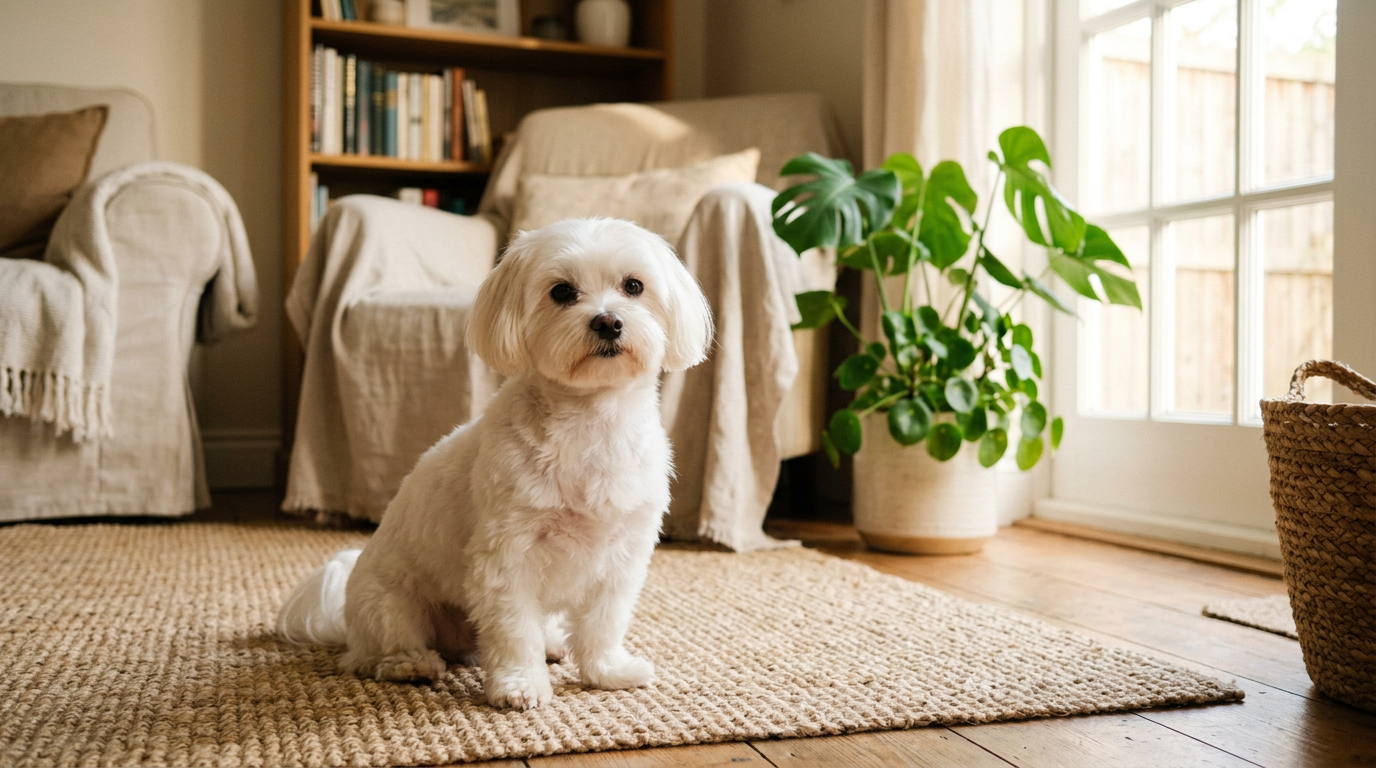
Maltese breed guide research should look past the white coat. A Maltese is a tiny, affectionate companion with a long lifespan, an alert mind and grooming needs that can dominate the weekly routine. The breed fits many apartments and travels easily, but its small body is vulnerable to rough handling, falls and accidental injury. Dental disease, kneecap problems and separation-related behaviour also deserve serious planning.
This guide explains daily life with a Maltese in practical terms. It covers size, lifespan, temperament, exercise, coat care, feeding, health, training, children, cats, apartment living and products. It also explains how a clipped companion coat differs from a floor-length show coat. Individual dogs vary, so use breed knowledge alongside the dog’s health, confidence and history.
Maltese ratings at a glance
| Category | Rating | What it means |
|---|---|---|
| Family-friendly | 8/10 | Affectionate and sociable, but better protected from very young or rough children. |
| Exercise requirement | 4/10 | Needs daily walks, play and mental work without demanding long-distance exercise. |
| Grooming requirement | 9/10 | Long hair mats quickly; even a short clip requires brushing, bathing, eye and dental care. |
| Trainability | 8/10 | Bright and responsive when owners use rewards, consistency and realistic toilet routines. |
These ratings describe typical workload, not a guarantee. An adult in a short coat may be straightforward, while a puppy with separation distress or chronic eye staining can require much more care. Meet the individual dog and arrange an independent veterinary examination before committing.
Breed overview
| Breed group | Toy |
|---|---|
| Height | About 7–9 inches |
| Weight | Under 7 pounds in the AKC breed description |
| Lifespan | Approximately 12–15 years |
| Coat | Long, straight, silky and white; usually kept shorter by companion owners |
| Typical character | Affectionate, lively, alert and closely attached to people |
| Best suited to | Owners who want a small companion and will maintain coat, teeth and safe handling |
The Maltese has centuries of history as a companion. It was not designed for strenuous field work, yet it is still an active dog that benefits from training and exploration. Treating the breed as a decorative object can create fear, barking, poor fitness and dependence.
A sound Maltese should move freely, breathe normally and show curiosity without panic. Extreme smallness is not a health advantage. Terms such as “teacup” are marketing language, not a separate recognised variety, and unusually tiny puppies may be more vulnerable to injury, low blood sugar and other medical problems.
Size and weight
The AKC lists a height of 7–9 inches and weight under 7 pounds. A healthy target depends on frame and body condition, not simply forcing every dog below a number. You should be able to feel the ribs under a light covering, see a waist and notice an abdominal tuck.
Weigh the dog monthly on a small accurate scale. A few hundred grams can represent a meaningful change in a toy breed. Unexpected loss, a reduced appetite or difficulty chewing deserves attention, while gradual gain should prompt review of treats, portions and activity.
Small size affects household safety. Block balcony gaps, supervise stairs, prevent jumping from high furniture and check recliners before closing them. Teach family members to look before stepping backward or sitting on blankets. Use a secure carrier in vehicles rather than allowing the dog to move loose.
Lifespan and long-term planning
Maltese commonly live 12–15 years, so choosing one can mean a decade and a half of grooming, dental care and companionship. Consider future housing, work schedules, travel and finances. A puppy selected today may still be active when the owner’s circumstances change substantially.
Long life does not remove the need for insurance or emergency savings. Toy dogs can require dental extractions, orthopaedic care, specialist eye treatment or management of chronic disease. Compare policy exclusions before a diagnosis appears and keep funds available for payment while awaiting reimbursement.
For seniors, maintain traction with nonslip mats, use ramps where appropriate and keep the dog lean. Monitor sleep, appetite, hearing, vision, mobility and toilet habits. A video of normal walking can help identify slow changes. Do not dismiss pain, confusion or weight loss as inevitable ageing.
Maltese temperament
Most Maltese are affectionate and people-focused. They often follow family members from room to room and enjoy lap time, but many also like short play sessions and exploring outdoors. Their confidence can be larger than their body; owners must stop them from provoking unsafe interactions with bigger dogs.
Alert barking is common. The goal is not absolute silence but an off-switch. Reduce access to windows, acknowledge the trigger once, then reward moving to a mat or orienting to the owner. Shouting often adds noise and excitement.
Because the breed bonds closely, independence training should begin immediately. Give food toys behind a gate, encourage sleep in a separate bed and practise absences measured in seconds before increasing duration. A dog that panics, howls, scratches exits or cannot eat when alone may have separation-related distress and needs a structured professional plan.
Some Maltese become defensive when constantly picked up without warning. Teach a cue for lifting, support chest and hindquarters, and allow the dog to opt into handling when possible. Growling is communication; punishing it can remove the warning while leaving fear intact.
Exercise requirements
A Maltese does not need endurance sport, but it needs daily movement. Several short walks, indoor play and training usually suit better than one long outing. Sniffing, varied surfaces and safe exploration help maintain confidence and muscle.
Adjust activity for age, weather and health. Puppies need free movement and frequent rest rather than forced roadwork. Seniors may prefer shorter, more frequent walks. Persistent skipping, lameness, reluctance to move or sudden slowing requires veterinary assessment.
Use mental exercise to prevent boredom. Scatter part of a meal, hide treats in cardboard boxes, practise toy retrieval or teach simple tricks. Keep puzzle pieces too large to swallow and supervise chewing. Rotate activities rather than leaving every toy available.
Hot pavement can burn small paws, while cold rain quickly chills a clipped dog. Walk in shade during heat and consider a light fitted coat in genuinely cold weather. Clothing must allow shoulder movement and should never be left on unsupervised where straps may snag.
Grooming a Maltese
Grooming is the breed’s largest routine commitment. Long hair tangles where the legs move, behind the ears, under the collar and around the armpits. Brush and comb to the skin every day for a long coat. Surface brushing can leave tight mats hidden underneath.
Use a pin brush or slicker appropriate for fine hair, followed by a metal comb. Work in small sections with a light conditioning spray; pulling a dry mat causes pain and breakage. If a comb cannot pass through, separate the tangle carefully or ask a groomer to clip it. Never cut close to skin with scissors because skin can be drawn into the mat.
A short “puppy cut” reduces daily workload but does not eliminate it. Brush several times weekly, schedule professional clips and maintain face, feet, sanitary areas and nails. Decide on a realistic coat before bringing the dog home, not after painful matting develops.
Bathe according to coat and lifestyle, often every few weeks for companion dogs. Use dog shampoo, rinse completely and dry thoroughly while brushing. Damp tangles tighten. Protect the eyes and ears from products and stop if the skin becomes red or uncomfortable.
Tear staining and face care
Rust-coloured staining beneath the eyes is common in white dogs, but staining has multiple causes. Hair rubbing the eye, tear drainage, allergy, infection or dental disease may contribute. Keep facial hair clean and dry and arrange veterinary assessment for sudden staining, squinting, redness, discharge or odour.
Avoid bleach, peroxide and harsh “whitening” chemicals near the eyes. Cosmetic cleaning should never replace diagnosis. Use only products considered safe by the veterinarian and separate clean cloths for each eye.
Nails, ears and teeth
Trim nails frequently because small dogs may not wear them down. Introduce handling through brief rewards. Check ears weekly for redness, odour or debris, and use only a veterinary-approved cleaner when needed.
Daily tooth brushing is a priority. Toy breeds often develop crowded teeth and periodontal disease. Start with lip handling, dog toothpaste and a soft brush. Bad breath, bleeding gums, loose teeth, chewing on one side or facial swelling needs veterinary attention.
Feeding a Maltese
Feed a complete and balanced diet appropriate for growth, adult maintenance or a diagnosed medical need. Measure food precisely because small errors add up quickly in a dog under seven pounds. A gram scale is more consistent than a large measuring cup.
Use tiny training rewards and account for them in the daily ration. One cube of cheese is a much larger percentage of a Maltese’s calories than of a Labrador’s. Family members should share one treat allowance so the dog is not repeatedly fed.
Puppies have small stomachs and may need several scheduled meals. Very young or unusually small puppies can be vulnerable to low blood sugar, especially if ill or not eating. Ask the breeder and veterinarian for a written feeding plan and seek urgent advice for weakness, trembling, disorientation or collapse.
Persistent picky eating should not be encouraged through endless upgrades. First rule out dental pain, nausea and illness. Offer measured meals on a routine and remove uneaten food after a reasonable period if the veterinarian agrees. Sudden appetite loss is more concerning than a dog that has trained the household to provide alternatives.
Change food gradually unless medically directed otherwise. Repeated vomiting, diarrhoea, weight loss or difficulty swallowing warrants examination. Homemade diets require formulation by a board-certified veterinary nutritionist; a recipe assembled from ingredients that sound healthy can still be deficient.
Common health considerations
Patellar luxation
A kneecap that slips from its groove can cause skipping, intermittent lameness or discomfort. Maintain lean weight and investigate persistent gait changes. The American Maltese Association and OFA recommendations should be checked for current screening protocols when selecting breeding stock; request verifiable patella results rather than accepting “vet checked.”
Dental disease
Periodontal disease can cause chronic pain, tooth loss and infection below the gumline. Home brushing slows plaque accumulation, but many dogs still need professional dental treatment under anaesthesia. Awake cosmetic scaling does not clean beneath the gums or allow complete examination.
Heart disease
Small older dogs can develop cardiac disease, including valve problems. Coughing, reduced stamina, fainting, rapid breathing at rest or abdominal swelling needs veterinary assessment. A heart murmur is a finding that may require monitoring or further imaging; it is not a diagnosis by itself.
Liver and vascular concerns
Congenital portosystemic shunts occur in small breeds, including Maltese. Signs can include poor growth, unusual behaviour after meals, vomiting, urinary problems or seizures, but presentation varies. Breeding programs may use bile-acid testing as part of risk assessment. Any symptomatic puppy needs veterinary investigation, not dietary experimentation at home.
Eye problems
Persistent squinting, redness, cloudiness, rubbing or discharge is not merely tear staining. Eye disease can worsen rapidly. Seek prompt care and never use leftover drops because steroid-containing medication can be dangerous if a corneal ulcer is present.
Tracheal and respiratory concerns
Small dogs may develop coughing associated with tracheal collapse or other airway disease. Use a well-fitted harness rather than applying lead pressure to the neck. A honking cough, breathing difficulty or blue gums requires veterinary attention; collapse or severe distress is an emergency.
Neurological concerns
Tremors, seizures, weakness or an altered gait have many possible causes. Record a video if safe, note duration and contact the veterinarian. Do not put hands near the mouth during a seizure or give human medication.
Breed risk is not diagnosis. Routine preventive care, body-condition control and early investigation provide more value than supplements marketed with vague claims. Seek emergency care for breathing difficulty, collapse, severe pain, repeated vomiting, inability to urinate or prolonged seizures.
Health testing and choosing a breeder
Ask the breeder for the registered names of both parents and verify current results in the OFA database. CHIC numbers mean the required tests were completed and publicly disclosed; they do not necessarily mean every result was normal. Read the actual record.
Request current parent-club recommendations because protocols can change. Discuss patellas, cardiac assessment, eye evaluation and any recommended serum bile-acid testing or DNA tests. A commercial DNA panel alone does not replace physical examinations or family history.
Responsible breeders discuss longevity, dental health, liver disease, knees, temperament and causes of death in relatives. They raise puppies in a clean home environment, introduce grooming and household sounds, provide records and take back a dog they bred if the owner cannot keep it.
Avoid sellers who promote “teacup” size, always have puppies available, will not show the mother, cannot provide objective results or use rare colour as the main selling point. Registration proves ancestry, not health or responsible breeding.
For rescue, ask about dental condition, house training, separation behaviour, handling, children, pets and any bite history. A foster home can provide more useful information than a brief kennel observation. Arrange a veterinary check soon after adoption.
Training a Maltese
This Maltese breed guide treats training as essential, not optional for a tiny dog. Teach name response, recall, hand target, wait, leave, drop, loose-lead walking and a mat settle. Short, frequent sessions suit the breed’s attention span.
Use a comfortable harness and fixed lead. Reward walking near you before the lead tightens. Retractable leads can create unsafe distance around traffic and larger dogs, and attaching them to a collar adds neck pressure.
House training
Small bladders and bad weather can make toilet training slower. Take puppies out after waking, eating, drinking, play and training, plus at regular intervals. Use the same quiet area and reward immediately after elimination. Supervise or use a safe pen between trips.
Punishing accidents teaches hiding. Clean with an enzymatic product and adjust timing. If a previously reliable dog begins urinating indoors, arrange veterinary assessment for urinary, metabolic or age-related problems.
Barking and door manners
Prevent repeated window patrol by moving furniture, using visual barriers and rewarding quiet check-ins. For the door, teach the dog to go to a mat while a helper knocks softly. Increase sound and visitor movement gradually. Management prevents daily rehearsal while training develops.
Cooperative grooming
Pair the brush, comb, tooth brush and nail tool with food before using them. Practise one body area at a time and stop before struggling begins. Restraint may finish a task quickly but can make tomorrow’s grooming harder. A reward-based groomer can help build confidence.
Separation training
Begin with the dog behind a gate while the owner remains visible. Reward settling, then step out of sight for one second and return before distress. Increase slowly and vary duration. Cameras help distinguish resting from pacing or panic. Established separation anxiety needs professional help, not repeated “cry it out” sessions.
Are Maltese good with children?
Maltese can be loving family companions, but their small bones make them vulnerable. They often suit calm, school-aged children better than toddlers. Adults must supervise and prevent carrying, squeezing, chasing or dropping.
Give the dog a gated bed that children never enter. Children should not disturb meals, sleep or chews. Teach them to sit on the floor and let the dog approach. If the dog hides, freezes, turns away or growls, end the interaction.
Do not rely on the dog to defend itself appropriately. A snap may follow many ignored signals, and the child can still injure the dog. Active adult management protects both.
Are Maltese good with cats and other dogs?
Many Maltese live successfully with cats. Introduce behind gates, reward calm observation and give the cat high escape routes and separate resources. Do not allow chasing simply because the dog is small.
When meeting dogs, physical size matters. Choose gentle partners and avoid chaotic parks where a collision can cause serious injury. Some Maltese are confident enough to approach unsafe dogs; owners must advocate for distance.
Apartment suitability
The breed scores highly for apartment living because it is small, adaptable and needs moderate exercise. It still needs outdoor experience, enrichment and training. Indoor pads can be useful in some homes but should not become an excuse to avoid walks and social exposure.
Alert barking and separation distress are the main neighbour concerns. Use window management, white noise and mat training, and practise calm absences early. Check balcony gaps, stair safety and building pet rules.
A small apartment can suit better than a large home where the dog is isolated. What matters is companionship, predictable care, climate control and safe access to toilet areas.
Similar breeds to consider
| Breed | Why compare | Key difference |
|---|---|---|
| Bichon Frise | Friendly white companion | Larger, curlier coat with substantial professional grooming |
| Havanese | Social, trainable toy companion | Usually larger and more robust with a different coat texture |
| Coton de Tulear | Affectionate, long-coated companion | Larger frame and cotton-textured coat |
| Yorkshire Terrier | Tiny, long-lived and portable | Stronger traditional terrier character and different coat colour |
| Shih Tzu | Compact companion suited to apartments | Heavier build and greater brachycephalic concern |
Compare adult robustness, grooming, barking, respiratory structure, dental health and time alone. Meet mature dogs rather than judging only from puppies.
Recommended Maltese products
| Product | Best for | Rating | Buying guidance |
|---|---|---|---|
| Pin brush and metal comb | Daily coat care | 10/10 | Choose smooth pins and a comb that reaches the skin without scratching. |
| Detangling spray | Reducing coat breakage | 9/10 | Use a dog-safe formula and avoid the eyes. |
| Small Y-front harness | Walking without neck pressure | 10/10 | Check fit frequently and allow shoulder movement. |
| Dog toothbrush kit | Daily dental care | 10/10 | Use dog toothpaste and introduce gradually. |
| Nonslip steps or ramp | Furniture access | 8/10 | Choose a stable, grippy design and train use with rewards. |
| Washable bed | Safe rest area | 9/10 | Select removable covers and low entry for seniors. |
| Secure travel carrier | Transport | 9/10 | Confirm ventilation, fastening and vehicle placement. |
| Small food puzzle | Mental enrichment | 8/10 | Avoid detachable parts that could be swallowed. |
| Enzymatic cleaner | House-training accidents | 9/10 | Follow label directions and keep the dog away until dry. |
| Pet camera | Monitoring absences | 7/10 | Use observations to guide training, not to replace company. |
Affiliate links should be disclosed clearly when added. Ratings reflect likely usefulness, not a guarantee of a particular brand. Confirm dimensions, supervise new items and replace damaged equipment.
Practical grooming schedule
| Task | Long coat | Short companion clip |
|---|---|---|
| Brush and comb | Daily, section by section to the skin | At least several times weekly, with daily checks at friction points |
| Face cleaning | Daily as needed | Daily as needed |
| Bathing | Often every one to three weeks depending on coat and lifestyle | Usually every few weeks or when dirty |
| Professional grooming | Regular maintenance and coat guidance | Often every four to eight weeks depending on desired length |
| Nails | Check weekly and trim before they affect gait | Same |
| Teeth | Brush daily | Brush daily |
Intervals vary with coat texture, activity and the groomer’s plan. Waiting until the dog looks untidy is too late if mats have already tightened against skin. Book the next appointment before leaving the salon, especially during busy seasons.
Bring reference photos showing a realistic length, but accept that coat condition determines what is possible. Removing severe mats humanely may require a short clip. A comfortable short coat is preferable to preserving length through painful dematting.
Travel, boarding and time away
A secure carrier is the safest default for routine vehicle travel. Condition it at home with meals and short rests before taking longer trips. Secure the carrier according to the manufacturer’s instructions and never leave the dog loose on a passenger’s lap.
Pack measured food, medication, veterinary records, comb, harness, waste bags and familiar bedding. Identify emergency clinics at the destination. Keep the dog leashed around unfamiliar doors and lifts; a tiny white dog can disappear quickly in a busy arrival area.
For boarding, choose staff comfortable with toy dogs and coat maintenance. Provide written feeding, toilet and handling instructions. If a long coat cannot be reliably combed, schedule a shorter clip before the stay rather than returning to severe mats.
A trusted home sitter may suit a dog that finds kennels stressful, but practise introductions and short trial absences first. Cameras can confirm whether the dog settles. A dog showing panic should not be left for increasingly long periods in the hope it will “get used to it.”
Ownership costs
Food portions are small, but grooming and dentistry can make lifetime costs substantial. Build a budget with professional clips, brushes, shampoos, dental cleanings, parasite prevention, insurance, boarding and emergency care. Price services locally; estimates based on medium dogs may not account for frequent salon visits.
Insurance deserves close reading. Check hereditary and congenital coverage, dental illness, waiting periods, annual limits and exclusions for pre-existing symptoms. Keep an emergency reserve even with insurance because reimbursement may arrive after payment is due.
Buying good grooming tools once is cheaper than repeatedly replacing poor ones, but do not purchase every product marketed for white coats. A comb that reaches the skin, safe shampoo, conditioning spray and patient technique matter more than a shelf of cosmetic treatments.
Common Maltese ownership mistakes
- Brushing only the surface: hidden mats form close to skin in the armpits, ears and legs.
- Ignoring teeth until breath smells: periodontal disease may already be advanced.
- Carrying the dog everywhere: constant carrying limits confidence, fitness and normal exploration.
- Allowing repeated barking: manage visual triggers while teaching a quiet alternative.
- Punishing toilet accidents: improve timing, supervision and access instead.
- Buying for extreme size: unusually tiny puppies may carry greater health and injury risk.
- Using cosmetic eye products without diagnosis: eye pain and sudden discharge need veterinary care.
- Skipping independence practice: constant company can make future absences difficult.
The solution is not a stricter household; it is a clearer one. Predictable routines, safe boundaries and small daily care tasks prevent many problems from becoming emergencies.
First-month plan
Before arrival, choose a veterinarian and groomer, secure stairs and balconies, and set up a pen or gated room. Buy a harness, carrier, comb, brush, toothbrush, measured food and safe enrichment. Keep the initial diet consistent.
During the first week, establish toilet trips, naps, short grooming practice and calm absences. Introduce visitors slowly. Avoid passing the puppy constantly from person to person; sleep and choice matter.
At the first veterinary visit, discuss body condition, teeth, knees, heart, eyes, parasite control, vaccination and any liver-screening history. Bring all breeder or rescue records and ask about emergency signs for a toy puppy.
Daily and weekly care checklist
- Measure meals and refresh water.
- Provide short walks, play and training.
- Check eyes and facial hair daily.
- Comb a long coat daily or a clipped coat several times weekly.
- Brush teeth daily.
- Check ears, paws, skin and nails weekly.
- Practise calm independence.
- Wash bedding, bowls and grooming tools regularly.
- Track weight and body condition monthly.
- Arrange prompt care for lameness, eye pain or appetite change.
Is a Maltese right for you?
A Maltese may suit you if you want a small, affectionate companion and will commit to grooming, dental care and training. The breed fits apartments, can travel easily and often remains playful into old age.
Choose another breed if daily coat or dental work is unrealistic, very young children cannot be managed safely, or the dog would regularly spend long days alone. Do not choose primarily because a seller promises an unusually tiny adult.
Spend time with healthy adults, price professional grooming and dentistry, and assess the actual household routine. A practical match matters more than the appeal of a white puppy.
Conclusion
A useful Maltese breed guide makes clear that small size does not mean minimal care. The Maltese combines modest exercise needs with demanding coat and dental maintenance, close attachment to people and a real need for safe handling.
Choose for sound health and stable temperament, verify current screening, keep the dog lean and teach grooming cooperation from the start. With those foundations, a Maltese can be a lively, adaptable companion for many years.
Related breed guides
Compare the Maltese with our Havanese breed guide and Chihuahua breed guide when considering small companion breeds. For realistic household planning, read our guide to apartment-friendly dog breeds.
Does this breed fit your life?
Use the dog lifestyle quiz to compare this breed with your home and routine, browse the breed database, or compare breeds side by side before deciding.